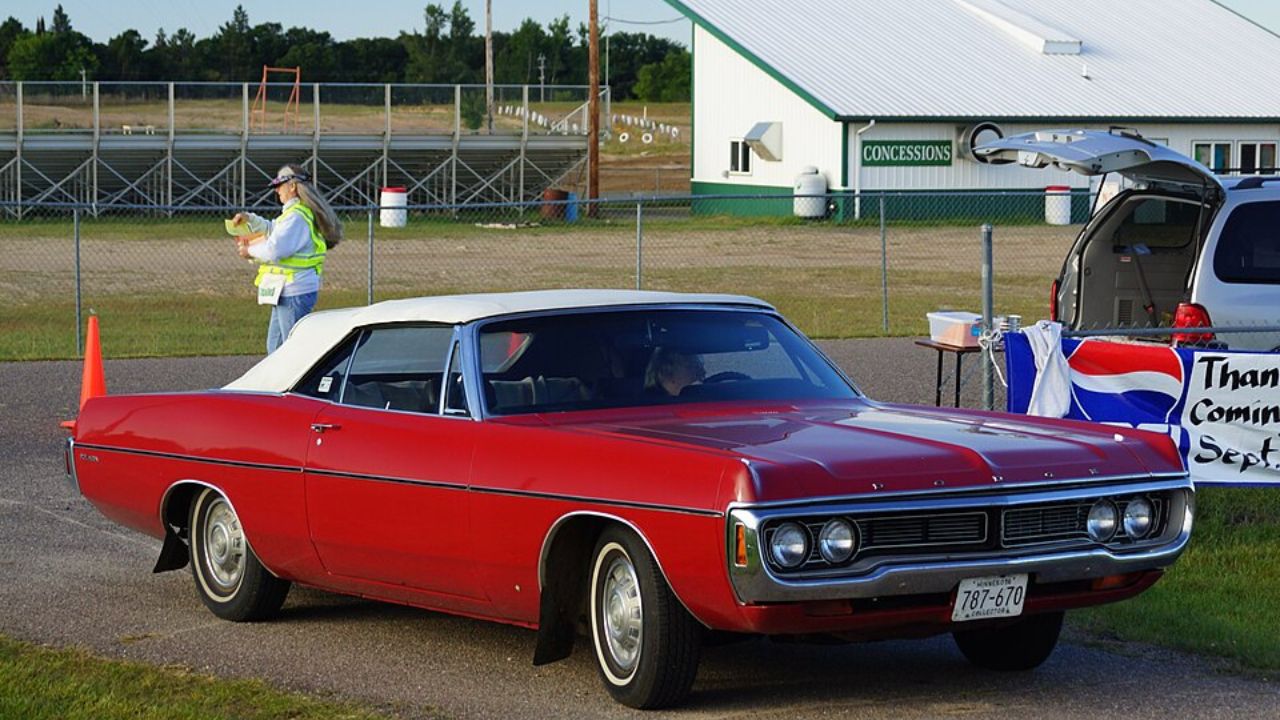
When enthusiasts talk about Dodge performance and styling in 1970, the conversation usually revolves around the company’s muscle cars.
Vehicles like the Dodge Challenger, Dodge Charger, and Dodge Super Bee tend to dominate headlines, collector discussions, and automotive history books. These cars represented the excitement of the muscle car era and became some of the most recognizable machines ever produced by Chrysler.
Lost in their shadow was another Dodge that quietly offered a surprisingly compelling package.
The 1970 Dodge Polara wasn’t designed to win drag races or attract crowds with dramatic graphics and performance badges. Instead, it served as one of Dodge’s full-size offerings, aimed at buyers who needed space, comfort, and practicality. Because of that mission, many people overlooked it entirely.
That was a mistake.
The Polara delivered a combination of style, comfort, capability, and value that made it far more interesting than its reputation suggests. While it lacked the glamour of Dodge’s performance heroes, it excelled in areas that mattered to a large number of buyers and often provided a more versatile ownership experience.
In many ways, the Polara represented an increasingly rare kind of automobile.
It could do almost everything well.
Full-Size Cars Still Mattered in 1970
It’s easy to forget how important full-size cars remained at the dawn of the 1970s.
Muscle cars received enormous attention, but the majority of American buyers still purchased larger vehicles. Families needed room, travelers wanted comfort, and many consumers appreciated the confidence that came with driving a substantial automobile.
Manufacturers understood these priorities.
As a result, companies continued investing heavily in their full-size lineups. These vehicles were often among the most profitable and important products in the showroom, even if they generated fewer magazine covers than high-performance models.
The Polara occupied an important place within Dodge’s lineup.
It offered buyers a step into the full-size market while maintaining many of the qualities that had made Dodge successful throughout the decade.
The car’s mission was practical.
Its execution was better than many people remember.
The Styling Was More Modern Than Expected
One of the Polara’s most overlooked strengths was its appearance.
By 1970, Dodge had embraced cleaner, more sculpted styling themes across much of its lineup. The Polara benefited from these design trends, receiving bodywork that looked modern and substantial without appearing excessive.
The car carried itself with confidence.
Its long profile, broad stance, and carefully integrated details gave it a presence that many competing full-size vehicles struggled to match. While it was clearly a large automobile, the design helped minimize visual bulk and created a more contemporary impression.
This mattered because styling was becoming increasingly important across every market segment.
Buyers wanted vehicles that looked attractive as well as practical.
The Polara delivered both.
Comfort Was a Major Selling Point
If the Polara excelled anywhere, it was comfort.
The spacious interior provided ample room for passengers, while the full-size platform contributed to a smooth and composed ride. Long-distance travel became one of the car’s greatest strengths.
Owners appreciated the difference.
Where smaller performance cars often prioritized excitement over refinement, the Polara focused on creating a relaxed driving experience. Highway cruising felt effortless, and passengers enjoyed the kind of space that was becoming increasingly difficult to find in smaller vehicles.
This comfort extended beyond physical dimensions.
The car’s overall character encouraged easy, stress-free travel.
For many buyers, that quality mattered far more than outright speed.
It Offered Serious Engine Choices
Although the Polara was not marketed as a muscle car, Dodge did not neglect performance entirely.
Buyers could choose from a range of engines that provided respectable power and strong real-world capability. Larger V8 options delivered the kind of effortless torque that suited a full-size automobile perfectly.
This capability often surprised people.
The Polara’s size led some observers to assume it would feel sluggish or uninspiring. In reality, properly equipped examples possessed more than enough power for confident highway driving, towing, and everyday use.
The emphasis was different from a dedicated performance car.
Rather than chasing quarter-mile times, the Polara focused on smooth and effortless power delivery.
That approach matched its mission exceptionally well.
Highway Driving Was Its Specialty
The Polara truly came into its own on the open road.
Its size, wheelbase, and suspension tuning combined to create a vehicle that felt remarkably comfortable at highway speeds. Long trips that might feel tiring in smaller cars became easy and enjoyable.
This capability reflected broader American driving habits.
Interstate highways continued expanding across the country, and many families regularly traveled long distances by automobile. Vehicles that excelled in these conditions offered genuine advantages.
The Polara was built for exactly this environment.
Its relaxed demeanor and spacious interior made it an outstanding road-trip companion.
Owners often appreciated this quality more with every mile traveled.
Families Appreciated the Practicality
Another reason the Polara deserved more recognition was its versatility.
The car could comfortably transport families, luggage, and passengers without feeling strained. Its size allowed it to serve multiple purposes simultaneously, making it particularly attractive to households seeking a single vehicle capable of handling diverse responsibilities.
This practicality broadened its appeal considerably.
While a muscle car might excel during weekend drives, the Polara succeeded in everyday life. School runs, vacations, commuting, and errands all fell comfortably within its capabilities.
For many buyers, this versatility represented genuine value.
The car fit naturally into daily routines.
That usefulness often went underappreciated.
Dodge Built It With Confidence
One reason the Polara aged well is that Dodge treated it as a serious product.
The company did not view full-size cars as an afterthought. Engineers and designers invested considerable effort into ensuring that the vehicle met customer expectations regarding comfort, quality, and capability.
This commitment showed throughout the car.
The styling felt cohesive, the engineering felt mature, and the overall experience reflected thoughtful development. Buyers received a vehicle designed to perform its intended role effectively rather than merely fill a gap in the lineup.
That attention to detail contributed to the Polara’s strengths.
The car was carefully executed.
And people noticed.
It Lived in the Wrong Era for Recognition
Part of the reason the Polara remains overlooked today is timing.
The car existed during one of the most celebrated periods in American performance history. With so many famous muscle cars competing for attention, full-size vehicles often struggled to generate the same enthusiasm among enthusiasts and automotive journalists.
The comparison was inherently unfair.
The Polara wasn’t trying to be a Challenger or a Charger. It served a different audience and pursued different goals. Judging it solely by muscle car standards misses much of what made it successful.
Viewed on its own terms, the Polara becomes far more impressive.
The car accomplished exactly what Dodge intended.
And it did so very well.
Modern Collectors Are Taking Notice
In recent years, appreciation for full-size American cars has grown steadily.
Collectors increasingly recognize that automotive history extends beyond muscle cars and sports cars. Vehicles like the Polara tell important stories about how most people actually traveled during the era.
This broader perspective has benefited the model.
Enthusiasts appreciate its styling, comfort, and historical significance. Many also enjoy owning something less common than the usual performance icons that dominate car shows and auctions.
The Polara offers a different experience.
That uniqueness has become part of its appeal.
It Reflected a Different Kind of Excellence
Not every great automobile earns recognition through speed or racing success.
Some vehicles succeed because they excel at serving their owners. The Polara belonged to this category. It delivered comfort, practicality, style, and capability in a package that worked exceptionally well for its intended audience.
That achievement deserves respect.
The car may not have generated the excitement of Dodge’s performance models, but it fulfilled its mission with remarkable competence.
Sometimes that’s equally impressive.
The Dodge People Forgot to Appreciate
Looking back, the 1970 Polara offered far more than many buyers and enthusiasts gave it credit for.
Its attractive styling, spacious interior, strong engine choices, and excellent road manners created a package that addressed real-world needs better than many flashier alternatives. While muscle cars captured the spotlight, the Polara quietly demonstrated the strengths of a well-designed full-size automobile.
It wasn’t trying to be the fastest car in the showroom.
It was trying to be one of the most useful.
More Than Just Transportation
The 1970 Dodge Polara offered more than buyers gave it credit for because it combined comfort, practicality, style, and capability into a package that excelled in everyday life.
Its roomy interior, confident highway manners, available V8 power, and thoughtful design made it an outstanding full-size car during an era when many consumers still valued space and versatility above all else. Although it lived in the shadow of Dodge’s more famous muscle cars, the Polara succeeded by focusing on what mattered most to its intended audience.
More than fifty years later, it remains a reminder that automotive excellence comes in many forms.
Sometimes the most rewarding cars aren’t the ones making the most noise.
They’re the ones quietly doing everything right.
More from Fast Lane Only