The muscle car era is often remembered through its biggest names.
Cars like the Plymouth Road Runner, Dodge Super Bee, Pontiac GTO, and Chevrolet Chevelle SS tend to dominate conversations about late-1960s performance. They were loud, powerful, and heavily marketed, making them easy to remember decades later.
Yet Plymouth’s lineup offered more than just its headline-grabbing muscle cars.
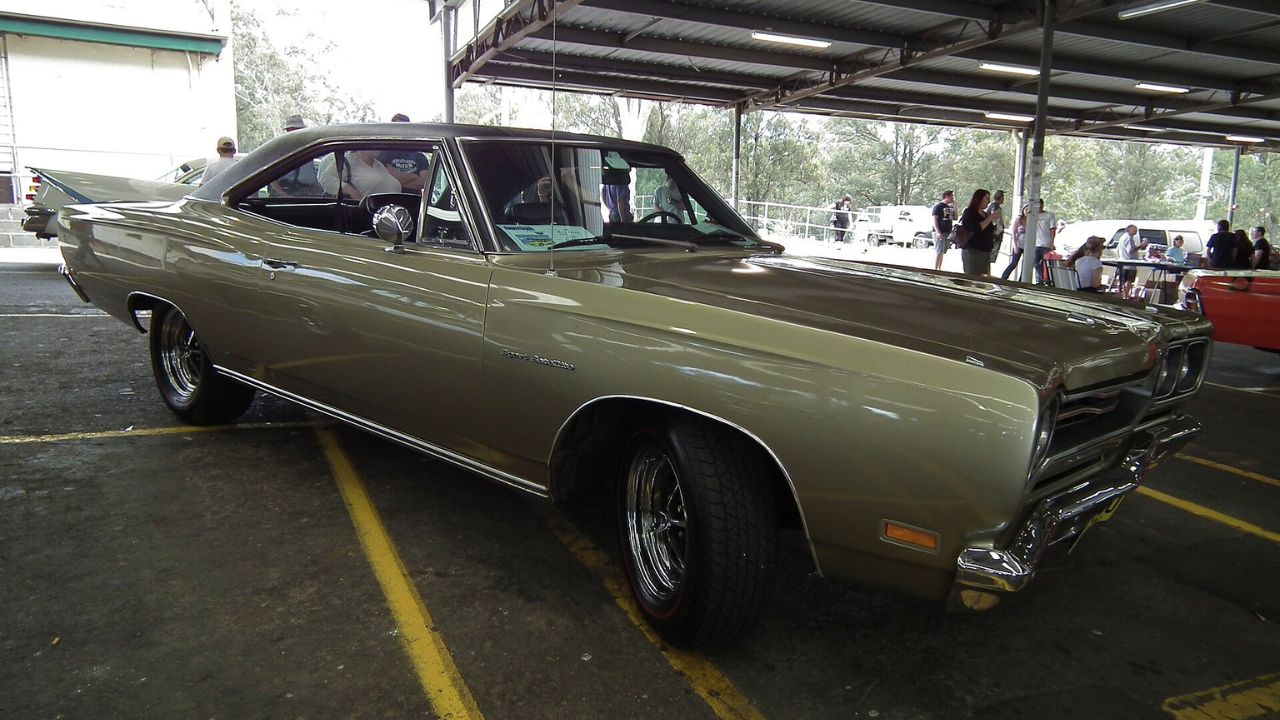
Among the division’s most interesting models was the 1969 Sport Satellite, a vehicle that occupied a unique position within the marketplace. On paper, it might have seemed like a stepping stone between ordinary transportation and Plymouth’s more aggressive performance offerings. In practice, it became something much more substantial.
The Sport Satellite appealed to buyers who wanted style, comfort, and performance without necessarily embracing the stripped-down image associated with some traditional muscle cars. It blended several automotive trends into a package that proved surprisingly versatile.
As a result, the car developed an identity all its own.
It wasn’t merely an entry-level performance machine.
It became one of Plymouth’s most balanced and overlooked offerings.
Plymouth Was Expanding Beyond Basic Muscle Cars
By 1969, Plymouth had already established a strong reputation among performance enthusiasts.
The success of the Road Runner demonstrated that affordable muscle cars could attract enormous attention. Buyers loved the formula of placing powerful engines into relatively inexpensive vehicles, and sales figures confirmed that Plymouth understood the market.
However, not every customer wanted exactly the same thing.
Some buyers appreciated performance but also valued comfort, appearance, and additional features. They wanted a car that felt sporty without sacrificing refinement. Plymouth recognized this audience and understood that the muscle car market was becoming increasingly diverse.
The Sport Satellite emerged as a response to those changing preferences.
Rather than focusing exclusively on raw performance, it offered a broader ownership experience.
That distinction proved important.
The Satellite Platform Already Had Strong Foundations
One reason the Sport Satellite succeeded was the strength of the platform beneath it.
The broader Plymouth Satellite lineup had already earned a reputation for attractive styling, solid engineering, and versatility. Plymouth’s intermediate platform provided an excellent foundation for a variety of models, ranging from family transportation to serious performance machines.
The Sport Satellite benefited directly from this flexibility.
It inherited the proportions and road presence that made the Satellite attractive while adding additional personality and equipment. Buyers received a vehicle that felt substantial and well-developed rather than narrowly specialized.
This foundation helped the Sport Satellite appeal to a wider audience.
The car already possessed many desirable qualities before performance even entered the conversation.
That gave Plymouth room to build something distinctive.
Styling Played a Major Role
One of the Sport Satellite’s biggest strengths was its appearance.
By 1969, Plymouth’s intermediate cars featured clean lines, muscular proportions, and a confident stance that fit perfectly within the era. The Sport Satellite added additional styling elements that enhanced its visual appeal while preserving a level of sophistication.
The result was a car that looked sporty without appearing overly aggressive.
Unlike some muscle cars that relied heavily on graphics, decals, and visual drama, the Sport Satellite projected confidence through its overall design. It attracted attention without demanding it.
Many buyers appreciated this approach.
The styling felt mature.
Yet it still communicated performance potential.
That balance helped define the car’s character.
It Offered More Comfort Than Many Muscle Cars
Another reason the Sport Satellite became more than an entry-level muscle car was its emphasis on comfort.
Many traditional muscle cars pursued performance above all else, sometimes treating refinement as a secondary concern. The Sport Satellite took a different approach by offering a more complete ownership experience.
The interior reflected this philosophy.
Buyers enjoyed upgraded trim, improved appointments, and a generally more comfortable environment than they might find in some stripped-down performance models. The car felt suitable for everyday driving as well as weekend fun.
This versatility broadened its appeal considerably.
Owners did not have to choose between comfort and excitement.
The Sport Satellite offered a meaningful combination of both.
Performance Was Still Part of the Formula
Comfort and style were important, but performance remained central to the Sport Satellite’s identity.
Plymouth offered a range of engine choices that allowed buyers to tailor the car to their preferences. Customers seeking reasonable everyday performance could choose more modest powerplants, while enthusiasts could select increasingly potent V8 options.
This flexibility became a major advantage.
The Sport Satellite could serve multiple roles depending on how it was configured. It might function as a comfortable personal coupe, a capable family car, or a serious performance machine.
The available engines ensured that buyers were never locked into a single experience.
The car adapted to their needs.
That adaptability helped distinguish it from more narrowly focused competitors.
Buyers Wanted More Sophisticated Performance
The late 1960s saw the muscle car market mature significantly.
Early muscle cars often emphasized straightforward formulas built around power and affordability. As the segment evolved, however, many buyers began seeking greater refinement alongside performance.
The Sport Satellite arrived at exactly the right moment.
It catered to customers who appreciated horsepower but also wanted attractive styling, comfortable interiors, and a more polished overall experience. Plymouth recognized that the market was expanding and responded accordingly.
The car represented an important evolution.
Performance was no longer the only consideration.
Buyers increasingly expected more.
The Sport Satellite delivered it.
It Bridged Multiple Segments
One of the most fascinating aspects of the Sport Satellite is how effectively it bridged different automotive categories.
The car wasn’t purely a muscle car, yet it wasn’t simply a personal luxury coupe either. Instead, it occupied a middle ground that allowed it to borrow strengths from both segments.
This positioning gave Plymouth a valuable product.
Buyers who found traditional muscle cars too extreme could appreciate the Sport Satellite’s comfort and refinement. Meanwhile, those who wanted more excitement than a typical intermediate sedan could enjoy its available performance options.
Few vehicles balanced these priorities as effectively.
The Sport Satellite managed it remarkably well.
It Lived Alongside the Road Runner
Ironically, one reason the Sport Satellite often gets overlooked today is the success of another Plymouth.
The Road Runner became one of the most famous muscle cars of its generation, attracting enormous attention and becoming closely associated with Plymouth’s performance image. Compared with such a high-profile model, the Sport Satellite naturally received less publicity.
Yet the two cars served different purposes.
The Road Runner emphasized simplicity and value-oriented performance. The Sport Satellite pursued a more balanced formula that incorporated comfort and sophistication alongside capability.
Both approaches had merit.
The Road Runner simply attracted more headlines.
That doesn’t diminish the Sport Satellite’s achievements.
Collectors Appreciate Its Balance
Modern enthusiasts increasingly recognize the qualities that made the Sport Satellite special.
Collectors appreciate vehicles that tell broader stories about automotive history, and the Sport Satellite represents an important shift in buyer preferences. It demonstrates how manufacturers adapted as customers began demanding more complete and versatile automobiles.
The car’s combination of style, comfort, and performance remains appealing today.
Many enthusiasts enjoy owning something less common than the era’s most famous muscle cars.
The Sport Satellite offers exactly that opportunity.
Its individuality has become one of its greatest strengths.
It Reflected the Future of Performance Cars
Looking back, the Sport Satellite feels surprisingly forward-thinking.
The idea that performance cars should also offer comfort, attractive styling, and everyday usability eventually became standard throughout the industry. Modern performance vehicles routinely embrace these qualities.
The Sport Satellite anticipated that evolution.
It showed that buyers wanted more than simple horsepower figures.
They wanted complete automobiles.
And Plymouth delivered one.
More Than a Stepping Stone
The 1969 Plymouth Sport Satellite became more than an entry-level muscle car because it successfully blended performance, comfort, style, and versatility into a package that appealed to a broad range of buyers.
Rather than focusing exclusively on raw acceleration, the Sport Satellite offered a more refined and balanced ownership experience. Its attractive styling, comfortable interior, flexible engine lineup, and ability to bridge multiple market segments helped create an identity distinct from both traditional muscle cars and ordinary family transportation.
More than fifty years later, it remains one of Plymouth’s most underrated achievements.
Not because it was the fastest car in the showroom.
But because it understood that performance could mean more than horsepower alone.
More from Fast Lane Only