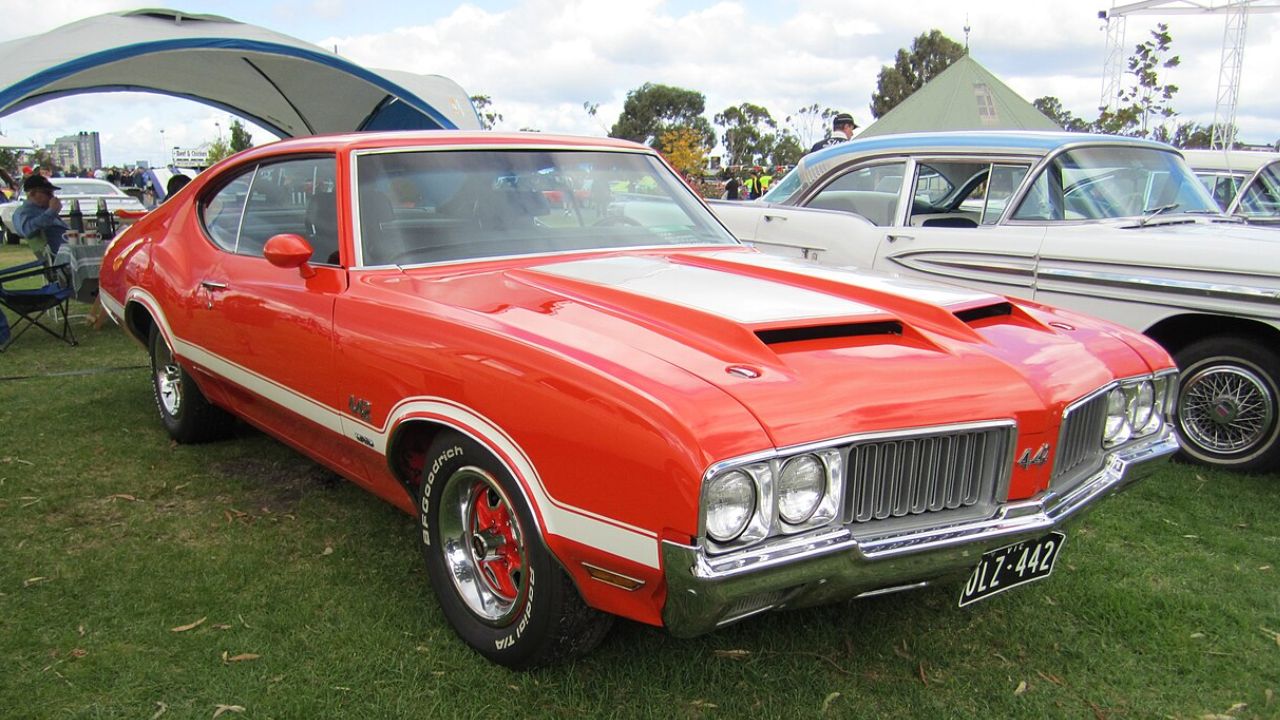
The 1970 Oldsmobile 442 W-30 is often overshadowed by more famous muscle cars of its era, yet it delivered serious power and performance that enthusiasts still admire today. With a unique blend of style and muscle, the W-30 package set itself apart in a crowded market, earning a dedicated following among collectors and car enthusiasts alike.
Historical Context of the 1970 Oldsmobile 442
The muscle car era of the late 1960s and early 1970s holds a significant place in American automotive history, representing a time when power and performance were paramount. The Oldsmobile 442, introduced in 1964, was one of the earliest entries in this burgeoning market. Initially designed as a performance-oriented variant of the F-85 compact, it quickly evolved into a formidable contender in the muscle car arena, boasting increasing horsepower and aggressive styling.
By 1970, the muscle car landscape was rife with competition, with iconic models like the Chevrolet Camaro, Ford Mustang, and Pontiac GTO vying for supremacy. Each brand sought to push the envelope in terms of performance, leading to a golden age where raw power and speed were the ultimate selling points. The 442’s evolution during this period showcased Oldsmobile’s commitment to delivering high-performance vehicles that appealed to speed enthusiasts.
What Made the W-30 Package Special?
The 1970 Oldsmobile 442 W-30 package was more than just an upgrade; it was a meticulously engineered performance option that significantly enhanced the car’s capabilities. At the heart of the W-30 was the 455 cubic-inch V8 engine, which featured an impressive output of 370 horsepower and 500 lb-ft of torque. This engine was marked by its unique aluminum intake manifold and a specialized air cleaner, designed to maximize airflow and performance. Coupled with a heavy-duty TH400 automatic transmission and a 3.90:1 rear axle ratio, the W-30 was a force to be reckoned with on both the street and the strip.
Beyond sheer power, the W-30 package also included several enhancements that set it apart from the standard 442 models. This included a performance suspension system, upgraded brakes, and specific badging that identified it as a high-performance variant. These features helped solidify the W-30’s reputation as a serious contender in the muscle car market, even as other manufacturers began to scale back on performance due to shifting regulations and consumer preferences.
Power and Performance Metrics
The performance metrics of the 1970 Oldsmobile 442 W-30 are a testament to its engineering prowess. The 455 V8 engine’s 370 horsepower was capable of propelling the car from 0 to 60 mph in around 5.5 seconds, which was exceptional for the era. In terms of quarter-mile times, the W-30 could achieve runs in the low 14-second range, rivaling some of the more recognized muscle cars of the time like the Chevrolet Chevelle SS and the Pontiac GTO.
Real-world performance tests often highlighted the W-30’s superior handling characteristics, thanks in part to its upgraded suspension. Enthusiasts who had the chance to drive the W-30 noted its responsive steering and stable cornering capabilities, making it not just a straight-line performer but a well-rounded vehicle. This combination of acceleration, handling, and overall driving experience has contributed to its enduring popularity among muscle car aficionados, especially those who appreciate the blend of power and finesse.
Design and Aesthetics
The design of the 1970 Oldsmobile 442 W-30 was as striking as its performance figures, embodying the bold styling trends of the muscle car era. The exterior featured aggressive lines, a distinctive front grille, and a muscular stance that commanded attention on the road. Buyers could choose from a range of vibrant color options, including the iconic “W-30 Red,” which further accentuated the car’s sporty silhouette.
Inside, the 442 W-30 offered a driver-focused cockpit that combined comfort with functionality. The interior featured high-backed bucket seats, a sporty steering wheel, and an array of gauges that provided essential performance information. The attention to detail in both exterior and interior styling played a significant role in the 442’s appeal, making it a desirable option for both performance seekers and style-conscious buyers. The fusion of aesthetics and power was a hallmark of the muscle car era, and the W-30 exemplified this synergy.
Market Reception and Sales Figures
Upon its release, the 1970 Oldsmobile 442 W-30 received a mixed response from consumers and critics alike. While it was praised for its impressive performance and bold design, the competitive landscape of muscle cars heavily influenced its market reception. Compared to the sales figures of contemporaries like the Chevrolet Camaro and Ford Mustang, the W-30’s numbers were modest. In 1970, Oldsmobile sold just over 1,600 W-30 models, a stark contrast to the tens of thousands sold by its competitors.
Several factors contributed to the W-30’s overlooked status. Firstly, the muscle car market was beginning to shift as insurance rates skyrocketed and fuel prices rose, leading many buyers to reconsider their performance vehicle options. Additionally, the reputation of Oldsmobile at the time wasn’t as dominant as other brands, which often overshadowed the 442 W-30 despite its impressive specifications. This combination of market dynamics made the W-30 a lesser-known entry in the pantheon of American muscle cars, even as it quietly delivered exceptional performance.
Legacy and Cultural Impact
The legacy of the 1970 Oldsmobile 442 W-30 continues to resonate in automotive culture today. Its impact on future performance vehicles is notable, as it showcased the potential of Oldsmobile to produce serious contenders in the muscle car segment. Enthusiasts often cite the W-30 when discussing the golden age of American performance, recognizing it as a vehicle that, while perhaps not as celebrated as others, made significant contributions to the muscle car narrative.
Collectors and restorers have dedicated themselves to preserving the W-30 legacy, often showcasing these vehicles at car shows and events across the country. Stories of restoration projects abound, with enthusiasts sharing their passion for reviving this powerful machine. The W-30’s relatively limited production numbers have only added to its allure, making it a sought-after model among collectors who appreciate its unique place in automotive history. As interest in classic muscle cars continues to grow, the 442 W-30 is gradually gaining recognition as a worthy icon of the era.
Restoration and Collectibility Today
In the current market, the 1970 Oldsmobile 442 W-30 is gaining traction among collectors and automotive enthusiasts. Prices for well-preserved models can vary widely, depending on factors such as condition, originality, and whether the car retains its matching numbers. Auctions and classic car sales often see strong interest in the W-30, indicating a resurgence in its desirability among collectors. The blend of performance, rarity, and historical significance makes the W-30 a compelling investment for car enthusiasts.
Restoring a W-30 model is not without its challenges, however. Finding original parts can be difficult, and restoration projects can be costly and time-consuming. Yet, the rewards of bringing a W-30 back to life are often worth the effort. Many collectors report that driving a well-restored 442 W-30 offers an exhilarating experience, combining nostalgia with the thrill of performance driving. As the market continues to evolve, the 442 W-30 stands poised to capture the attention of a new generation of automotive enthusiasts, ensuring its legacy endures.
More from Fast Lane Only