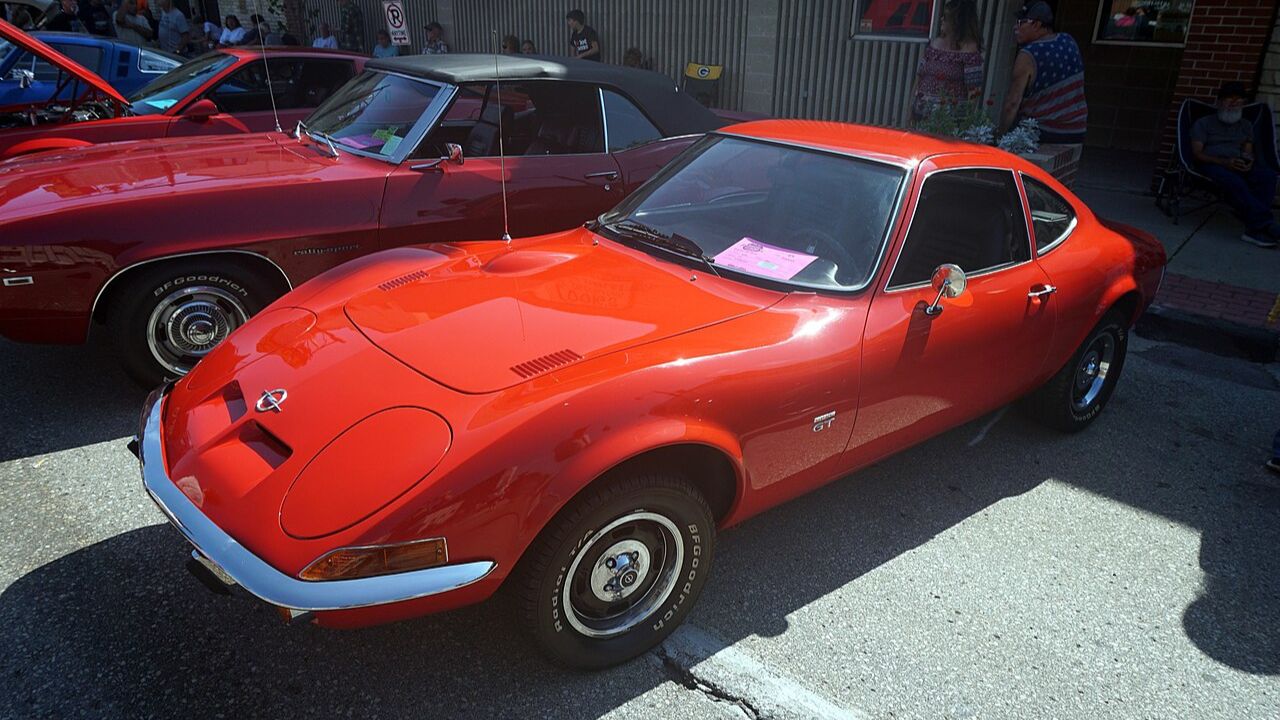
The 1970 Opel GT is one of those cars that can sell itself from twenty paces. The proportions are pure sports coupe, the fastback roofline looks exotic, and the cabin feels like a scaled-down grand tourer. Yet behind that sleek shape lie age, design quirks, and rust traps that can turn an impulse buy into a long and expensive education for first-time classic owners.
For enthusiasts willing to prepare, the GT can still be a rewarding, relatively affordable way into vintage sports car ownership. The key is knowing where this “baby Corvette” hides its problems and how those issues affect what to pay, how to inspect, and what sort of project a buyer is really taking on.
Why the 1970 GT is so tempting
Visually, the Opel GT was engineered to grab attention. Period design analysis notes that the GT’s shape was not actually based on the Corvette C3, yet the resemblance is close enough that the nickname stuck and still helps the car stand out among small European coupes. A detailed history review explains that the company offered both a 1.9-liter and a 1.1-liter version, with the 1.9-liter GT becoming the volume seller from 1969 to 1970.
The cabin sells the dream too. Instead of a conventional trunk, a storage area behind the seats compensates for the lack of a rear lid, with the spare tire and tools tucked behind a flap in the rear section. For a late 1960s compact, it feels surprisingly purposeful and focused, exactly the sort of thing that hooks first-time buyers scanning classifieds for something more interesting than an MGB or a mainstream sedan.
Powertrain specs also look attractive on paper. Contemporary comparisons describe the GT as intended to compete with a 95 horsepower MGB, but with a different character and German build quality. Period driving impressions say the experience is closer to half of a Chevrolet Corvette C3, with more emphasis on stylish cruising than outright speed, which suits many modern buyers who want a classic that looks fast more than they need it to be genuinely quick.
The 1970-only mechanical mix
The 1970 model year sits at a mechanical crossroads. A detailed video on the car explains that this year marked a transition, with changes to the Opel GT transmission and rear axles. It was also the last year for several earlier features that collectors now seek out, giving the 1970 cars particular appeal for buyers who want a mix of early styling and updated hardware.
Under the hood, most 1970 examples carry the 1.9-liter four-cylinder. Analysis of the engine family highlights that this 1.9-liter unit used a tiny three-quart sump. That small oil capacity means levels must be checked frequently, especially on cars that see modern highway speeds or hot weather. When owners ignored that, the engines could suffer from oil starvation and accelerated wear.
Electrical details matter as well. Reports on long-term ownership describe how engine heat hardened the plastic insulation on factory wiring, which could crack and create short circuits or even fires. Buyers used to more modern insulation standards may underestimate how fragile original looms have become in cars that are more than half a century old.
Rust: the GT’s most expensive surprise
No issue shapes the Opel GT ownership experience more than corrosion. In one widely shared project thread, a new owner who posted “Just bought this 1970 Opel GT, am I an idiot?” was quickly told that Rust is the car’s defining problem. Contributors warned that these things are known for rusting, and that the body is a single piece of steel. As one comment put it, Body damage is Similar to the rust issue, since any serious damage usually needs to be hammered out or cut out and replaced with sheet metal, rather than unbolting separate panels. That warning on Rust and Body work is central to any buying decision.
Professional assessments of rough cars paint the same picture. One detailed project evaluation found that the primary rust spots seemed to be the rear corners, the interior floor boards, the rocker panels, the front nose pan, and inside the headlight tubs. In that Project Opel GT, the evaluator had to weigh Dream Restoration potential against the risk that the car was essentially Scrap metal.
Forum guides for prospective buyers echo those high-risk zones. Experienced owners list the front foot wells, rocker panels beneath the doors, and fenders behind the wheels as the worst and most problematic places to find rust, because all of them tie into structural strength and are not simple cosmetic fixes. One detailed checklist on Front foot wells and rocker panels has become a reference point for pre-purchase inspections.
Hidden corrosion can be even more dangerous. A separate discussion on hidden rust locations opens with the blunt line, Sometimes the rust is hidden and does not become visible until it is at the point where major repairs are needed. Contributors point to areas like the rails under thick black insulation pads, where moisture can sit unnoticed for years.
Recent restoration videos of a 1971 car underline that the problem is not limited to the obvious lower body. One episode on a 1971 Opel GT shows how the roof vents are another area susceptible to rust, while a separate segment on the same project explains that the boot is a unique rust trap. Together they suggest that a thorough inspection needs to go above and below the beltline, not just along the sills.
Monocoque body, expensive mistakes
The GT’s structure magnifies the impact of corrosion and body damage. Unlike some contemporaries that use a separate frame, the Opel GT relies on a single shell. The Reddit warning that the Body is a single piece of steel is not just trivia; it defines how repairs are done. When damage is Similar to the rust issue, shops cannot simply swap a fender. They must cut, fabricate, and weld, which drives up labor costs.
Project write-ups of rough examples show how quickly that can escalate. The same assessment of a highlights corrosion in the nose pan and inside the headlight tubs, both of which are integral to the front structure. Once those areas are compromised, the decision between Dream Restoration and Scrap becomes stark.
For a first-time buyer, the implication is simple. A visually attractive but rusty GT can be a far worse purchase than a scruffy but solid one. Any pre-purchase inspection should prioritize getting the car safely on a lift, probing rocker seams, floor pans, rear corners, and the nose, and budgeting as if at least some of those areas will need professional metal work.
Mechanical quirks that catch new owners
Even a structurally sound 1970 GT can surprise buyers with mechanical details that differ from more common classics. The headlights, for example, are manually operated by a lever connected to rods. That unusual system adds charm, but also its own failure modes. Guides for shoppers warn that Headlight buckets that do not lock can indicate a broken rotator bolt or two, which can be a major PITA to fix. The same checklist notes that Transmission leaks and noise from wear seem to be pretty common on higher mileage cars, and that both issues should be factored into the price when inspecting a candidate. Those warnings are captured in a widely shared buying guide.
Brake and fuel systems create another layer of work, especially on cars that have been parked. Owners who respond to new-buyer questions point out that Cars that have sat for a while will almost always need new brake calipers, cylinders, and hoses. They also stress that After 40 years the fuel tanks are usually full of rust and varnish and need replacement. In other words, a long-stored “barn find” may require a complete hydraulic and fuel system overhaul before it is safe to drive.
Engine service can be trickier than it looks. A detailed restoration story of a 1970 car describes how a previous attempt to remove the cylinder head went wrong. Also, when taking the head off, they did not realize you cannot take the timing chain housing off without dropping the oil pan, so they broke that housing in the process. That anecdote, preserved in a barn-find feature, illustrates how unfamiliarity with Opel-specific procedures can turn routine jobs into parts hunts.
Interior condition is another signpost of a car’s history. A technical note on cabin refurbishment opens with the observation that Now 40 years old, Opel GT interiors have been more likely to receive neglect, subject to being exposed to excessive sunlight or moisture, or even abused. Cracked dash pads, warped panels, and faded seats are not just cosmetic issues; they signal how carefully (or carelessly) the rest of the car may have been treated.
Parts supply and the “only one place” problem
Compared with more common British sports cars, parts availability for the Opel GT is more limited. A popular video review points out that while the GT was intended to compete with the 95 horsepower MGB, it faced challenges due to fewer available parts compared to MGs. The presenter concludes that fixing an Opel GT can be difficult in markets where specialist suppliers are scarce.
Veteran owners echo that reality. In the same inspection guide that warns about Headlight and Transmission issues, one contributor notes that there is really only one parts place for many GT-specific components. That concentration means buyers are more dependent on a small number of dedicated vendors, and that shipping times and costs can be higher than for more mainstream classics.
More from Fast Lane Only