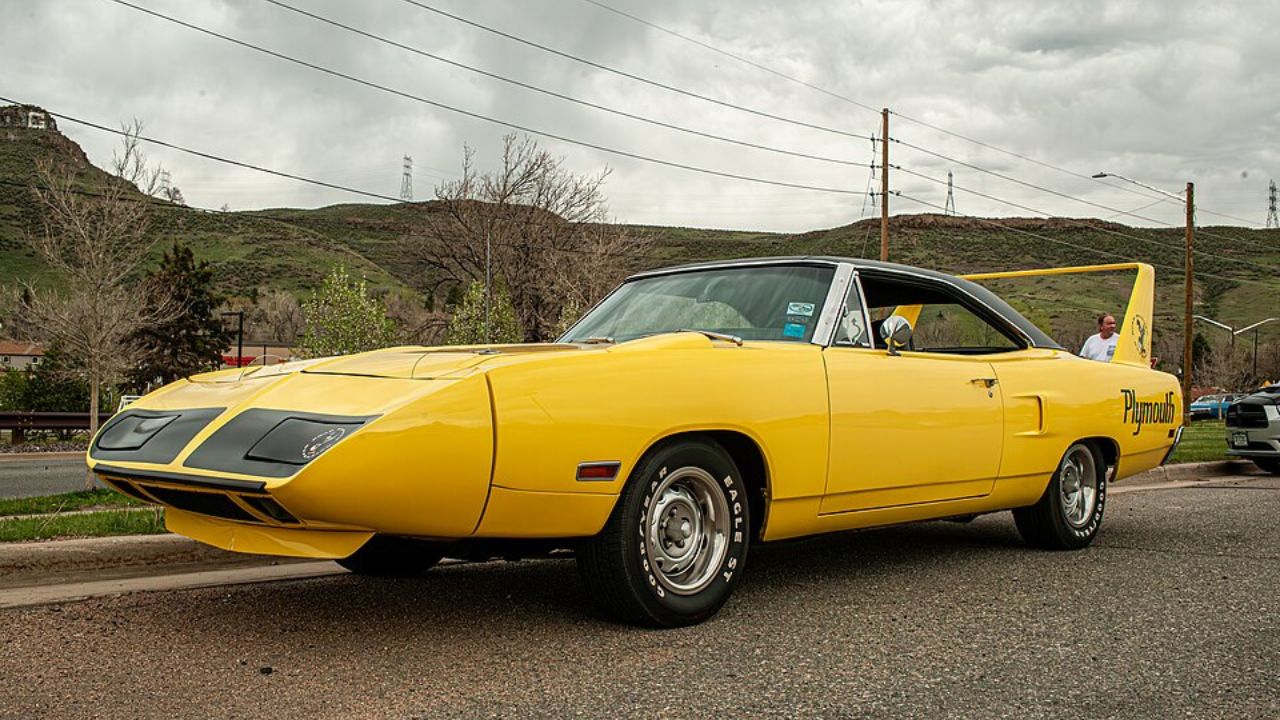
The 1970 Plymouth Superbird was built to do one thing: dominate NASCAR’s high-speed ovals so completely that rivals and rulemakers would be forced to respond. With its towering rear wing, wind-cheating nose cone, and limited production run, the Superbird pushed stock-car racing to a technological edge that made regulators uncomfortable. What followed reshaped how “stock” a stock car could be and turned a short-lived race weapon into one of the most mythologized muscle cars ever sold.
What happened
By the late 1960s, Chrysler’s racing program faced a problem. Ford and Mercury had strong aero cars, and Dodge had already rolled out the Charger Daytona with a pointed nose and tall rear wing. Plymouth needed its own high-speed missile to keep Richard Petty and other factory-backed drivers competitive on NASCAR’s fastest tracks. The answer was the 1970 Plymouth Superbird, a heavily modified Road Runner that barely resembled the cartoon-badged coupe sitting in regular showrooms.
The Superbird’s most obvious features were its extended fiberglass nose and huge rear wing, which sat on tall struts so it could reach clean air above the roofline. This was no styling gimmick. Engineers shaped the nose to cut drag and improve stability at speeds that pushed past 190 miles per hour, while the wing generated downforce without adding much resistance. Under the skin, the car carried serious hardware, including the 426 cubic inch Hemi V8 in some examples, a racing-bred engine that already had a reputation for brutal power in Mopars of the era.
To satisfy NASCAR’s requirement that race cars be based on production models, Plymouth had to build a batch of road-legal Superbirds. The figure commonly cited by historians and registries is 1,920 units, a small fraction of overall Plymouth volume but enough to qualify the car for competition. Many of those cars were sold slowly, sometimes with their wings removed or noses swapped to make them easier to move off dealer lots, because the extreme styling was a hard sell to everyday buyers. Survivors that kept their original equipment intact have become highly prized, especially those with the 426 Hemi. One such 1970 Plymouth Hemi Superbird, parked for 48 years and retaining its factory configuration, has been described as amazingly original by modern collectors who track these cars.
On track, the Superbird delivered what Plymouth wanted. In NASCAR competition, the aero car helped Richard Petty and other drivers win on the superspeedways that defined the sport’s top tier. The combination of a slippery body and big V8 power meant the Superbird and its Dodge sibling sat in a different performance class from more conventional stock cars. Rivals complained that the so-called “aero warriors” were turning races into a contest of wind tunnel time rather than driver skill or mechanical durability.
NASCAR leadership shared some of that concern. The sanctioning body had built its identity on cars that looked like what fans could buy, with rules that encouraged close racing rather than runaway speed records. As the aero cars pushed velocities higher, officials also worried about safety on tracks that had not been designed for such speeds. The response came in the form of new regulations that limited engine displacement for these extreme designs and then effectively outlawed them from top-level competition. Within a short window, the Superbird went from cutting-edge weapon to obsolete curiosity in the NASCAR paddock.
Why it matters
The Superbird’s brief but intense impact still shapes how fans and regulators think about race car innovation. It highlighted the tension between technological progress and the desire for parity. On one side, manufacturers argued that racing should reward engineering creativity and that dramatic advances in aerodynamics and power were part of the sport’s DNA. On the other, NASCAR officials and competitors warned that if one or two teams found a loophole, the result could be unwatchable dominance and higher risk for drivers.
By pulling the plug on the Superbird and its peers through targeted rule changes, NASCAR sent a clear message that it would step in when a design pushed performance beyond what the series considered acceptable. That decision set a precedent for later eras, from restrictor plates on big tracks to template bodies that tightly control aerodynamics. The Superbird era showed how quickly a single innovation could force a series to choose between pure speed and a more controlled show.
The car’s road-going versions also tell a story about how tastes and values evolve. When new, many Superbirds sat unwanted, their radical nose cones and tall wings seen as too strange for daily driving. Some dealers discounted them heavily, while others modified them to look more conventional. Decades later, the same features that once scared off buyers have turned the car into a blue-chip collectible. Unrestored examples, especially those with original drivetrains and interiors, are treated as rolling time capsules, with owners preserving details from faded paint to factory paperwork.
Enthusiast culture has layered new meaning onto the Superbird as well. The car’s cartoon Road Runner graphics and unmistakable profile have made it a staple in television and restoration circles. One notable example involves Mike Worman, known from automotive reality TV, who has been associated with a broken Plymouth Superbird that captured attention precisely because of its rarity and the emotional weight attached to saving such a machine. Stories like that reinforce the idea that even rough or incomplete Superbirds are not just old race-homologation specials, but pieces of motorsport history worth rescuing.
The legacy also extends to how manufacturers approach homologation today. While modern race cars in top series are far removed from true street models, the Superbird era showed that a company could use a limited run of extreme road cars to shift the balance of power on track. That template influenced later homologation specials, from Group B rally cars to touring car specials in Europe. Each time, regulators have had to decide how far they will let the envelope be pushed before rewriting the rulebook.
What to watch next
The Superbird’s story continues to evolve in the collector market and in how NASCAR presents its own history. Auction results for high-spec examples, particularly those with the 426 Hemi and documented race connections, are closely watched as barometers of muscle car values. As more long-stored cars emerge from barns and garages, each discovery adds detail to the production and ownership record. The 48-year-parked Hemi car that surfaced in remarkably original condition is one illustration of how new finds can reset expectations about what survives.
Preservation versus restoration is another ongoing debate. Some owners choose to keep their Superbirds as untouched as possible, emphasizing originality over cosmetic perfection. Others invest heavily in concours-level restorations, aiming to present the car as it would have appeared on a showroom floor in 1970. The choices they make influence how future generations will understand these cars, whether as pristine artifacts or as honest survivors that show the wear of decades.
On the racing side, NASCAR’s current approach to innovation still carries echoes of the Superbird episode. Whenever a team finds aerodynamic gains within the rules, officials face pressure to decide whether that edge is clever engineering or a threat to competitive balance. The introduction of standardized chassis and tightly controlled body shapes in recent years reflects a continued preference for limiting the kind of wild one-off designs that defined the aero wars of 1969 and 1970.
Manufacturers, meanwhile, continue to leverage nostalgia for cars like the Superbird in their marketing and product planning. Limited-edition models and heritage-inspired trims tap into the same emotional pull that makes winged Mopars headline attractions at car shows. As electrification and advanced driver aids reshape the performance-car world, the raw, mechanical character of a carbureted big-block with a four-speed manual becomes even more of a touchstone for enthusiasts.
More from Fast Lane Only