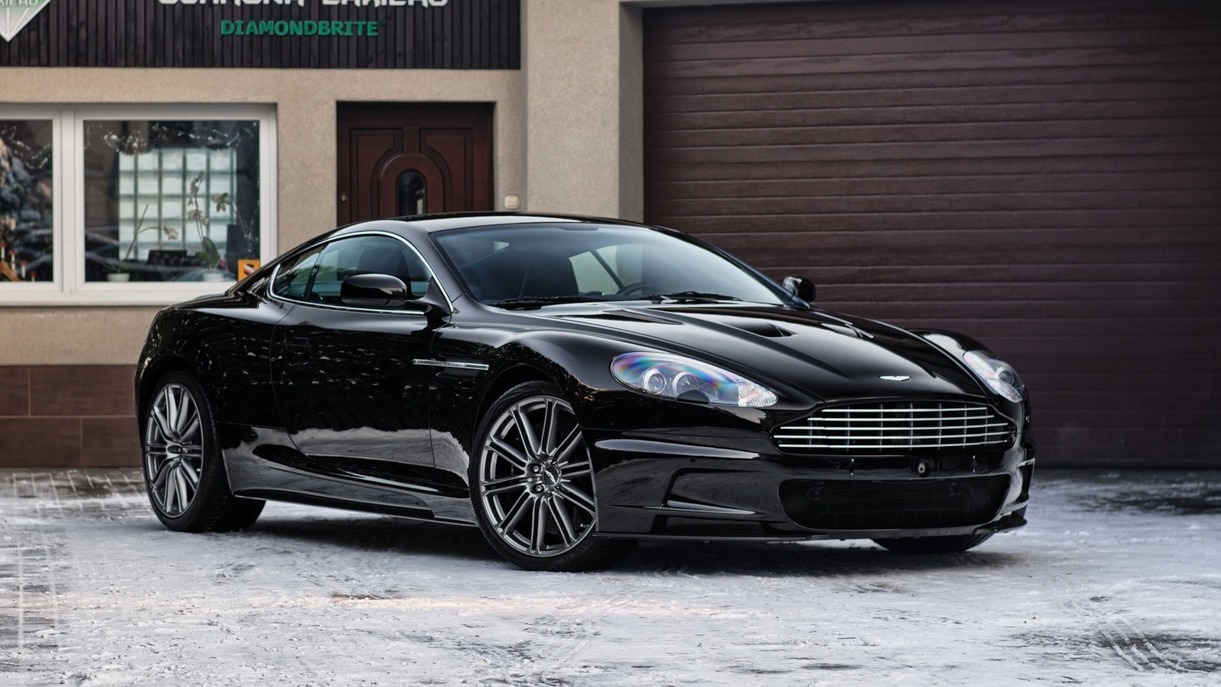
The 2009 Aston Martin DBS arrived as a grand tourer capable of crossing continents in comfort while delivering the sort of power and drama usually reserved for pure supercars. Positioned above the DB9 yet more usable than a track special, it aimed to blend long‑legged refinement with serious performance and a cinematic sense of occasion. More than a decade later, it still stands out as a turning point for Aston Martin’s modern GT philosophy.
A flagship built on familiar foundations
When the DBS reached customers for the 2009 model year, it was presented as Aston Martin’s flagship road car, derived from the DB9 but sharpened in almost every respect. The bonded aluminum VH platform formed the core, shared across the brand’s range at the time, but the DBS used lighter body panels, stiffer suspension hardware, and more aggressive tuning. The goal was not to abandon the DB9’s grand touring brief, but to turn up the intensity while keeping the core architecture recognizable.
Under the hood sat a 6.0‑liter V12, part of a family of engines that had already defined the character of several Aston models. In DBS trim, output climbed well beyond the DB9’s figures, and the car paired that extra power with weight savings from carbon fiber bodywork and lighter wheels. The result was a coupe that could legitimately be mentioned alongside contemporary Italian exotics in terms of acceleration and top speed, yet still carried four pieces of luggage and a sense of British restraint.
The styling made its intent clear. Compared with the softer DB9, the DBS wore a deeper front splitter, more pronounced side sills, and a rear diffuser that looked functional rather than decorative. Wide rear haunches and a vented hood signaled that this was the serious one in the lineup, even before the engine fired.
Performance that matched the drama
The 2009 DBS was far more than a styling exercise. Period testing showed that the car’s V12 delivered the sort of thrust expected from a top‑tier GT of its era, with strong mid‑range torque and a willingness to rev that encouraged long pulls through the gears. The soundtrack, a signature part of Aston’s appeal, blended a cultured low‑speed burble with a metallic howl at higher rpm that made even a simple highway on‑ramp feel special.
A comparison between the DBS and the Ferrari 599 GTB Fiorano highlighted how far Aston had pushed its grand tourer. In that test, the Aston went up against the Ferrari’s 6.0‑liter V12 and advanced chassis electronics, yet reviewers still praised the British car’s balance and real‑world usability. The evaluation of the DBS versus the 599 underscored that the Aston could hold its own on challenging roads while offering a more relaxed demeanor when the pace dropped.
Steering feel was a strong point. The hydraulic system delivered clear feedback, and the chassis tuning aimed for a sweet spot between body control and ride comfort. Adaptive dampers allowed the driver to stiffen the suspension for aggressive driving or soften it for long journeys, supporting the car’s dual identity as both a fast GT and a capable back‑road machine.
Braking performance kept pace with the engine’s output. Carbon ceramic discs were fitted, a high‑tech solution at the time that reduced unsprung mass and resisted fade under repeated heavy use. For owners who intended to explore the car’s limits on track days, that hardware gave the DBS a layer of durability that some earlier Astons lacked.
Grand touring comfort with a sporting edge
Inside, the DBS balanced luxury materials with a cockpit that felt more focused than the DB9’s. Leather, Alcantara, and carbon fiber trim created an environment that was both plush and purposeful. The front seats offered strong lateral support for spirited driving yet remained comfortable over long distances, which was essential for a car marketed as a high‑speed tourer rather than a stripped‑out racer.
The rear compartment was best described as occasional seating, suitable for short trips or small passengers, but its presence still mattered. It allowed the DBS to serve as a usable daily driver for some owners, especially when combined with a reasonably sized trunk. That practicality, modest as it was, differentiated the car from mid‑engined supercars that offered little storage and even less comfort.
Technology reflected the era. Infotainment and navigation lagged behind later standards, but the focus remained on the driving experience. Keyless entry, premium audio, and climate control were present, yet none of those features overshadowed the central role of the V12 and the tactile controls. The cabin layout placed major functions within easy reach, reinforcing the impression that this was a driver’s car first and a gadget showcase second.
Where the DBS sat in the Aston family
To understand the 2009 DBS, it helps to see it within Aston Martin’s broader lineup at the time. The DB9 served as the brand’s core GT, while the Vantage targeted a more compact, two‑seat sports car role. The DBS effectively topped that structure, priced and positioned as the aspirational flagship for buyers who wanted the most focused expression of Aston’s front‑engined formula.
Elsewhere in the range, Aston was already experimenting with new body styles and niches. The four‑door Rapide, for example, adapted the same basic architecture into a low, sleek sedan with V12 power and a luxurious cabin. A guide to the Rapide lineup shows how that model tried to extend grand touring values to a more practical format, while the DBS remained the sharper, two‑door expression of the same idea.
This strategy reflected Aston’s need to cover multiple segments without the resources of larger manufacturers. By stretching the VH platform and the V12 across coupes, convertibles, and sedans, the company could chase new customers while keeping development costs under control. The DBS benefited from that approach, since it received the most advanced version of the shared components and the highest level of tuning attention.
Design language and brand identity
The DBS also played a key role in defining Aston Martin’s modern design language. Its proportions, with a long hood, short rear deck, and muscular fenders, reinforced the brand’s commitment to front‑engined GTs. Details such as the signature grille, swept‑back headlights, and clean side surfaces helped the car appear elegant rather than aggressive, even though its performance credentials were serious.
Many later models drew on this template. Lists of the best Aston Martins often highlight how the DBS bridged classic styling cues with more contemporary aerodynamics and materials. Its use of carbon fiber for the hood, trunk lid, and other panels hinted at the brand’s gradual move toward lighter, more advanced construction methods, while still preserving the visual warmth of hand‑finished metal and paint.
Color and trim choices further emphasized individuality. Buyers could specify traditional silver or darker, more menacing finishes, along with interior combinations that ranged from understated black leather to bolder two‑tone schemes. This flexibility helped the DBS appeal both to long‑time Aston enthusiasts and to younger buyers stepping up from other performance brands.
How the DBS shaped later super GTs
The legacy of the 2009 DBS becomes clear when looking at the cars that followed it. Aston Martin later revived the DBS name for a new generation of flagship GTs, including a convertible variant that pushed performance and luxury even further. The unveiling of the DBS Superleggera Volante showcased a more powerful twin‑turbo V12, advanced aerodynamics, and an even more opulent cabin, yet the underlying mission remained similar: a front‑engined grand tourer with supercar‑level pace.
Coverage of the DBS Superleggera Volante emphasized how the latter car built on the earlier DBS formula, trading naturally aspirated character for turbocharged torque while retaining the long‑distance comfort that defined the badge. The open‑top layout added another layer of drama, but the core idea of blending speed with refinement stayed intact.
Aston Martin itself framed the modern DBS Superleggera as a spiritual successor to the original DBS and other historic models that carried the Superleggera name. The company described the car as a super GT that combined lightweight construction techniques with immense V12 performance, drawing a direct line from past to present. In official material introducing the DBS Superleggera, the brand highlighted the continuity of philosophy rather than a clean break.
That continuity reflects how influential the 2009 DBS turned out to be. It proved that there was strong demand for an Aston that sat above the DB9 in both price and performance, and that customers were willing to trade a little comfort for a more intense driving experience, as long as the car still felt usable in daily life.
Strengths and compromises on the road
As with any performance car, the 2009 DBS required trade‑offs. Its ride, even with adaptive dampers, could feel firm on poor surfaces, especially compared with softer luxury sedans. Road noise from the wide tires was more noticeable at highway speeds than in quieter grand tourers. For some buyers, those traits simply reinforced the car’s sporting character, but others might have preferred the more relaxed nature of a DB9.
The manual transmission option appealed to purists, offering a level of engagement that automated gearboxes of the era could not match. At the same time, the clutch could feel heavy in traffic, and the gated shift pattern demanded attention. The automatic alternative delivered easier progress in urban settings, though it sacrificed some of the immediacy that enthusiasts prized.
Fuel consumption, as expected from a large naturally aspirated V12, was not a strong suit. Owners accepted that reality in exchange for the engine’s character and sound. The DBS was never intended as an efficiency champion; its mission centered on emotional appeal and performance, and on that front, it delivered.
Collector interest and long‑term appeal
Over time, the 2009 DBS has gained a following among collectors who appreciate its position in Aston Martin’s history. It represents one of the last naturally aspirated V12 flagships from the brand before turbocharging and hybridization began to reshape performance car engineering. That alone gives it a certain purity in the eyes of enthusiasts who value linear power delivery and unfiltered engine sound.
The car’s connection to high‑profile appearances in popular media has also helped its visibility, although long‑term appeal rests more on its driving qualities and design than on screen time. Well‑maintained examples with low mileage and manual gearboxes attract particular attention, since they combine the most engaging specification with relative rarity.
From a usability standpoint, the DBS still functions as a credible grand tourer. Modern buyers may find its infotainment dated, but the fundamentals of seating comfort, luggage space, and ride quality remain competitive for occasional long trips. That practicality, combined with its performance, keeps it relevant even as newer models arrive with more power and technology.
What the 2009 DBS tells us about grand touring today
The 2009 Aston Martin DBS captured a moment when grand touring cars were evolving from comfortable high‑speed cruisers into machines that could challenge dedicated supercars on performance while still carrying two people and their luggage across a continent. It showed that buyers wanted both theater and usability in the same package, and that they were willing to pay for craftsmanship and character rather than raw numbers alone.
More from Fast Lane Only
- Unboxing the WWII Jeep in a Crate
- 15 rare Chevys collectors are quietly buying
- 10 underrated V8s still worth hunting down
- Police notice this before you even roll window down
*Research for this article included AI assistance, with all final content reviewed by human editors.