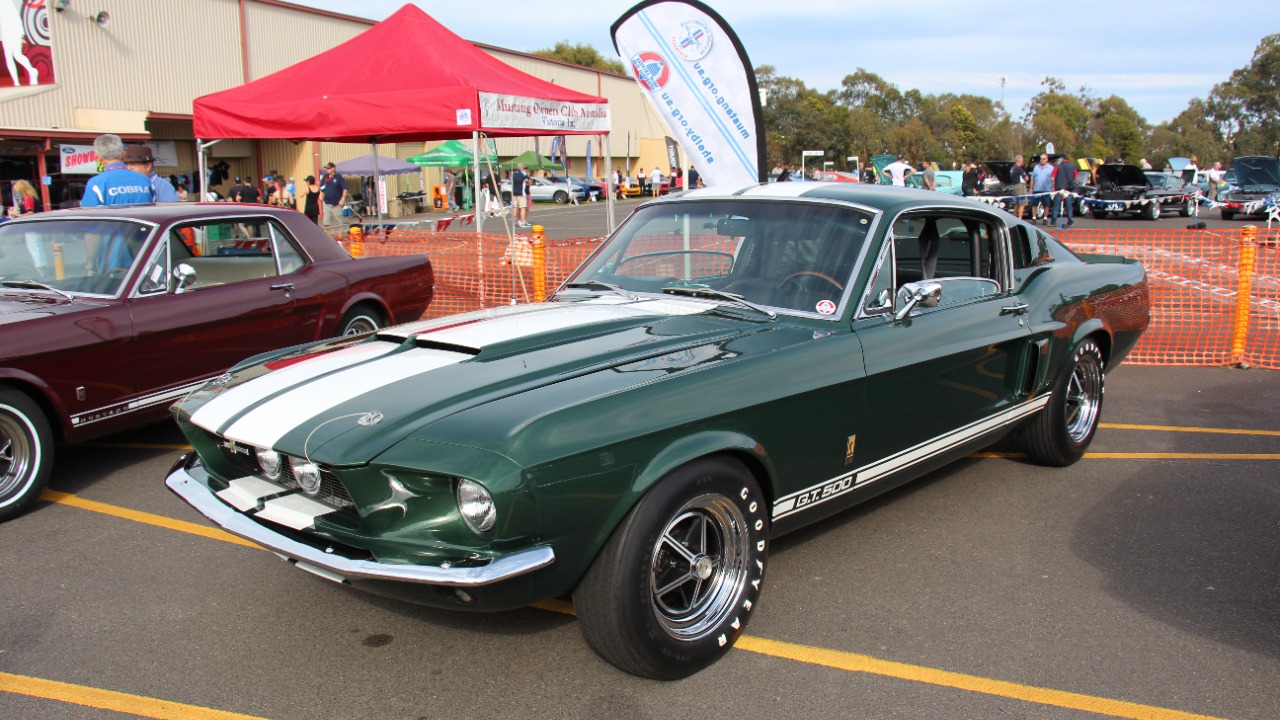
The 1967 Shelby GT500 arrived at a turning point for American performance, pairing a massive 7.0 liter V8 with race-bred hardware in a street-legal Mustang. That combination reset expectations for what a factory muscle car could be in power, presence, and price. Nearly six decades later, it still shapes how enthusiasts think about big block performance and collectible Fords.
More than a simple trim level, the GT500 marked a shift from nimble small block pony car to brutal long-distance stormer, a machine that could cruise, drag race, and intimidate in equal measure. Its impact can be traced through later Mustang generations, through Carroll Shelby’s own legacy, and through the modern collector market that now treats the best examples as blue chip assets.
From hot-rod Mustang to big-block statement
When Ford launched the Mustang in the mid-1960s, the car was built around small block V8s that emphasized affordability and style over outright speed. That changed quickly as Detroit’s horsepower race intensified and the Mustang line evolved from basic coupes to high-performance models documented across its multiple generations. By the 1967 model year, the platform had been redesigned to accept larger engines and heavier-duty components.
Carroll Shelby had already turned early Mustangs into track-capable GT350s using the 289 cubic inch V8, but the new body shell opened the door to something more extreme. The GT500 took advantage of the extra space and stronger structure to house Ford’s 428 cubic inch big block, a 7.0 liter unit that instantly moved the car into a different league. This was no longer just a tuned pony car; it was a full muscle machine built around torque and high-speed authority.
Installing such a large engine in a production Mustang reflected a broader shift inside Ford. The company wanted to counter rivals that were dropping ever larger V8s into midsize and compact bodies, and it saw Shelby’s cars as a halo that could prove the Mustang was not merely stylish transportation. The 1967 GT500 became the clearest expression of that strategy.
The 7.0 liter heart of the GT500
At the center of the GT500’s appeal was its 428 cubic inch V8, a 7.0 liter big block that used dual four-barrel carburetors and heavy-duty internals to deliver serious thrust. Factory ratings were conservative, as was common in the era, but the combination of displacement and breathing hardware gave the car effortless midrange punch and a top end that felt far beyond the brochure figures. Drivers discovered that the car could surge from low revs in tall gears, making highway passing and long-distance cruising feel almost casual.
Putting such a large engine in a car derived from the Mustang platform changed expectations for what a street machine could be. Instead of requiring high revs and constant shifting, the GT500 offered a more relaxed but even faster experience. The 7.0 liter V8 gave the car a character closer to a grand tourer, with a broad torque curve and a deep, rolling exhaust note that became part of its identity.
This engine choice also pushed the supporting hardware forward. The GT500 needed stronger driveline components, uprated suspension, and better braking to cope with the extra mass and speed potential. Those upgrades, combined with the engine itself, created a package that felt engineered rather than simply modified, and that factory-backed integration helped legitimize big block performance for a wider audience.
Carroll Shelby’s evolving philosophy
The GT500 also marked an evolution in Carroll Shelby’s own approach to performance cars. Earlier projects like the Cobra and the GT350 had focused on lightweight agility and track work, but by the late 1960s his portfolio included more powerful, more luxurious machines that could appeal to a broader customer base. The 1967 GT500 sat at the intersection of those priorities, combining race-derived know-how with comfort and style that made it usable every day.
Accounts of the cars that shaped Shelby’s career highlight how the GT500 shared space with icons like the Cobra and later Shelby Mustangs in defining his public image. The 1967 model, with its 7.0 liter engine, helped cement Shelby as a figure who could translate racing technology into road cars that ordinary buyers could actually own, a theme that appears repeatedly in assessments of the cars that defined. The GT500 was not the purest track weapon he ever touched, but it was one of the most influential in shaping the Shelby brand as a symbol of American muscle.
This shift in philosophy also mirrored changes in the market. Customers were asking for more comfort and style along with speed, and the GT500 delivered with features like power accessories, improved interiors, and distinctive exterior styling that set it apart from standard Mustangs. Shelby’s name on the fenders signaled performance, but the car’s execution showed that performance could coexist with daily usability.
Design cues that matched the power
The 1967 GT500 did not hide its capabilities. It wore an aggressive fiberglass nose, functional hood scoops, and unique rear treatment that visually stretched the Mustang’s proportions. Wider tires filled the arches, and side stripes with GT500 badging announced its status from a distance. Together, these elements created a look that matched the 7.0 liter engine’s authority.
Inside, the GT500 blended Mustang familiarity with Shelby-specific touches. Auxiliary gauges, special trim, and optional roll bar equipment hinted at the car’s competition roots, while the presence of rear seats and sound insulation kept it from feeling like a stripped racer. That dual personality, as both a comfortable cruiser and a serious performance machine, helped broaden its appeal and set a template for later high-performance Mustangs that would continue to mix luxury and speed.
The design also had a practical side. The hood scoops and air intakes were not purely decorative; they supported cooling and airflow for the big block engine. The car’s stance and wheel fitment were tuned to handle the additional weight over the front axle, and the body modifications helped improve stability at the higher speeds that the 7.0 liter V8 made possible.
How the GT500 changed the muscle car conversation
By combining a huge engine with a relatively compact body and a recognizable nameplate, the 1967 GT500 raised the bar for what buyers expected from muscle cars. It showed that a factory-backed model could offer race-inspired power and engineering without requiring owners to build their own combinations from parts catalogs. The car’s existence pushed rivals to respond with their own big block specials and helped normalize the idea that a street car could carry a 7.0 liter engine straight from the showroom.
The GT500 also shifted perceptions of the Mustang itself. What had started as a sporty, affordable coupe was now a platform for serious performance, and that association has followed the Mustang through each successive generation. Later high-output variants, from big block Mach 1s to modern supercharged models, owe part of their identity to the precedent set by the 1967 Shelby. The idea that a Mustang could be both a mass-market car and a halo performance machine traces back to this period.
For enthusiasts, the GT500 redefined value. Buyers who managed to secure one in period gained a car that could outpace many more expensive imports while still offering Ford dealer support and familiar mechanicals. That combination of performance, accessibility, and brand recognition helped the GT500 become a touchstone in muscle car history.
Rarity, auctions, and modern collector status
Today, the 1967 GT500 occupies a special place in the collector market. Original, well-documented examples command strong prices at auction, reflecting both their limited production and their historical significance. Collectors prize cars that retain factory specifications, particularly those with matching-number drivetrains and correct Shelby features, and the 7.0 liter engine remains a key part of that appeal.
One restored 1967 GT500, finished in a classic color combination and equipped with its big block V8, has been highlighted as a standout offering at a major sale, with attention focused on its condition, documentation, and driving character that still feels potent by modern standards. Coverage of that car emphasized how a properly sorted example can showcase the blend of torque, style, and usability that made the model famous, presenting it as a dream car for serious enthusiasts.
Values climb even higher for unique variants. The GT500 “Super Snake,” an experimental version built with even more extreme performance in mind, has been reported to sell for as much as 2,200,000 dollars, a figure that made it the most expensive Mustang ever sold at auction at the time of that sale. The car’s combination of one-off status, Shelby involvement, and extraordinary power output contributed to its record price, illustrating how far collectors are willing to go for the rarest expressions of the GT500 formula, as shown by the Super Snake auction.
These market results reinforce the idea that the 1967 GT500 is more than a nostalgic artifact. It is now treated as a key reference point in American performance history, and its values reflect both emotional appeal and recognition of its role in reshaping expectations for factory muscle cars.
Influence on later Mustangs and modern performance cars
The legacy of the 1967 GT500 can be traced through later Mustang performance models that continued to push the boundaries of power and technology. Subsequent generations introduced supercharged engines, advanced suspension systems, and electronic aids, yet many of these cars still drew inspiration from the original formula of combining a strong engine with assertive styling and everyday usability. The idea that a Mustang could serve as a flagship performance model for the brand, not just an entry-level sporty car, gained strength from the GT500’s success.
Modern high-output Mustangs, including later Shelby-branded models, often reference the 1960s cars in their marketing and design cues. Stripes, hood scoops, and Shelby badging are used to connect contemporary buyers with the heritage established by the 7.0 liter GT500. While technology has moved far beyond carburetors and leaf springs, the core promise of abundant power in a familiar, relatively attainable package remains consistent.
Beyond Ford, the GT500 helped validate the concept of factory-built street cars that approached race car performance. Other manufacturers followed similar paths, creating big engine specials that were sold in limited numbers and promoted as halo models. The modern trend of track-focused variants and heritage-inspired editions owes a debt to the groundwork laid by cars like the 1967 GT500.
What enthusiasts and buyers should watch now
For enthusiasts, the continuing relevance of the 1967 GT500 raises several questions about the future of performance and collecting. As emissions regulations tighten and electrification spreads, large displacement engines are becoming rarer in new cars. That shift may increase the historical importance and desirability of classic big block models, including the 7.0 liter GT500, as tangible reminders of a different engineering philosophy.
Buyers considering entry into the Shelby market need to pay close attention to authenticity and documentation. The values attached to original examples, and the premiums commanded by rare variants like the Super Snake, make accurate identification essential. Expert inspections, factory records, and detailed histories will only grow more important as these cars age and as more money flows into the segment.
More from Fast Lane Only
- Unboxing the WWII Jeep in a Crate
- 15 rare Chevys collectors are quietly buying
- 10 underrated V8s still worth hunting down
- Police notice this before you even roll window down
*Research for this article included AI assistance, with all final content reviewed by human editors.