For most enthusiasts, the word “Hemi” belongs to Chrysler, yet Chevrolet quietly touched hemispherical combustion chamber design long before and after the muscle car wars. From an early luxury V8 to obscure race projects and aftermarket experiments, there was a brief, fragmented era when Chevy power wore Hemi-style heads that almost no one remembers today. I want to trace those forgotten detours, and show how they reshaped what a Chevrolet V8 could be, even if they never became showroom legends.
Chevy’s first V8 and the forgotten hemispherical roots
Decades before big-block Chevys and small-block folklore, Chevrolet’s first production V8 already hinted at the combustion chamber experimentation that would later define Hemi mythology. The Chevrolet Series D used a liquid cooled V8 that period documentation describes as a 288-cubic-inch, 4.7 L, 90 degree engine, built as a premium powerplant rather than a mass market workhorse. It relied on a Zenith updraft two barrel carburetor and a breaker point ignition by Remy, with three babbitt main bearings and full pressure lubrication, a specification that placed it well above the brand’s four cylinder cars of the time in both complexity and ambition.
While the surviving technical descriptions of the Series D focus more on displacement and hardware than on chamber shape, they show that Chevrolet was already comfortable pushing into sophisticated V8 architecture long before the postwar horsepower race. The fact that The Series D engine combined a 288-cubic-inch layout with a Zenith double jet carburetor and a 90 degree bank angle underlines how early Chevrolet engineers were thinking about airflow, mixture quality, and smoothness in ways that would later become central to hemispherical head design. Even if the Series D was not a textbook Hemi, it set a precedent for Chevrolet treating combustion chamber geometry as a lever for performance, not just an afterthought.
The secret big block Hemi that almost raced
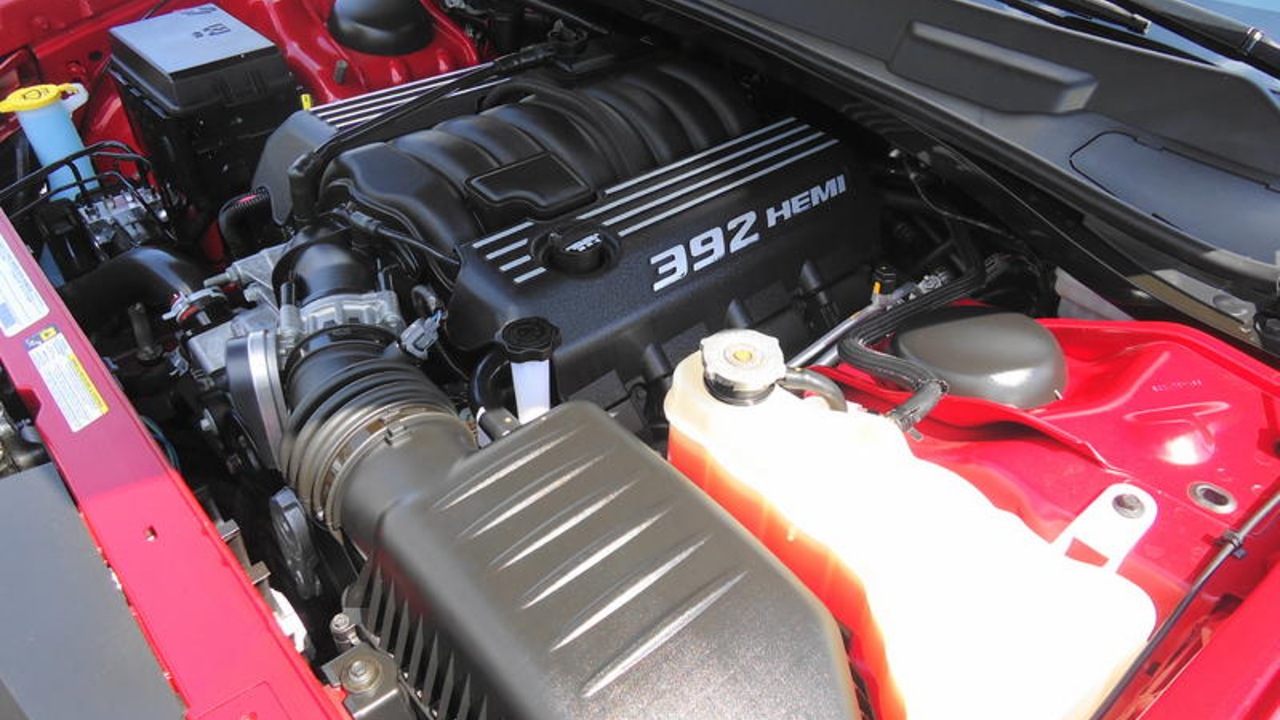
The clearest moment when Chevrolet itself crossed into true Hemi territory came in the late 1960s, when the company developed a secret hemispherical head version of its big block V8 for road racing. Internal research described a prototype Hemi variant of the large displacement Chevrolet engine, created for the era’s experimental road racing scene rather than for drag strips or dealer lots. The project was meant to answer Chrysler’s dominance with its own Hemi engines and to give Chevrolet a more efficient, high rpm cylinder head that could compete in endurance events where breathing and durability mattered more than brute torque.
From what I can verify, this Hemi big block never reached regular production and remained a prototype, which is why most enthusiasts still assume Chevrolet never built a Hemi V8 at all. Yet contemporary accounts confirm that Chevy did indeed build a Hemi V8, even if it stayed in the shadows and never wore factory badges on a showroom car. The development work, carried out quietly inside Chevrolet’s engineering ranks, shows that the company was willing to explore hemispherical combustion chambers when racing rules and competitive pressure made it worthwhile, even if corporate strategy later pulled back before the design could be commercialized.
Smokey Yunick, Riverside, and the Hemi head Camaro
If the factory prototype was Chevrolet’s official flirtation with Hemi architecture, Smokey Yunick’s work pushed the idea into the public eye in the most dramatic way. At Riverside International Raceway the racing world watched a Chevrolet Camaro driven by Lloyd Ruby shatter expectations, and the car’s secret weapon was a radical Hemi head engine package that did not look like any standard big block. Yunick was famous for stretching rulebooks, and his Hemi head Camaro turned a familiar pony car into a rolling test bed for combustion chamber experimentation that rivaled anything Chrysler had on track.
The Riverside International Raceway the crowd saw a Camaro that sounded and pulled differently from its rivals, and period coverage of Smokey Yunick’s 1968 Hemi head Camaro lists it among the strangest and most innovative Chevrolet powered race cars of its time. By combining Chevrolet bottom end hardware with hemispherical style heads, Yunick demonstrated that the airflow and combustion advantages of a Hemi layout could be grafted onto Chevy architecture with devastating effect. Even though sanctioning bodies and corporate politics limited how far this concept could spread, the Lloyd Ruby driven Chevrolet Camaro proved that a Hemi style Chevy was not just a theoretical exercise but a competitive weapon on a major American road course.
Aftermarket alchemy: Leo Lyons and the Arias Hemi-Chevy
Outside the factory, independent innovators took the idea of a Hemi Chevrolet much further, and their work explains why some of the rarest speed parts in hot rodding history wear Chevy bolt patterns. In San Bernardino, California, Leo Lyons ran a small operation that created the Leo Lyons Small Block Chevy Hemi, a conversion that replaced conventional small block heads with hemispherical chambers. Enthusiast accounts describe the Leo Lyons small block Chevy Hemi conversion as some of the rarest speed parts ever produced, so scarce that they have been compared to being as rare as hen’s teeth. Lyons’ work proved that even the compact small block could benefit from Hemi geometry when airflow and high rpm power were the goals.
On the big block side, Nick Arias Jr turned hemispherical heads into a cottage industry by designing Hemi style conversions for Chevrolet engines that were explicitly not Chrysler Hemi units. Reporting on these engines stresses that this hardware is not a Chrysler Hemi, it is an Arias, and that distinction matters because Arias hemispherical head conversions were engineered to bolt onto Chevrolet blocks while delivering the breathing characteristics of a Hemi. Technical coverage of the Arias Hemi-Chevy big block head notes that it produces its big power by flowing large amounts of air through a very efficient port and chamber design, a combination that lets it post impressive flow numbers above 0.600 inch lift. Modern parts listings for HEMI ARIAS BIG BLOCK CHEVY HEADS describe complete packages that pair Arias heads with a BIG BLOCK CHEVROLET foundation, a BLOWER SHOP 871 KIT, dual blower carburetors, and a DART BLOCK, underlining how deeply this hybrid concept has penetrated serious drag racing and blown street builds.
Why Chevy Hemis stayed obscure while Chrysler owned the name
Given this history, it is striking that the phrase “Chevy Hemi” still sounds like a contradiction to many enthusiasts, while Chrysler’s branding remains synonymous with hemispherical engines. Part of the answer lies in how Chrysler, and its various automotive brands, invested heavily in marketing the Hemi name, turning it into a core identity rather than a technical detail. Chevrolet, by contrast, treated hemispherical experiments as tools for specific problems, such as road racing prototypes or Smokey Yunick’s Riverside projects, rather than as a pillar of its public image. Even the rare factory Hemi V8 and the prototype Hemi variant of the big block were kept in the background, which meant there was never a mass produced, dealer advertised “Chevy Hemi” to anchor the concept in popular memory.
The aftermarket efforts by Leo Lyons and Nick Arias Jr, as well as the niche appeal of HEMI ARIAS BIG BLOCK CHEVY HEADS and similar parts, further pushed Chevy Hemis into specialist territory. These conversions demanded deep pockets, mechanical skill, and often a racing context to make sense, which kept them in the hands of a small circle of builders rather than everyday buyers. When enthusiasts today talk about the strangest Chevrolet engines, they are more likely to mention the 427 Mark IIS V8 sometimes called the Mystery Motor, a limited run big block that powered select race cars and has only a handful of surviving examples, than they are to recall the brief, scattered era of hemispherical Chevy heads. The result is a paradox: Chevrolet did indeed build and inspire Hemi style engines, from early V8 experimentation to secret prototypes and aftermarket hybrids, yet those efforts never coalesced into a single, iconic program, so they slipped into the margins of history while Chrysler’s Hemi became a household name.
More from Fast Lane Only: