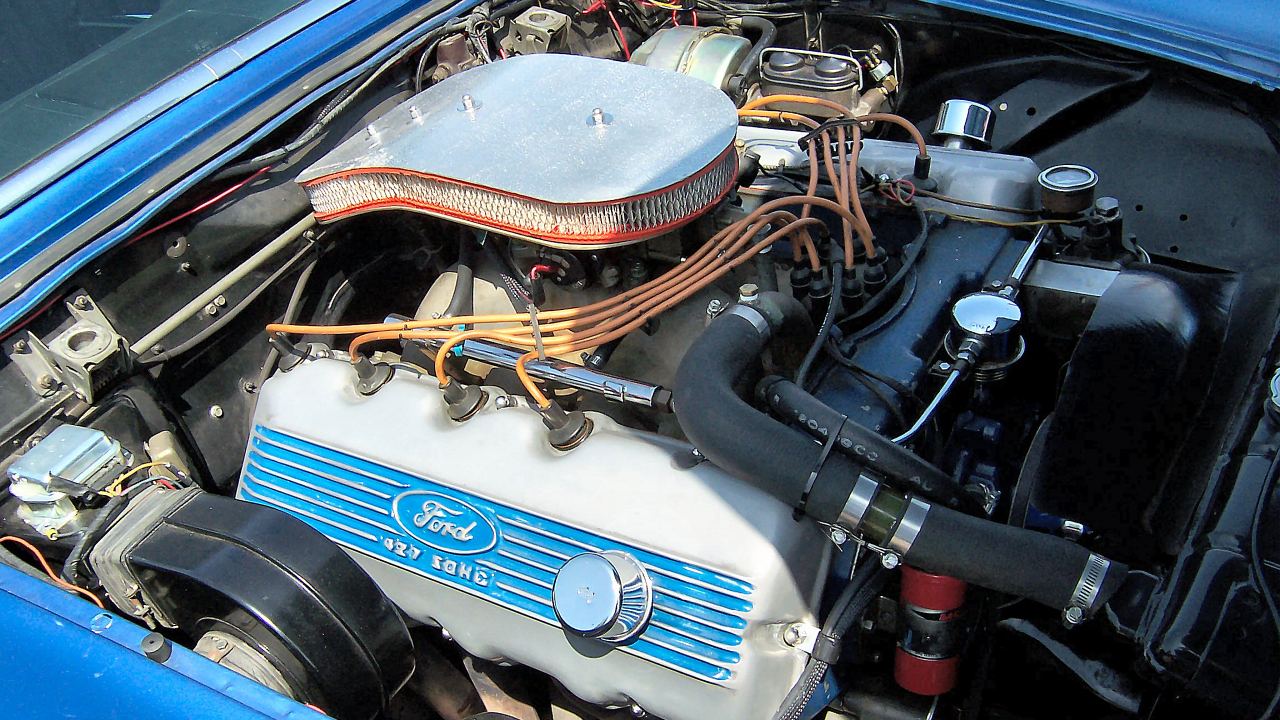
The Ford 427 SOHC arrived as a weapon, not a commuter engine, built to win races and unsettle rivals who thought they had big-block dominance locked up. It shared displacement with other FE V8s, but its single overhead cam architecture, sky high rev potential, and brief, controversial life in organized racing made it something very different from the usual Detroit iron. To understand why it was not just another big block, I need to trace how it was conceived, how it was built, and why it was effectively outlawed before it could fully prove its point.
Born as a racing fix, not a showroom motor
Ford Had One Thing In Mind For The 427: Racing. That guiding principle set the 427 SOHC apart from the start, because it was never meant as a mass market powerplant for family sedans or pickup trucks. The base 427 FE already existed as a competition focused engine, designed to rev high for prolonged periods and survive under sustained lateral G forces, but Chrysler’s emerging Hemi program threatened to erase that advantage. In response, Ford engineers created a radical top end package that turned the familiar FE block into a single overhead cam monster, a move that signaled this was a purpose built racing tool rather than a conventional big block option.
Ford’s Reaction to Chrysler’s Hemi development was rooted in fear of losing on the track, not in a desire to sell more street cars. Company leaders had been keeping a close eye on Chrysler and its Hemi, aware that the competition was about to gain a serious edge in NASCAR and drag racing. The 427 SOHC, often nicknamed the Cammer, was their counterpunch, a way to match hemispherical combustion efficiency and high rpm breathing without abandoning the proven FE bottom end. That strategic origin story, built around beating Chrysler’s Hemi rather than filling dealer order sheets, is the first clue that this engine occupied a different category from ordinary big block V8s.
A radical top end on a familiar foundation
At its core, the Cammer was Essentially a two valve, single overhead cam conversion of Ford’s 427ci FE V8, but that simple description understates how radical the top end really was. The foundation of the Cammer remained the 427 FE block, yet the new cylinder heads, valvetrain, and timing system transformed its character. Instead of the pushrod layout that defined most American big blocks, the 427 SOHC used chain driven overhead cams to actuate the valves directly, eliminating pushrods and allowing more precise control at high rpm. This architecture put it closer in spirit to European racing engines than to the typical Detroit V8 of its era.
The 427 SOHC Design Features It included hemi head pistons and a forged steel crankshaft, with machined cylinder heads that were engineered for serious airflow rather than low cost production. With the new heads, the pushrods are eliminated, and the camshafts are driven by a gear drive system and long timing chain designed to take up slack under load. Those choices were not about saving money or simplifying assembly, they were about keeping valve timing stable when the engine was spun far beyond the comfort zone of a standard FE. By pairing a familiar bottom end with exotic top end hardware, Ford created a hybrid that looked like a big block on paper but behaved like a purpose built race engine.
Power figures that pushed the limits
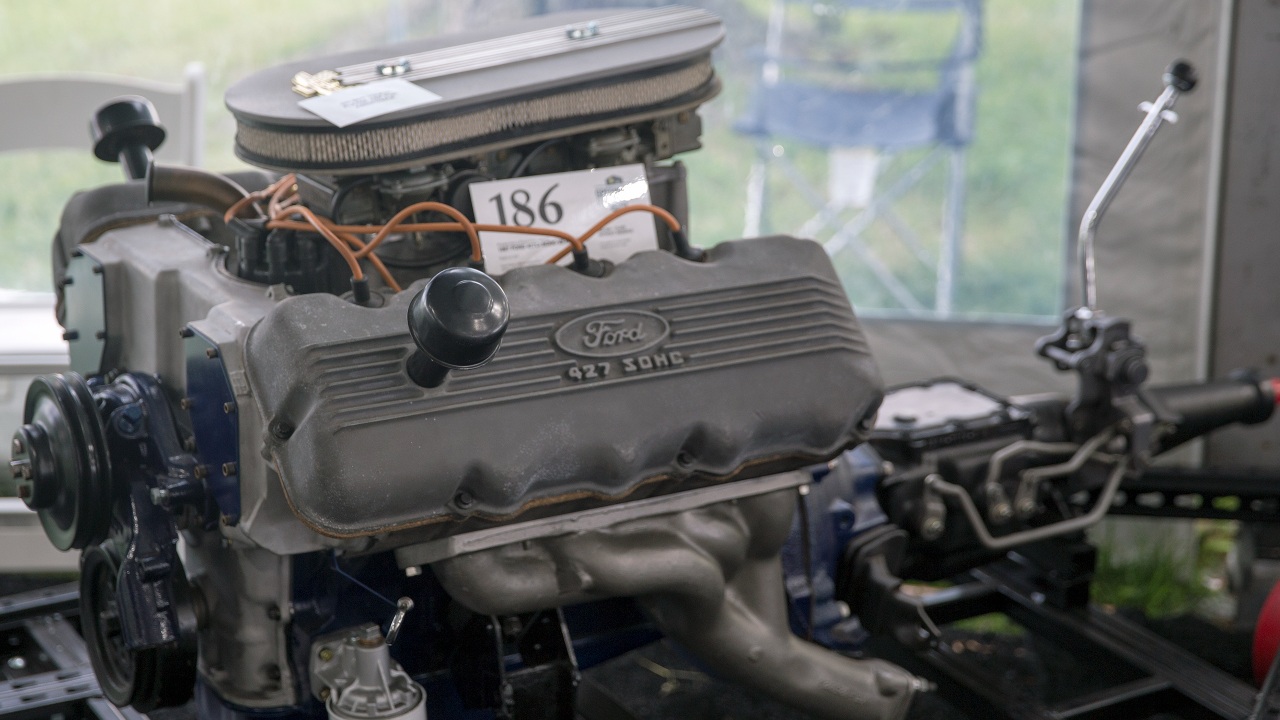
Contemporary Reports from that era showed that the 427 SOHC could produce well over 600 hp with two four barrel carbs, a figure that immediately separated it from most production big blocks of its time. One detailed account cites output rated at 657 horsepower at the top of its competition tune, a number that placed it among the most ferocious engines Detroit ever produced in quantity. Those figures were not marketing fantasies, they reflected what racers and engineers were seeing on dynos when the Cammer was allowed to breathe and rev as intended.
Clearly, the Ford 427 SOHC (Cammer) engine earned its legendary status based on that power and its reputation in competition trim. Enthusiast rankings that place it among the top engines of all time point to the combination of huge horsepower, high rpm capability, and durability when properly built. Compared with more conventional FE variants like the 428, which were tuned for broader street duty, the Cammer’s output and rev range made it feel like a different species. It was still a 427 on paper, but in practice it operated in a realm that ordinary big blocks rarely approached.
Outlawed before it could dominate
The 427 SOHC’s story is also defined by what it was not allowed to do. Ford developed the Cammer with NASCAR supremacy in mind, but sanctioning bodies quickly saw it as a step too far and moved to restrict or effectively ban it from top level stock car racing. The engine was outlawed before it hit the track in full factory backed form, which meant its greatest potential in oval racing was never realized. That regulatory backlash is a key reason the Cammer stands apart from other big blocks, which typically enjoyed long competitive lifespans before being phased out.
With the main racing stage closed off, the 427 SOHC found a home in drag racing and in a handful of wild street and exhibition cars, where its reputation as an outlaw engine only grew. Reports from that period describe it as one of the most potent engines ever produced by Detroit in quantity, even if those quantities were small. Its limited official use, combined with the sense that it had been unfairly sidelined to protect the status quo, helped cement its mythic status. Instead of becoming just another catalog option, it became the symbol of what happens when engineering ambition collides with rulebook politics.
Rarity, cost, and lasting mystique
The 427 SOHC V8 was produced in limited numbers due to its specialized nature and high production costs, which immediately set it apart from mainstream FE engines. Its complex valvetrain, unique heads, and racing focused hardware were expensive to build, and Ford only invested modest sums in the project while the real money went into other development programs. That combination of high cost and narrow purpose meant the Cammer never approached the production volumes of more conventional big blocks, and surviving examples are now rare artifacts rather than common swap candidates.
Its rarity is underscored by the way collectors talk about it today. Its ( Ford 42… V8 ) a sought after collector’s item, with the 427 SOHC often cited as one of the rarest V8 engines enthusiasts can chase. Modern overviews of FE history still single out the Cammer as a distinct branch of the family tree, not simply a higher output tune of the same basic design. When I look at that mix of racing only intent, radical engineering, outsized power, regulatory controversy, and extreme scarcity, it is clear why the Ford 427 SOHC was never just another big block V8. It was a short lived experiment in pushing American pushrod architecture to its limits by stepping beyond pushrods altogether, and its legend has only grown as the engines themselves have become harder to find.
More from Fast Lane Only: