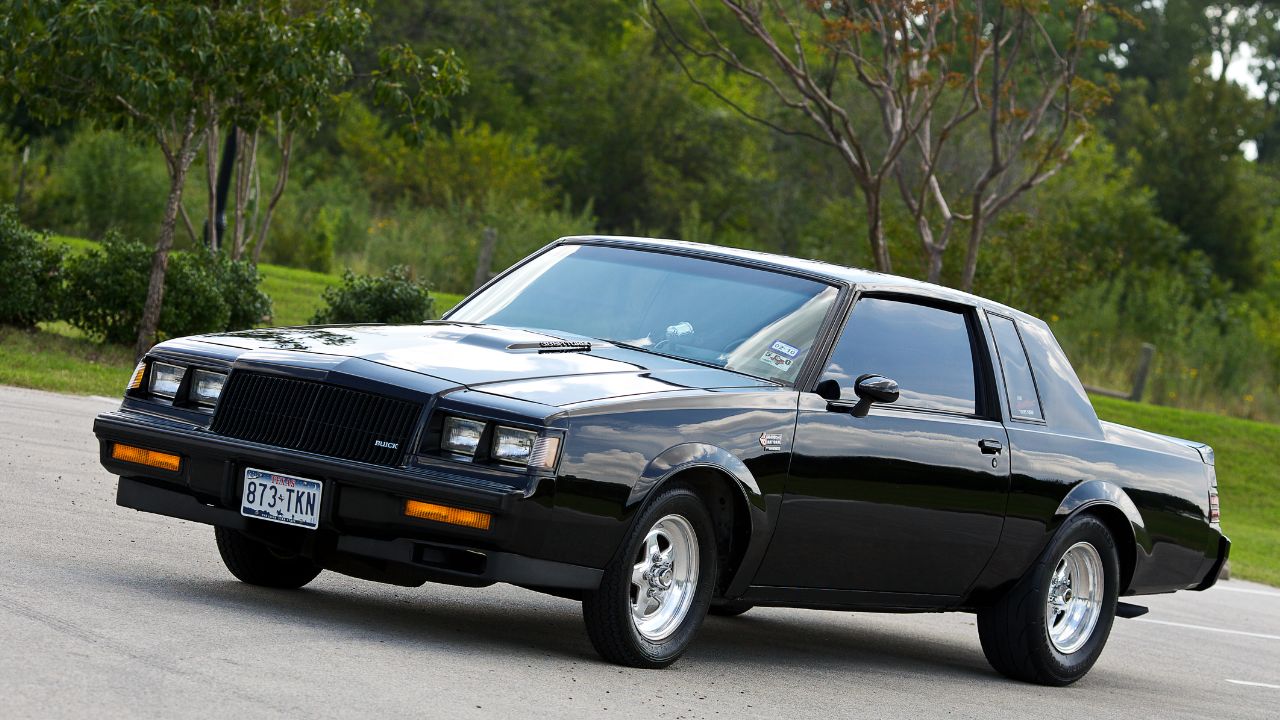
Some cars are born collectibles. Others stumble into it because the market eventually notices what owners already knew: the right mix of style, engineering, and timing can make a model stand out years after it leaves the showroom. One Buick that fits that “collectible almost by accident” story is the 1987 Buick GNX—an end-of-the-line, tuner-flavored sendoff that wasn’t originally positioned as a museum piece so much as a statement.
How the Grand National set the stage
To understand why the GNX became such a big deal, you’ve got to back up to the Grand National itself. Buick brought the Grand National back in the 1980s as a performance-oriented version of the Regal, leaning into turbocharging at a time when many V8s were being choked down by emissions and fuel-economy realities. The blacked-out look and the torque-heavy personality gave it a distinct identity inside GM, and it built a following that didn’t depend on flashy stripes or high-revving theatrics.
The key was that it felt different from the typical muscle-car formula. Turbo torque made it quick in real-world driving, and the Regal’s relatively conservative shape let it fly under the radar. That sleeper vibe is part of what later made the top-spec versions so desirable—people remembered being surprised by them.
A limited run meant as a finale, not a long-term investment
The GNX arrived for 1987, essentially as a final, more serious evolution tied to the end of the rear-wheel-drive Regal’s run. It was limited in production, and Buick worked with the specialty firm ASC/McLaren for aspects of the package. At the time, that kind of “factory-plus” collaboration wasn’t automatically treated like a blue-chip collectible recipe the way it is today; it was more like a clever way to create a halo car without building an all-new platform.
That context matters because the car’s collectibility isn’t just about rarity on paper. It’s also about the “last chance” nature of the moment: the industry was moving toward different packaging and priorities, and a turbocharged, rear-drive coupe with a menacing personality started to look like something that wouldn’t be repeated in the same way.
The performance story that kept growing
The GNX’s reputation rode on how it performed and how people talked about it afterward. The Grand National already had a strong street image, and the GNX sharpened it with a more focused setup and a more aggressive stance. In period, it was widely recognized as very quick for its era, especially in the kind of acceleration that owners actually used—rolling into boost and pulling hard from a stoplight.
Over time, the story got a second life because the broader enthusiast world began to appreciate turbocharged performance as its own tradition, not just an ’80s workaround. As tuning culture grew and forced induction became mainstream again, the GNX looked less like an oddball and more like a landmark.
Subtle design cues that aged well
Part of the GNX’s appeal is that it doesn’t rely on loud decoration to prove what it is. The sinister, mostly monochrome treatment and purposeful wheels gave it presence without needing a retro cartoon of muscle-car styling. It still reads as serious, and that’s helped it age gracefully compared with some era-specific graphics packages.
Enthusiasts also tend to love cars that communicate capability quietly. The GNX is a great example of that: it looks like a tough Regal to the uninitiated, but people who know what they’re seeing recognize the stance and details. That “insider car” quality often feeds collectibility because it creates a tight community around the model.
Why it became collectible “almost by accident”
The GNX didn’t need a decades-long motorsports pedigree or an exotic price tag to become a prized object. It gained collector gravity because it marked a turning point: a high-water moment for Buick performance in the modern era and a memorable finale for a particular rear-drive GM coupe formula. Buyers in 1987 might have simply wanted the baddest Buick you could get, not a car to seal in a bubble.
As the years passed, attrition did what it always does—hard-driven cars, modified examples, and normal wear thinned the population of clean, correctly preserved ones. Meanwhile, nostalgia for the 1980s and renewed respect for early turbo performance brought in new fans. Put those together with limited production and a strong, well-documented identity, and you get a model that ended up far more collectible than its original mission statement suggested.
What matters most to enthusiasts today
Among people shopping the GNX now, the conversation usually centers on originality, documentation, and sympathetic preservation. Because these cars were tempting platforms for modifications, survivors that remain close to stock spec tend to draw more interest. Provenance, correct parts, and a clear history can matter as much as cosmetic condition, especially for a model whose value is tied to what it represents.
At the same time, the GNX is still admired as a driver’s car in spirit, not just a static artifact. Its legacy comes from being a car that felt a little rebellious for a Buick and a little unexpected for its decade. That’s the kind of reputation that doesn’t have to be manufactured—and it’s why it became collectible without needing to try too hard.
More from Fast Lane Only
- Unboxing the WWII Jeep in a Crate
- 15 rare Chevys collectors are quietly buying
- 10 underrated V8s still worth hunting down
- Police notice this before you even roll window down
*Research for this article included AI assistance, with all final content reviewed by human editors.