The 2016 Dodge Viper ACR is the rare modern supercar that feels purpose built to dominate lap times rather than valet lines. It is a street legal weapon that treats curbing, braking zones, and high speed sweepers like a daily breakfast buffet, turning racetracks into its natural habitat instead of a weekend diversion.
With a massive naturally aspirated V10, a towering aero package, and hardware tuned with single minded focus, the Dodge Viper ACR has earned a reputation as one of the most ferocious track cars ever sold from a showroom. Its legend is not nostalgia or internet hype, it is written in lap records, engineering detail, and the way drivers talk about it after climbing out of the cockpit.
The track beast that rewrote the record book
At the core of the Viper’s modern mythology is the 2016 Dodge Viper ACR, a car that pushed the already wild Viper formula into full circuit assault mode. The car’s combination of huge mechanical grip, aggressive aerodynamics, and a naturally aspirated engine turned it into what one detailed video review simply calls a legendary track beast, a description that fits the way the 2016 Dodge Viper ACR hammers around a circuit with relentless pace and stability, as seen in Jan. The ACR badge had appeared on earlier Vipers, but this final evolution sharpened every edge, from downforce to braking, until the car felt less like a road car and more like a GT racer that happened to wear plates.
That focus translated directly into hard numbers. The SCCA did not just acknowledge the car’s speed, it certified that the new 2016 Dodge Viper ACR holds more track records than any other production car, a claim backed by a factory campaign that chased lap times across circuits and came away with a staggering haul of official benchmarks, as detailed in the statement from The SCCA. In a separate account of that record tour, the team describes how they went from track to track, beating the lap record for all production cars, then moving on to the next venue and repeating the process until the tally reached 13 different circuits, a run captured in Nov. Those numbers are why the ACR is not just fast in isolation, it is a benchmark that other track specials are still measured against.
Aero, grip, and the brutal logic of the ACR package
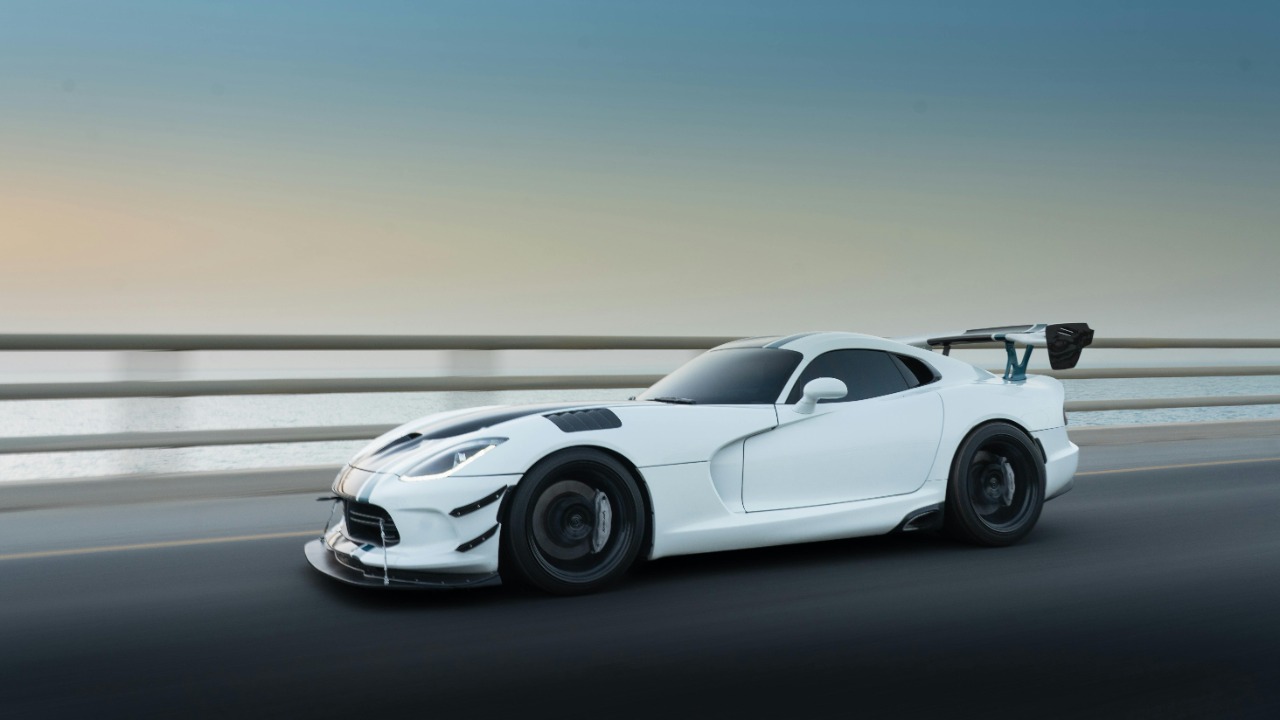
The Viper ACR’s lap time obsession is written across its bodywork. The big headline story on the ACR is the extraordinary aero kit, which transforms the car’s silhouette with a towering rear wing, deep front splitter, and aggressive dive planes that generate serious downforce at speed. Select the Extreme Package option, which you must if you are serious about chasing lap times, and the rear wing is just the final flourish on a package that turns the car into a high speed vacuum cleaner for apexes, as described in a detailed first drive of the ACR. This is not styling for its own sake, it is functional hardware that lets the car brake later, carry more speed through corners, and stay planted when lesser machines start to squirm.
Underneath that aero, the chassis and braking systems are tuned to exploit every extra pound of grip. The brakes work in conjunction with ABS and ESC specifically tuned for ACR to take into account the extra grip provided by the additional aero and the specifically designed Kumho tires, a combination that lets the driver lean hard on the pedal without triggering early intervention or instability, as laid out in a technical overview of the car’s ABS. The result is a car that feels brutally logical in its engineering: every vent, every wing element, every calibration choice exists to shave tenths off a lap, not to soften the experience.
From airport runways to road trips: living with Viper violence
The Viper story has always been about raw speed, and the ACR inherits that straight line ferocity even as it pivots toward cornering performance. Long before the ACR’s record spree, a popular car magazine raced a Dodge Viper SRT-10 on an airport runway to see how fast it could go using a measured acceleration run, a scenario preserved in a physics problem that walks through the numbers for the Dodge Viper SRT. That earlier Viper was already a blunt instrument of speed, and the ACR builds on that heritage by pairing similar straight line muscle with far more sophisticated grip and braking, turning runway drama into repeatable lap time consistency.
Yet for all its track focus, the ACR is not confined to trailers and pit lanes. One owner recounts how, in 2015, they embarked on one of the craziest road trips imaginable, when Darla and they took a 2016 Dodge SRT Viper ACR and covered serious distance on public roads, describing how the car’s personality shifts from brutal to almost playful once you settle into a rhythm, as told in a long form story about how Darla and the car tackled that journey. I read accounts like that as proof that the ACR, while uncompromising, can be lived with by drivers who accept its noise, heat, and heavy controls as part of the bargain for having a road legal track car in their garage.
Collector status and the culture around a modern icon
Scarcity has only intensified the ACR’s appeal. Enthusiasts point out that only about a thousand units of the ACR model were made and even fewer of the Extreme variants, a production reality that has already pushed the car into collector territory, as one passionate owner notes while calling the car a collector’s item and promising it will be their new baby in a short video focused on the Only ACR. That kind of language is not marketing copy, it is the way real buyers talk when they know they are acquiring something that will not be easily replaced, either emotionally or financially.
The culture around the car reflects that mix of reverence and fear. Social media clips show owners lining up the ACR on empty straights, walking around its massive rear wing, and joking about how it is ready to devour any circuit they point it at. One post, tagged with #dodgeviperacr and #trackmonster, captures the mood perfectly with the caption Ready to eat up any track and notes that the clip drew 317 likes and 13 comments, a small but telling snapshot of how the car still commands attention in enthusiast circles, as seen in the post that begins with Aug. I see that ongoing fascination as part of why values remain strong and why track days still light up whenever an ACR rolls into the paddock.
Why the Viper ACR still matters in a turbocharged, hybrid era
In an era when lap time headlines are often driven by complex hybrid systems and turbocharged torque curves, the Dodge Viper ACR stands out for its almost old school approach to speed. The car relies on displacement, aero, and mechanical grip rather than electric boost or trick torque vectoring, yet it still managed to earn a reputation as a legendary track beast that pushes the limits of performance on a racing circuit, as highlighted in a deep dive that frames the 2016 Dodge Viper ACR as a testament to engineering precision in Dodge Viper ACR. That contrast makes the ACR feel like a bridge between analog brutality and modern chassis science, a car that proves you do not need batteries to be devastatingly quick if you are willing to commit fully to aero and tire technology.
The car’s influence also shows up in how other manufacturers talk about their own track specials. When brands tout their latest limited run circuit weapons, they often reference lap records, aero packages, and track focused ABS and ESC tuning in language that echoes the way the ACR’s systems were described, including the way its brakes work in conjunction with ABS and ESC specifically tuned for ACR to handle the extra grip from its aero and Kumho tires, as detailed in the breakdown of its ESC. I see the Viper ACR’s legacy not just in its own lap records, but in the way it set expectations for what a factory built track car should deliver: uncompromising hardware, verified performance, and a driving experience that feels like it really does eat tracks for breakfast.