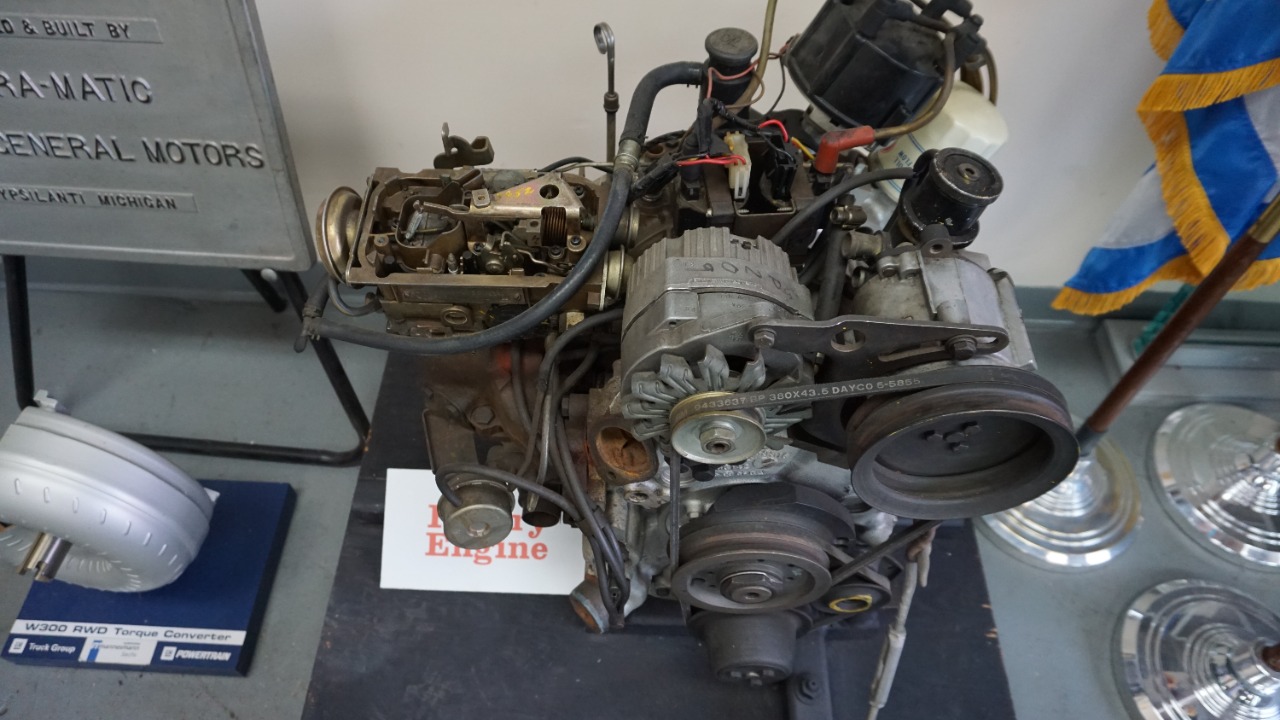
In the annals of automotive history, Detroit has long stood as a beacon of innovation and progress. Yet, within its storied past lies a forgotten engine program that, had it succeeded, could have reshaped the industry and the city itself in profound ways. The tale of this program is one not just of technological advancement, but of dreams, ambitions, and the socio-economic landscape of an American city that has seen its share of triumphs and tribulations.
ENGINEERING INNOVATIONS THAT SHAPED DETROIT
Detroit is synonymous with the rise of the automobile industry. In the early 20th century, it became the epicenter of automotive engineering, with pioneers like Henry Ford revolutionizing mass production techniques—most notably through the introduction of the assembly line. This innovation not only advanced manufacturing efficiency but also made cars accessible to the general public, fundamentally altering transportation in America.
Throughout the decades, Detroit manufacturers have introduced key innovations that have become industry standards. From the introduction of the V8 engine in the 1930s to advancements in safety features like seat belts and crumple zones, the competitive landscape of Detroit has pushed automakers to constantly innovate. The rivalry between companies such as General Motors, Ford, and Chrysler often led to breakthroughs that shaped not only the vehicles we drive but also the regulatory frameworks that govern automotive safety and performance.
THE FORGOTTEN ENGINE PROGRAM: A BRIEF HISTORY
The forgotten engine program, initiated in the late 1970s, aimed to create a new generation of engines that would significantly improve fuel efficiency and reduce emissions. With the oil crisis of the 1970s prompting a shift in consumer demand towards more economical vehicles, this initiative was seen as a crucial step for Detroit to stay relevant in a rapidly changing market. Key stakeholders included major automakers, government agencies, and academic institutions, all collaborating to push the boundaries of engine technology.
Despite initial enthusiasm, the program faced numerous challenges from the outset. Development began with high hopes in 1978, but by the mid-1980s, a combination of corporate restructuring, shifting market priorities, and the onset of economic downturns led to a gradual decline in support. By 1986, the program had effectively been abandoned, leaving behind a legacy of unrealized potential and innovation.
TECHNOLOGICAL ADVANCEMENTS PROMISED BY THE PROGRAM
The engine program proposed several cutting-edge technologies, including variable valve timing, turbocharging, and advanced fuel injection systems. These innovations promised to enhance fuel efficiency by as much as 30% compared to existing technologies, which primarily relied on older carburetor systems. The potential impact on emissions was equally significant, as the new engines were designed to produce far fewer pollutants, aligning with the growing environmental concerns of the time.
When compared to the standard engines of the era, which often struggled with fuel consumption and emissions control, the innovations promised by the engine program could have set a new benchmark. For instance, while many popular models like the Ford Mustang and Chevrolet Camaro were still utilizing traditional V8 configurations, the proposed advancements could have placed Detroit back at the forefront of engine technology, paving the way for a new class of high-performance yet environmentally friendly vehicles.
CULTURAL AND ECONOMIC IMPACT OF THE PROGRAM’S FAILURE
The socio-economic landscape of Detroit during the 1980s was tumultuous. As the automotive industry faced global competition and economic challenges, the cancellation of the engine program had far-reaching implications. Thousands of jobs were lost as companies scaled back operations, and the ripple effects were felt throughout the local economy. The dream of a greener, more efficient automotive future seemed to slip away, leaving a void in innovation and opportunity.
Moreover, the failure of the program affected not just the automakers but also local suppliers, research institutions, and communities reliant on the automotive sector. The loss of potential advancements in engine technology stifled the momentum of innovation in Detroit, allowing other regions, particularly California, to emerge as leaders in automotive technology. This shift contributed to a longer-term decline in Detroit’s status as the automotive capital of the world, a title it had proudly held for decades.
LESSONS LEARNED AND FUTURE IMPLICATIONS
The legacy of the forgotten engine program offers vital lessons for today’s automotive industry. It highlights the importance of sustained investment in research and development, especially in an era where technological advancements are crucial for survival. As we witness the rise of electric vehicles and alternative fuel technologies, it’s clear that the willingness to embrace innovation can dictate the future success of an industry.
Today, as Detroit begins to experience a renaissance with the emergence of electric vehicles and autonomous driving technologies, it’s essential to remember the lessons of the past. The automotive sector is once again at a crossroads, facing challenges that demand creativity and collaboration. Initiatives similar to the forgotten engine program must be nurtured, allowing for the exploration of new technologies that could redefine our relationship with transportation. The potential for success hinges not only on the innovations themselves but also on the commitment to seeing them through to fruition.
As I reflect on the history of Detroit and its automotive industry, it becomes evident that the future can be bright if we learn from our past. The resurgence of companies like Ford and General Motors, along with the influx of startups focused on electric and hybrid technologies, signals a renewed spirit of innovation. The forgotten engine program may be a relic of a different time, but its lessons remain relevant as we navigate the future of the automotive landscape.
More from Fast Lane Only
- Unboxing the WWII Jeep in a Crate
- 15 rare Chevys collectors are quietly buying
- 10 underrated V8s still worth hunting down
- Police notice this before you even roll window down
*Research for this article included AI assistance, with all final content reviewed by human editors.