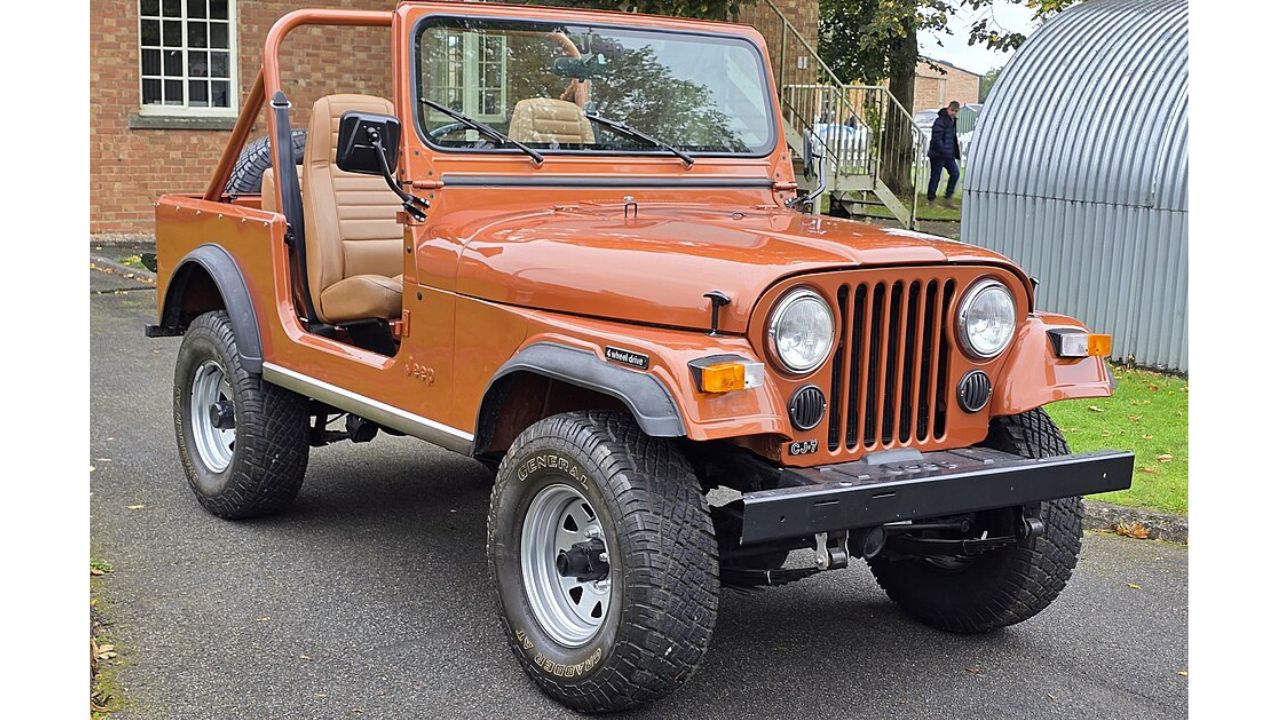
When the Jeep CJ-7 debuted for the 1976 model year, it was introduced as an evolution of the long-running Civilian Jeep rather than a revolutionary new vehicle. Yet over the following decade, it became far more than a capable off-roader. Through its versatility, growing aftermarket, and appearances in popular culture, the CJ-7 evolved into a symbol of freedom and adventure that extended well beyond the trails.
Jeep Built It for Broader Appeal
The CJ-7 arrived at a time when recreational four-wheel driving was becoming increasingly popular. While it retained the rugged body-on-frame construction and solid axles that Jeep enthusiasts expected, it also introduced a longer wheelbase than the CJ-5, creating more interior space and improving ride comfort.
The additional length made the CJ-7 more practical for everyday use without sacrificing its off-road capability. Buyers could equip it with removable hard or soft tops, manual or automatic transmissions, and a variety of engines to suit different driving needs.
This flexibility attracted a much wider audience than earlier Civilian Jeeps. The CJ-7 appealed not only to farmers and outdoor workers but also to families, commuters, and weekend adventurers looking for a vehicle that could handle both highways and backcountry trails.
Its broader appeal laid the foundation for its cultural success.
Personalization Turned Every CJ-7 Into Something Unique
One of the biggest reasons the CJ-7 became so popular was the freedom it gave owners to customize their vehicles. Few automobiles of the era offered as many aftermarket accessories or modification options.
Lift kits, larger tires, winches, roll bars, auxiliary lighting, upgraded bumpers, and custom interiors allowed owners to tailor their Jeeps for rock crawling, camping, hunting, beach driving, or simply creating a distinctive look. Even relatively stock examples often reflected the personalities of their owners through unique paint colors and accessories.
This growing customization culture helped build a passionate community. Jeep clubs, trail rides, and off-road events became gathering places where owners shared ideas, explored new terrain, and celebrated the vehicle’s capabilities.
The CJ-7 became more than transportation—it became a hobby and a lifestyle.
Popular Culture Expanded Its Reputation
The CJ-7’s rugged appearance and open-air driving experience made it a natural choice for movies, television shows, advertisements, and outdoor magazines throughout the late 1970s and 1980s. Whether climbing mountain trails or cruising coastal roads, the Jeep consistently represented adventure, independence, and exploration.
Unlike many vehicles that became famous through a single film or television series, the CJ-7 appeared across countless forms of media, reinforcing its image as the ultimate recreational four-wheel-drive vehicle. Its unmistakable silhouette made it instantly recognizable to audiences around the world.
At the same time, Jeep’s marketing emphasized experiences rather than specifications. Advertisements focused on escaping the ordinary and reaching places inaccessible to conventional automobiles, strengthening the emotional connection many buyers felt toward the brand.
This combination of media exposure and lifestyle marketing transformed the CJ-7 into an icon.
Its Influence Continues Today
Production of the CJ-7 ended in 1986, but its impact continues through modern Jeep models and the thriving off-road community. The Wrangler, introduced as its successor, retained many of the features that made the CJ-7 successful, including removable doors, open-air driving, rugged four-wheel-drive capability, and exceptional aftermarket support.
Original CJ-7s remain highly sought after by collectors and enthusiasts who appreciate their mechanical simplicity and timeless design. Restored examples appear regularly at classic car shows, while modified versions continue tackling trails across North America and beyond.
Perhaps most importantly, the CJ-7 helped redefine what an off-road vehicle could represent. It was no longer viewed solely as a work machine but as a vehicle that encouraged adventure, personal expression, and outdoor exploration.
Looking back, the Jeep CJ-7 became a cultural phenomenon because it arrived at the perfect moment, blending proven off-road capability with everyday usability and nearly endless customization possibilities. What began as an updated utility vehicle ultimately became one of the most influential recreational vehicles ever built, inspiring generations of enthusiasts to embrace life beyond the pavement.
More from Fast Lane Only
- Unboxing the WWII Jeep in a Crate
- 15 rare Chevys collectors are quietly buying
- 10 underrated V8s still worth hunting down
- Police notice this before you even roll window down
*Research for this article included AI assistance, with all final content reviewed by human editors