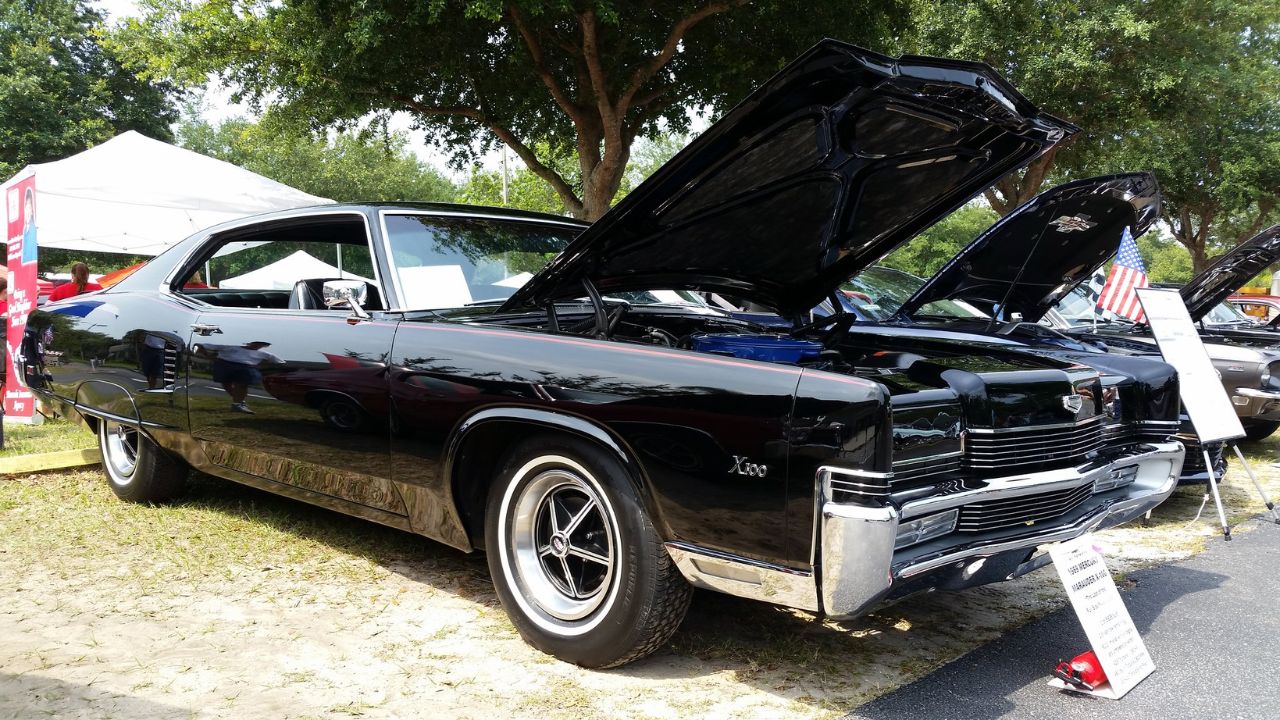
The Mercury Marauder X-100 occupies a narrow but fascinating slice of American muscle history, built for buyers who wanted big-block power wrapped in full-size luxury. Understanding exactly which years this model was produced, and how its values are moving today, helps clarify why it remains a niche choice even as other late‑1960s performance cars surge in price. I want to trace that short production run, then look at how auction data and price guides frame the X-100’s current market and where it might be headed.
How the Marauder name evolved into the X-100
The Marauder badge started as a performance signal inside the Mercury lineup, tied to some of the most powerful engines the brand offered. Deriving its name from the strongest powerplants available to Mercury, the Marauder label was used to mark the highest performance versions in the range, a positioning that set the stage for a later, more focused grand touring coupe. By the late 1960s, that heritage of big power and highway speed created the backdrop for a flagship that would combine muscle car output with full-size comfort.
When Mercury revived the concept for its second generation, the Mercury Marauder moved into a 2dr Hardtop Coupe format that leaned into personal luxury as much as straight-line performance. Period coverage of the Mercury Marauder, including second‑generation overviews, shows the car marketed as a top-tier offering within the brand, sitting above more common sedans and intermediates. That context matters, because the X-100 package did not appear out of nowhere; it was the logical extension of a name already associated with the most serious engines Mercury was willing to put on the street.
The narrow production window: 1969 and 1970
The Marauder X-100 itself arrived as a short-lived experiment in luxury muscle, confined to the 1969 and 1970 model years. Reporting on the 1969–1970 Mercury Marauder X100 describes it as a full-size performance coupe from Dearborn that never quite broke through in the showroom, despite its aggressive styling and big-block power. That two‑year window is critical for collectors, because it sharply limits supply and makes it easier to track how many of these cars survive compared with longer-running nameplates.
Contemporary analysis of the Mercury Marauder second generation, covering 1969 to 1970, reinforces that the X-100 package sat within this brief production span rather than stretching across the decade. Enthusiast histories of the 1969–1970 Mercury Marauder X100, including pieces dated Aug 25, 2019 and August 26, 2019, underline how quickly the model came and went, often describing it as a Forgotten Luxury Muscle Machine from Dearborn. That framing is not just colorful language; it reflects the reality that the X-100 was overshadowed almost immediately by smaller, lighter muscle cars and pony cars that were easier to sell and race, leaving this big coupe as a niche choice even when new.
Original pricing and positioning in the late 1960s
From the start, the Marauder X-100 was priced to signal exclusivity rather than volume. Period pricing shows that with a base price of $4091, the X-100 listed for $700 more than the base Marauder, a gap that underscored its role as the premium performance trim. Options could push that figure higher, and commentary on the model notes that Options made it more expensive, but that was the point: Mercury aimed the car at buyers who wanted a full-size statement piece, not a budget drag-strip special.
Later retrospectives on the Marauder X-100’s market reception describe how that strategy limited its success. One analysis notes that it was Not quite the marketing success that Mercury hoped for, even though a Fully optioned example could carry a sticker price that reflected its upscale ambitions. Another report on the same car characterizes it as a luxurious land yacht with V8 muscle, emphasizing that the blend of comfort and performance did not translate into strong sales. When a model is both more expensive than its base counterpart and out of step with shifting buyer tastes, it tends to sell in modest numbers, which is exactly what happened here.
Key specs and how they shape collectability
Under the skin, the Marauder X-100 delivered the kind of numbers that still catch collectors’ attention. A representative 1969 Mercury Marauder X-100 2dr Hardtop Coupe is documented with an 8‑cyl. 429cid/360hp 4bbl engine, a specification that placed it firmly in big-block territory. That combination of a 429 cubic inch V8 and 360 horsepower, wrapped in a full-size Hardtop Coupe body, is central to why the car is now discussed in the same breath as other late‑1960s performance machines, even if it never matched their sales.
Enthusiast coverage of the 1969 Mercury Marauder X-100 highlights how, despite that power, the model struggled to escape the shadow of more popular intermediates and pony cars. One detailed feature published on Mar 26, 2024 notes that big-block intermediates and pony cars were pushed out dealer doors as quickly as they came in, But the X-100 remained in the more popular intermediate’s shadow. Another retrospective from Sep 26, 2023 describes the Marauder X-100 as a luxurious land yacht with V8 muscle, reinforcing the idea that its size and comfort, while appealing to some, kept it from being seen as a pure muscle car. For collectors today, that mix of strong specs and limited mainstream recognition can translate into relatively accessible prices compared with better-known nameplates.
Current value benchmarks and recent price trends
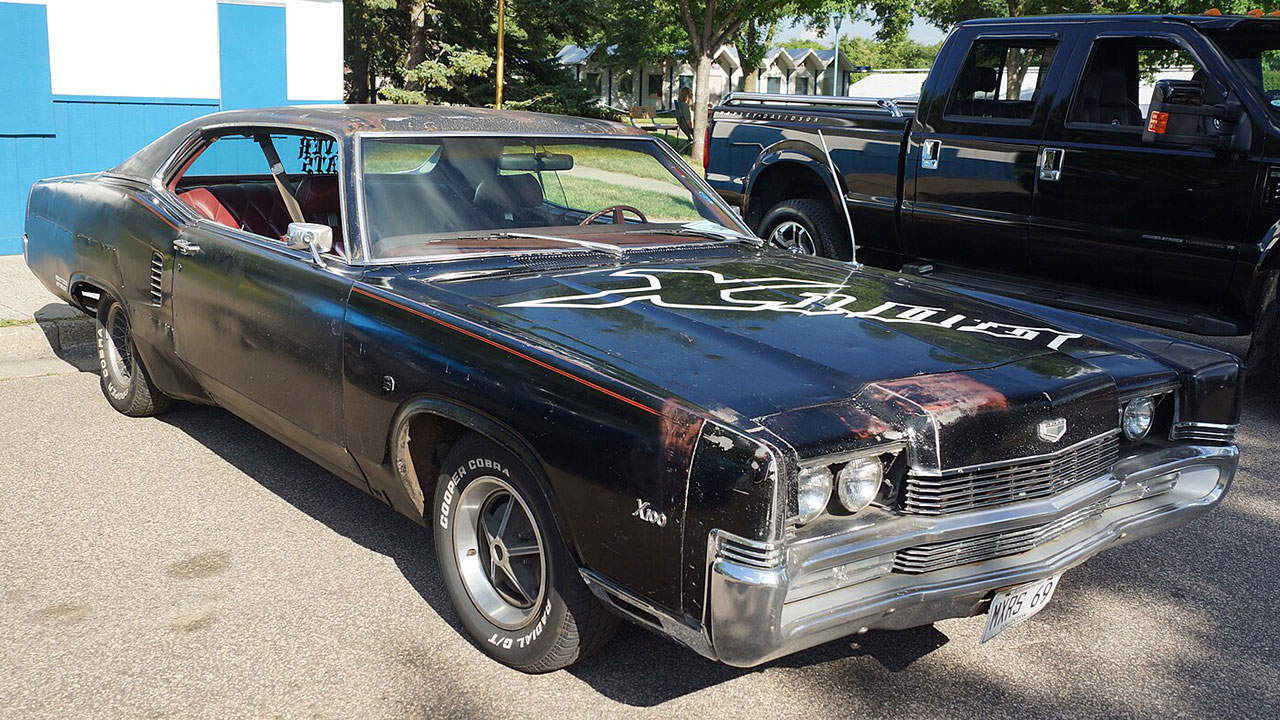
To understand where the Marauder X-100 sits in today’s market, I look first at structured price guides that track actual transactions. One widely used valuation tool lists a 1969 Mercury Marauder X-100 2dr Hardtop Coupe with the 8‑cyl. 429cid/360hp 4bbl at $15,800, with a noted change of +9.7%. That same guide, which prompts users to Calculate the price and includes interface text such as Please select all, treats $15,800 and 9.7% as key reference points for recent movement. The repetition of the figure 100 in that context underscores that the valuation is tied specifically to the X-100 package rather than the broader Marauder line.
Additional detail from the same valuation source indicates that the average sale price for the X-100 over the last three years was $12,650, which helps explain the current $15,800 benchmark and the recorded +9.7% shift. In other words, the model has seen measurable appreciation from its recent average, but it still trades well below the six‑figure territory occupied by some contemporaneous muscle cars. Broader market tracking for the Mercury Marauder second generation, covering 1969 to 1970, also points to a relatively modest top sale price compared with more famous performance coupes, reinforcing the idea that the X-100 remains undervalued relative to its specifications and rarity.
Why values remain modest and where they may go next
Even with a recent uptick, the Marauder X-100’s values remain surprisingly approachable for a big-block late‑1960s performance car. One recent feature on the model notes that a Marauder X-100 is currently worth around 13k, a figure that aligns with the three‑year average of $12,650 and sits just below the $15,800 guide value. That spread between individual examples and guidebook benchmarks is typical for a niche model, especially one where condition, originality, and options can vary widely. It also suggests that buyers who are willing to look beyond headline muscle names can still find substantial V8 power and period style without paying top-tier prices.
Looking at the broader context, the Mercury Marauder X-100’s limited production window from 1969 to 1970, its positioning as a premium 2dr Hardtop Coupe, and its 429cid/360hp 4bbl engine all argue for long‑term collectability. Yet the same factors that hurt it in period, including its size and luxury focus, continue to cap demand compared with smaller, more iconic muscle cars. Enthusiast commentary that labels it a Forgotten Luxury Muscle Machine and a luxurious land yacht with V8 muscle captures that tension: the car is distinctive and capable, but still off most mainstream collectors’ radar. If current trends like the +9.7% guide increase continue and more buyers discover the model’s blend of comfort and power, I expect values to keep climbing gradually rather than spiking, rewarding patient owners who appreciate a slightly left‑field slice of Mercury history.