For a brief window in the late 2000s and early 2010s, American luxury sedans stopped being soft, slow status symbols and started running with the quickest cars on the road. Big, leather-lined four-doors from Detroit suddenly posted acceleration times that would have embarrassed supercars from a decade earlier, while still offering quiet cabins and massaging seats. That short period did not just change spec sheets, it reset expectations for what a premium American badge could mean.
The moment has already passed in its purest form, but its influence lingers in how brands talk about performance, how buyers think about comfort versus speed, and how regulators weigh power against efficiency.
From soft cruisers to quarter-mile bruisers
Through most of the 1990s, American luxury cars followed a familiar formula: front-wheel drive, cushy suspensions, and engines tuned for quiet torque rather than outright pace. Cadillac DeVille, Lincoln Town Car, and Chrysler LHS prioritized isolation over involvement. German rivals defined the sport-luxury template, while Japan proved that refinement could coexist with reliability.
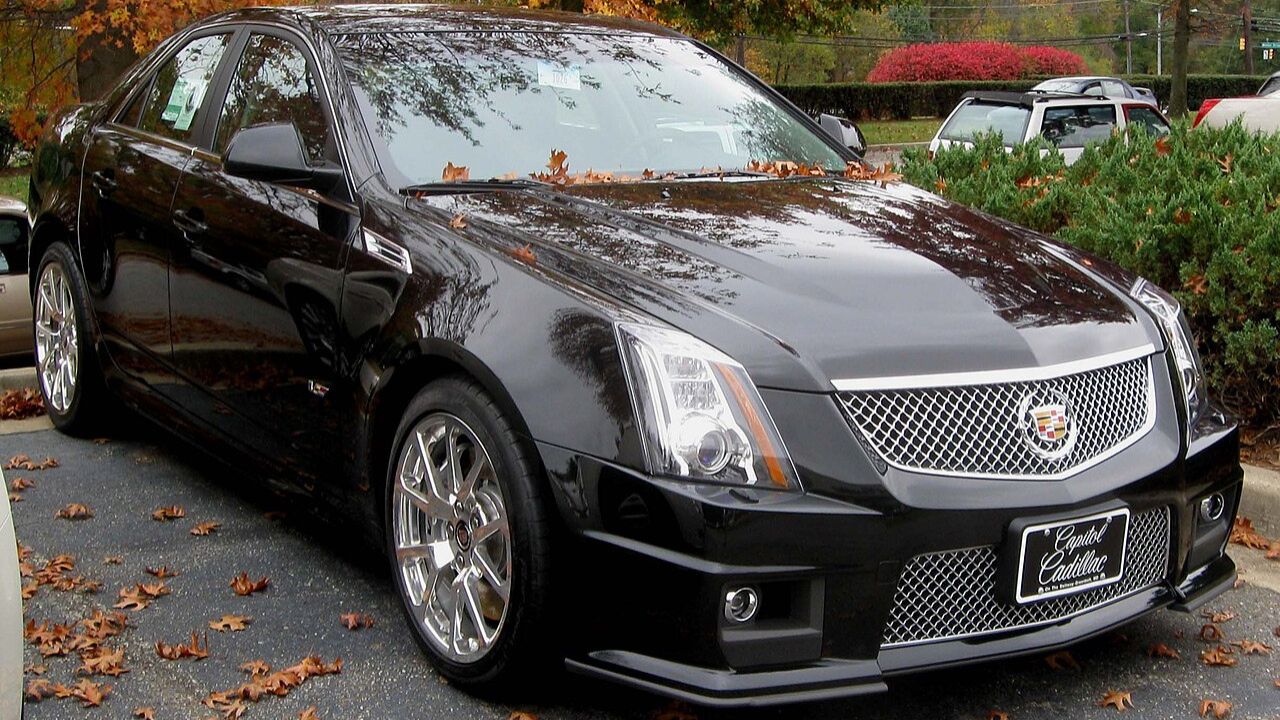
The shift began when Detroit realized that comfort alone could not carry premium pricing against sharper European sedans. Cadillac’s decision to move the CTS to rear-wheel drive signaled a new direction, but the real inflection point arrived when high-output V8s and sophisticated chassis tuning filtered into mainstream luxury trims, not just halo variants. Suddenly, a full-size American sedan could sprint to highway speeds in the time it once took to merge.
This change did not happen in a vacuum. Tighter emissions rules pushed engineers toward direct injection and advanced engine management, which in turn made it easier to extract large power numbers from relatively compact packages. At the same time, stability control and adaptive suspensions helped keep heavy sedans composed when that power arrived, so speed no longer meant sacrificing the calm ride buyers expected from a flagship.
Engineering choices that unlocked unexpected speed
The fastest of these luxury sedans relied on a familiar American ingredient, a large-displacement V8, but wrapped it in modern technology. Aluminum blocks trimmed weight over the front axle. Variable valve timing broadened the torque curve so power arrived early and stayed accessible. Multi-speed automatic transmissions kept engines in their sweet spot and, with paddle shifters, gave drivers a sense of involvement that older column shifters never attempted.
Chassis engineers quietly did as much work as powertrain teams. Wider tracks, stiffer subframes, and carefully tuned bushings reduced the float that once defined big Detroit sedans. Magnetic ride control, which can adjust damping in milliseconds, became a signature feature that allowed cars to glide over broken pavement in comfort mode yet clamp down body roll in sport settings. The result was a class of vehicles that could absorb a long interstate trip in silence, then surprise owners with how quickly they covered a favorite back road.
Braking and tire technology completed the transformation. Performance-oriented all-season tires gave heavy sedans more grip without sacrificing winter usability, while large multi-piston brake calipers and vented rotors provided the stopping power that high speeds demanded. Safety systems such as advanced stability control and collision mitigation helped reassure regulators and buyers that this new pace would not come at the expense of control.
Why that performance surge was so brief
The era of unexpectedly quick American luxury sedans did not last long because the economic and regulatory environment shifted under it. The financial crisis squeezed both automakers and buyers, forcing companies to justify every engineering investment. At the same time, fuel economy standards tightened, and public scrutiny of gas consumption increased. Big V8s in plush sedans became harder to defend when crossovers promised similar comfort with a more efficient image.
Electrification also changed the conversation. Once Tesla demonstrated that a large electric sedan could out-accelerate almost anything on the road while producing zero tailpipe emissions, the idea of a thirsty, high-horsepower gasoline flagship started to feel dated. Luxury buyers who wanted bragging rights increasingly looked to kilowatt ratings and battery sizes rather than displacement badges.
Inside the companies, automakers reallocated resources. Performance engineering talent that once focused on rear-drive sedans shifted to SUVs and electric platforms. Marketing budgets followed consumer demand into crossovers and technology features, from driver-assistance systems to expansive infotainment screens. The result was a gradual retreat from the old formula of big-engine sedans as brand flagships.
Why that fleeting moment still matters
Even though the peak years of these fast American luxury sedans were short, they left a lasting mark on how brands think about performance. They proved that comfort and speed are not mutually exclusive, and that buyers will pay for a car that can handle a long commute in relaxed silence yet still deliver a thrilling on-ramp surge. That lesson now shapes how companies tune their electric flagships, where instant torque naturally blends with quiet operation.
The episode also reshaped expectations for value at the high end. Just as travelers discovered that destinations like the Maldives could be when packaged differently, luxury-car shoppers realized they could get near-supercar acceleration in a practical sedan without paying exotic-car prices. That changed the competitive set for German and Japanese brands, which had to respond with quicker versions of their own mainstream luxury models.
On the regulatory side, the period helped refine the balance between performance and responsibility. Engineers learned how to integrate cylinder deactivation, stop-start systems, and efficient gearing into high-output drivetrains, knowledge that later carried over to hybrid and plug-in platforms. Safety agencies, meanwhile, gained experience evaluating vehicles that combined family-car practicality with sports-car speed, a combination that now defines many electric crossovers.
How the legacy shows up in today’s market
Modern American luxury cars rarely rely on big naturally aspirated V8s, yet the spirit of that fast-sedan era survives in their performance targets and marketing language. Twin-turbo V6s, plug-in hybrid systems, and full battery-electric drivetrains now deliver the same or greater acceleration, often with better efficiency and lower emissions. Adaptive suspensions and active aerodynamics, once reserved for top trims, filter down the range to keep comfort and control in balance.
Inside the cabin, the priorities that defined those earlier cars remain. Quiet glass, active noise cancellation, and extensive sound deadening still matter, but they now share space with large digital displays and connected services. The idea is similar: a car that can isolate occupants from the outside world while delivering serious pace when requested. The difference is that software and electric torque now do more of the work that big-displacement engines once handled.
Used examples from the short-lived fast-sedan era have also found a second life among enthusiasts who appreciate their blend of old-school character and modern capability. These cars offer hydraulic steering feel, physical buttons, and traditional proportions, combined with performance that still feels strong alongside many new vehicles. Their existence helps explain why some buyers remain attached to internal combustion even as the industry moves toward electrification.
What comes next for American luxury speed
The next chapter of American luxury performance will likely be written in kilowatts instead of cubic inches. Electric sedans and SUVs already match or surpass the acceleration benchmarks that once defined the fastest gasoline flagships, and software updates can improve performance long after a vehicle leaves the factory. That opens the door for new business models, where buyers pay to unlock higher power levels or more aggressive driving modes.
Meanwhile, regulators are pushing manufacturers toward lower fleet emissions and greater energy efficiency. That pressure will continue to limit the viability of traditional high-output gasoline sedans, especially in urban markets that experiment with low-emission zones or congestion charges. Automakers that once relied on V8-powered luxury sedans to showcase engineering prowess now face the challenge of delivering the same emotional appeal through quiet, battery-powered platforms.
The brief era when American luxury cars became unexpectedly quick may never return in the same form. Yet its influence will be felt every time a large electric sedan launches silently onto a highway on-ramp, combining serenity with startling speed. The lesson from that period is clear: when comfort, technology, and performance align, even a conservative segment can surprise both its makers and its drivers.
More from Fast Lane Only
- Unboxing the WWII Jeep in a Crate
- 15 rare Chevys collectors are quietly buying
- 10 underrated V8s still worth hunting down
- Police notice this before you even roll window down
*Research for this article included AI assistance, with all final content reviewed by human editors