Pontiac performance has always been as much about attitude as horsepower, and few symbols captured that mix like the screaming bird and bold-lettered badges that came to define the brand’s quickest cars. Long after Pontiac left showrooms, those emblems still signal a certain kind of American speed: loud, unapologetic, and just a little rebellious.
The story behind one of Pontiac’s most recognizable performance badges is also the story of how a division inside General Motors turned visual theater into a promise of real capability, then watched that promise tested, stretched, and finally retired as the brand itself disappeared.
The badge that turned a mid-size coupe into a performance icon
For many enthusiasts, Pontiac performance begins with three letters on the decklid of a mid-size coupe: GTO. When Pontiac engineers slipped a big V8 into the Tempest and pushed it as a street fighter, the badge became shorthand for muscle car performance. Later, the Firebird Trans Am, with its aggressive graphics and specialized equipment, cemented Pontiac’s visual identity as a builder of fast cars.
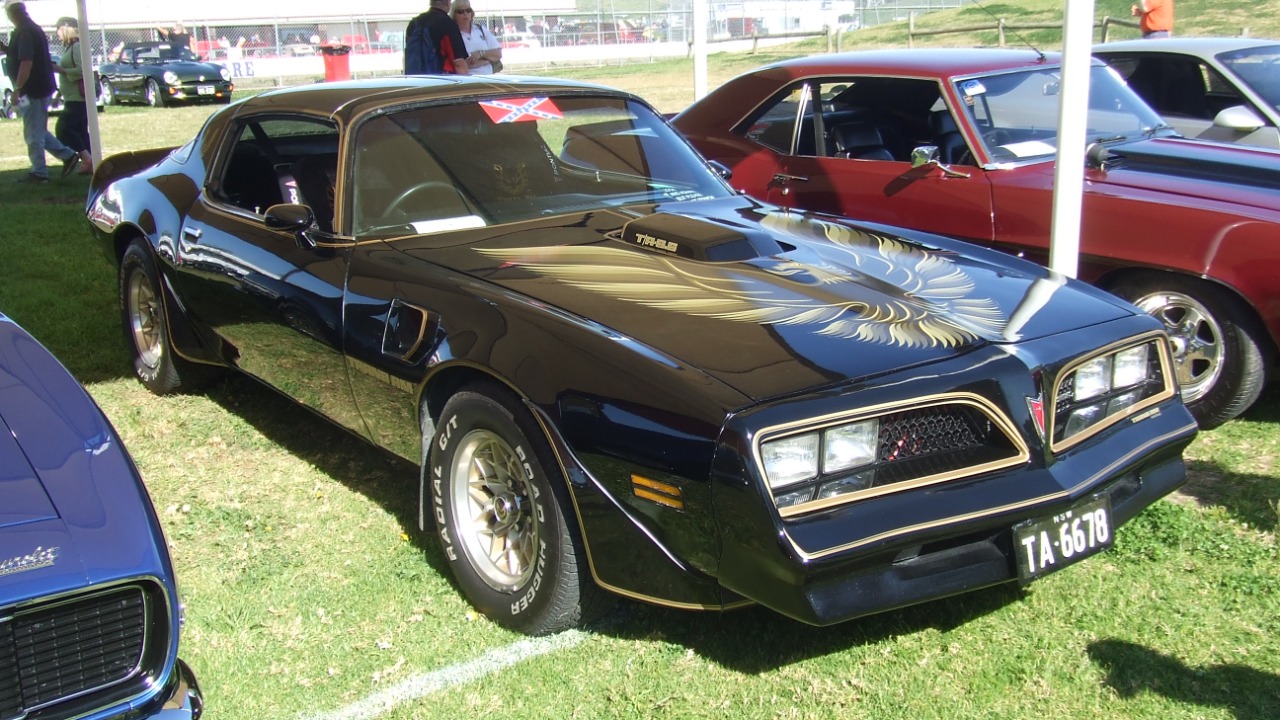
By the 1970s, the Trans Am package had evolved beyond a simple option code. It combined uprated engines, tuned suspensions, and visual cues like shaker scoops and fender vents. Over time, the giant hood bird and blocky Trans Am script turned the car into a rolling billboard for speed. The evolution of the Firebird and its high-performance variants gave Pontiac a halo model that carried the brand’s performance image through the fuel crisis and into the modern era, as detailed in the long-running Trans Am history.
By the late 1990s and early 2000s, the WS6 performance package had effectively become a badge of honor for fourth-generation Firebird owners. The WS6 code appeared on build sheets and rear bumpers, signaling a formula of ram-air induction, freer-flowing exhaust, and a more aggressive suspension tune. A 2002 Trans Am is often cited as one of Pontiac’s last and most capable pony cars, a final flourish for the badge before GM shut the lights on the brand’s performance coupes.
How Pontiac kept reinventing its performance identity
Pontiac rarely let one badge carry the entire weight of its performance story. In the 1980s, the company experimented with mid-engine engineering and futuristic styling in the Fiero. The car promised European flair at an attainable price and wore its own distinctive badging that separated it from the traditional front-engine muscle lineage.
The Fiero’s reputation suffered after early cars developed well-documented issues, including engine bay fires and quality problems, and it eventually became known as GM’s most famous. Yet even that misstep revealed how deeply Pontiac believed in the power of a performance image. The Fiero’s unique nose badge and script tried to signal a new chapter for the brand: agile, efficient, and unconventional compared with the heavy muscle coupes of the past.
At the same time, Pontiac continued to chase traditional performance benchmarks. Some lesser-known models managed to surprise even seasoned enthusiasts. Reporting on a particular Pontiac that outran shows how the division occasionally slipped serious hardware under otherwise modest badges, reinforcing the idea that Pontiac emblems could not be taken at face value.
Convertibles played their part as well. From GTO ragtops to Firebird and later Sunbird and G6 convertibles, Pontiac used open-air models to blend style with straight-line performance. A survey of the most iconic Pontiac highlights how many of those cars paired folding roofs with performance-oriented trims and graphics, reinforcing the brand’s commitment to a speed-focused identity even when the emphasis was on cruising.
What changed in Pontiac’s signature performance story
Over time, Pontiac’s performance badges shifted from engineering markers to marketing shorthand. Early GTO and Trans Am emblems usually indicated a substantial mechanical difference: bigger engines, stronger drivetrains, or track-inspired suspensions. As emissions rules tightened and corporate fuel economy targets grew stricter, the gap between visual drama and actual performance sometimes widened.
By the late 1970s, a 400 cubic inch V8 under a screaming chicken hood might deliver less power than smaller engines from earlier years. The badge still carried weight in the showroom, but the numbers on the spec sheet no longer matched the swagger. That tension between image and reality shaped Pontiac’s trajectory through the 1980s and 1990s, as the brand tried to reconcile its muscle car heritage with front-wheel-drive platforms and global parts sharing inside GM.
The fourth-generation Trans Am and its WS6 package marked a partial return to form. Here, the badge once again meant real hardware: functional ram-air intakes, upgraded brakes, and suspension components that could handle serious track use. Enthusiasts recognized that the WS6 script on a rear bumper or door panel was not just decoration. It signaled a car that could credibly compete with contemporary Ford Mustang and Chevrolet Camaro rivals.
The turning point came when GM discontinued the Firebird and later Pontiac itself. Without a dedicated rear-drive performance coupe, Pontiac’s most famous badges lost their natural home. Attempts to revive the GTO name on an imported coupe and to attach performance branding to sedans could not fully recreate the magic of a long-hood, short-deck pony car with a screaming bird on the hood and a performance code on the tail.
Why Pontiac’s performance badges still matter
Even without new models, Pontiac’s performance emblems continue to influence how enthusiasts think about American performance. Auction listings and classifieds still highlight WS6, Trans Am, and GTO badges as key selling points, often commanding higher prices than equivalent cars without those codes. The badges have become shorthand for a certain level of specification, much like Z/28 or Boss labels in Ford and Chevrolet circles.
The continued fascination with late-model Trans Ams, including well-preserved WS6 cars, reflects a broader nostalgia for analog performance. These cars combine modern safety and reliability with relatively simple mechanical systems and a direct driving feel. The badge on the fender or tail panel signals a bridge between classic muscle and contemporary expectations of comfort and usability.
Collectors also see Pontiac’s badges as historical artifacts from a brand that no longer exists. Owning a car with original GTO or Trans Am badging offers a tangible link to a chapter of GM history that cannot be repeated without reviving the division itself. That scarcity adds emotional and financial value, especially for low-production variants and special editions.
There is also a cultural dimension. Pontiac’s performance symbols appeared in films, television, and music videos, helping define the look of American performance for several generations. The badges became visual shorthand for characters who were independent, sometimes defiant, and always in a hurry. Even viewers who never memorized engine codes learned to associate the screaming bird and bold lettering with speed and attitude.
What comes next for Pontiac’s legacy of speed
With Pontiac gone from showrooms, its performance badges now live in three main arenas: the collector market, restomod culture, and digital nostalgia. In the collector space, original cars with intact badging continue to trade hands, often with detailed documentation that traces factory option codes and build sheets. Authenticity matters, since the badge’s power depends on a real connection to the hardware it once represented.
Restomod builders take a different approach. They may retain original GTO or Trans Am emblems while replacing drivetrains, suspensions, and interiors with modern components. In these projects, the badge becomes a starting point rather than a strict promise. The visual identity stays familiar, but the performance underneath can far exceed anything Pontiac engineers imagined when the car left the factory.
Digital culture provides the third life for Pontiac performance symbols. Video games, online forums, and social media communities keep the imagery in circulation, introducing younger enthusiasts to badges that disappeared from dealerships before they could drive. High-resolution recreations of classic Trans Am hood birds and GTO scripts appear in virtual garages and custom liveries, extending the badge’s influence into spaces that do not require gasoline at all.
More from Fast Lane Only
- Unboxing the WWII Jeep in a Crate
- 15 rare Chevys collectors are quietly buying
- 10 underrated V8s still worth hunting down
- Police notice this before you even roll window down
*Research for this article included AI assistance, with all final content reviewed by human editors