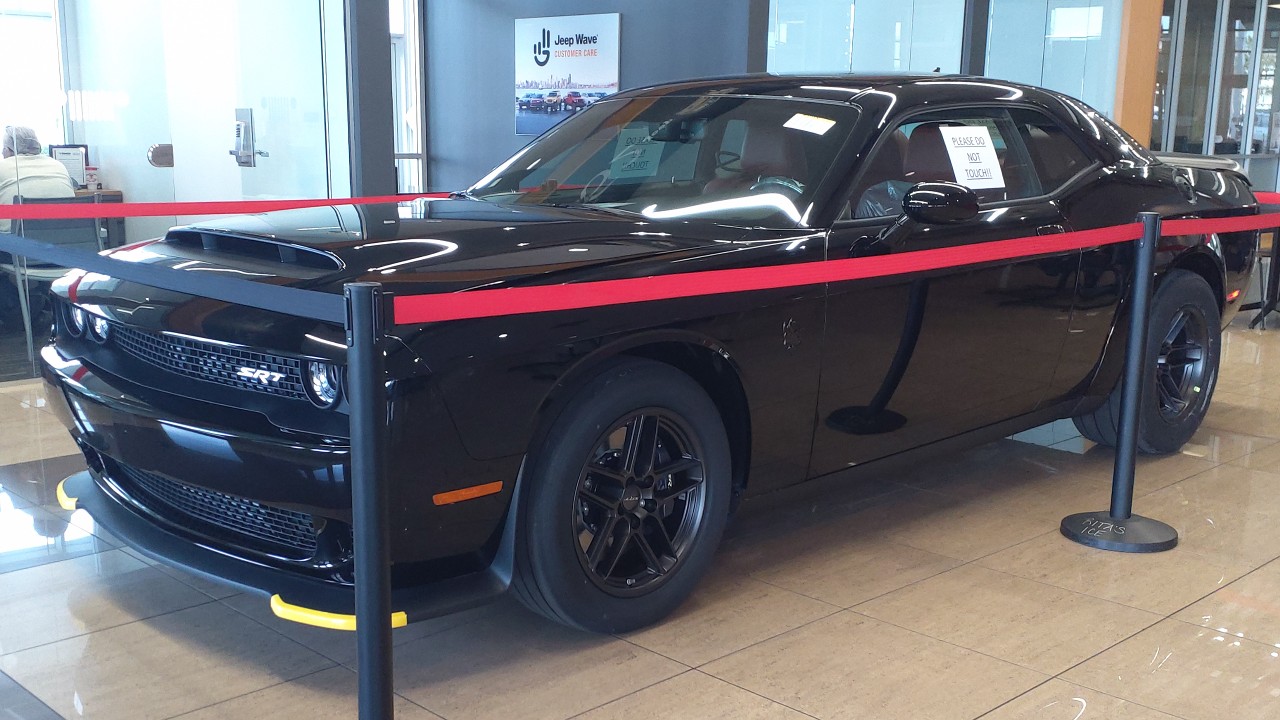
Dodge has never been shy about building outrageous performance specials, yet some of its wildest ideas have disappeared almost as quickly as they arrived. Behind the marketing bravado, the company has repeatedly run into a quieter, more bureaucratic wall: regulators, sanctioning bodies, and insurers who decide when “too fast” or “too dirty” is simply too much. The most curious cancellations in Dodge’s modern performance story are not about lack of demand, but about a set of external rules that effectively forced the brand to walk away early from packages it was eager to sell.
The pattern stretches from the classic Hemi era to the latest supercharged monsters, and it reveals a strange truth about American muscle in the 2020s. The limiting factor is no longer whether engineers can make more power, but whether the resulting car can be legally sold, insured, and raced in the places buyers expect to use it. That tension, rather than any loss of appetite for speed, explains why one headline-grabbing performance package in particular was effectively abandoned before it could fully live out its potential.
The modern muscle car that was “too quick” for the rulebook
The clearest recent example of a performance package cut short by outside forces is the 2023 Dodge Challenger SRT Demon 170. On paper, it delivered exactly what Dodge’s muscle faithful wanted: a factory drag car with power and acceleration that would have sounded like fantasy a decade earlier. Yet the very numbers that made the Demon 170 such a sensation also triggered a formal violation letter from the NHRA, which warned that the car could not legally run sub nine second quarter miles at sanctioned strips without additional safety equipment such as a full cage and a parachute.
That ruling did not ban the Demon 170 from existing, but it did undercut the core promise of a turnkey, street legal drag package that owners could simply drive to the track and run at full potential. The NHRA letter made clear that if the car did what Dodge claimed it could do, it would immediately run afoul of safety rules that were written for purpose built race cars, not showroom coupes. In effect, the car’s performance outpaced the framework that was supposed to govern it, and the result was a halo model that generated headlines but faced practical limits on the very stage it was built for.
When emissions rules quietly kill a halo SUV
Dodge has faced a different kind of external veto with its supercharged SUV, the Durango SRT Hellcat. When Dodge revived the Durango SRT Hellcat for the 2026 model year earlier this May, the company did so under a cloud of regulatory constraint that had nothing to do with drag strip safety and everything to do with tailpipe emissions. The model remained effectively banned in 7 states because it did not meet the California Air Resources Board’s emissions regulations, a restriction that automatically extended to other jurisdictions that follow the same standards.
For a niche, high margin performance package, losing access to those markets is not a mere inconvenience, it is a structural problem. The Durango SRT Hellcat for the latest model year could be advertised nationally, but a significant slice of potential buyers were told, in effect, that their state would not allow the vehicle to be sold new. That kind of patchwork availability makes it far harder to justify long term investment in a specialized powertrain, and it explains why such a high profile performance SUV has already seen its production plans reshuffled and constrained by rules written in emissions board conference rooms rather than engineering labs.
Insurance, safety scares, and the long shadow of the Hemi era
The strange dynamic of regulators and risk managers throttling Dodge’s ambitions is not new. In the late 1960s, the brand’s most fearsome engines were already colliding with a different kind of gatekeeper: insurance companies. A 1969 Charger fitted with a Hemi V8 represented the pinnacle of Dodge’s street performance at the time, yet it was also a symbol of a market turning against such excess. Period accounts note that it was the last year when Charger buyers could order the Hemi, as the anti muscle car trend was gaining ground and insurers were increasingly unwilling to underwrite the risk at reasonable premiums.
The result was that some of the most desirable configurations, such as a Charger with a Hemi, became commercial dead ends despite their appeal to enthusiasts. Cars that survived, including examples that later surfaced after sitting abandoned for decades, stand as physical reminders that the market did not reject these packages because they were uninteresting, but because the broader ecosystem of insurance and public sentiment made them untenable. The echoes of that shift still shape Dodge’s decisions today, as the company weighs not only what it can build, but what buyers can realistically insure and use without prohibitive cost or scrutiny.
Safety recalls and the limits of pushing hardware
Even when regulators do not directly block a performance package, safety concerns can force a manufacturer to rethink how far it is willing to push shared hardware. Fiat Chrysler Recalling V8s Over Stuck Cruise Control and Sudden Acceleration highlighted how a defect in electronic controls could turn a routine feature into a serious hazard. The recall specifically affected Hemi powered vehicles, including various Dodge Char models, and required a coordinated fix to prevent situations in which cruise control might fail to disengage as intended.
For a brand that trades heavily on the Hemi name, such episodes are more than a one off embarrassment. They underscore how tightly modern performance is bound to complex software and control systems, and how any flaw in those systems can trigger large scale interventions that cut across multiple nameplates. When a high output engine family like the Hemi is at the center of a safety campaign, it inevitably prompts internal questions about how aggressively that hardware should be tuned and deployed in future special editions, particularly if those editions are already under scrutiny from regulators or racing bodies for their speed.
Marketing bravado meets regulatory reality
Dodge’s recent marketing has leaned into a kind of theatrical extremism, from the Demon 170’s drag strip bravado to the Durango SRT Hellcat’s unapologetic size and power. In parallel, the broader performance world has seen a surge of commentary about how such vehicles reshape expectations, including claims that the Demon 170 “ruined” the muscle car market by resetting the bar for factory performance. Even in enthusiast media, that conversation has been intertwined with sponsorship messages urging viewers to download services like Babel with promises of 60% discounts, a reminder that the culture around these cars is as commercialized as the vehicles themselves.
Yet behind the showmanship, the practical constraints are stark. The Demon 170’s clash with the NHRA, the Durango SRT Hellcat’s exclusion from 7 states, and the historical retreat from Hemi powered Chargers under insurance pressure all point to the same underlying tension. Dodge can continue to engineer ever more potent packages, but each new step up the performance ladder invites a fresh round of scrutiny from safety regulators, emissions boards, sanctioning bodies, and insurers. The “strange reason” some of these packages vanish early is not a lack of horsepower or enthusiasm, but the simple fact that the surrounding system was never designed to accommodate street legal vehicles that accelerate, pollute, or risk as much as they do.
More from Fast Lane Only