The story of the first real automobile is steeped in innovation, rivalry, and unexpected twists. As I delve into this fascinating journey, I find that the evolution of the automobile is not just a tale of mechanical ingenuity but also one of human ambition and societal transformation. From the early experiments with steam engines to the revolutionary designs that paved the way for modern vehicles, the automobile industry has significantly shaped our world.
The Origins of the Automobile Concept
The origins of the automobile can be traced back to a series of pre-automobile innovations, particularly the steam engine. In the late 18th century, inventors like James Watt and George Stephenson were developing steam technology that would later be applied to various forms of transportation. Steam engines were initially used in railroads and ships, showcasing their ability to propel vehicles faster than horse-drawn methods. These early innovations laid important groundwork, proving that machines could indeed replace traditional forms of transport.
One of the pivotal figures in this narrative is Nicolas-Joseph Cugnot, who built the first full-scale working steam-powered vehicle in 1769. Cugnot’s vehicle, a three-wheeled contraption, was designed to transport heavy artillery for the French Army. While it could only reach a speed of about 2.5 mph and wasn’t practical for widespread use, it represented a significant step toward the automobile. As societal demands for faster transportation grew, inventors and engineers began to explore the possibilities of motorized vehicles, setting the stage for what would come next.
The Birth of the First Real Automobile
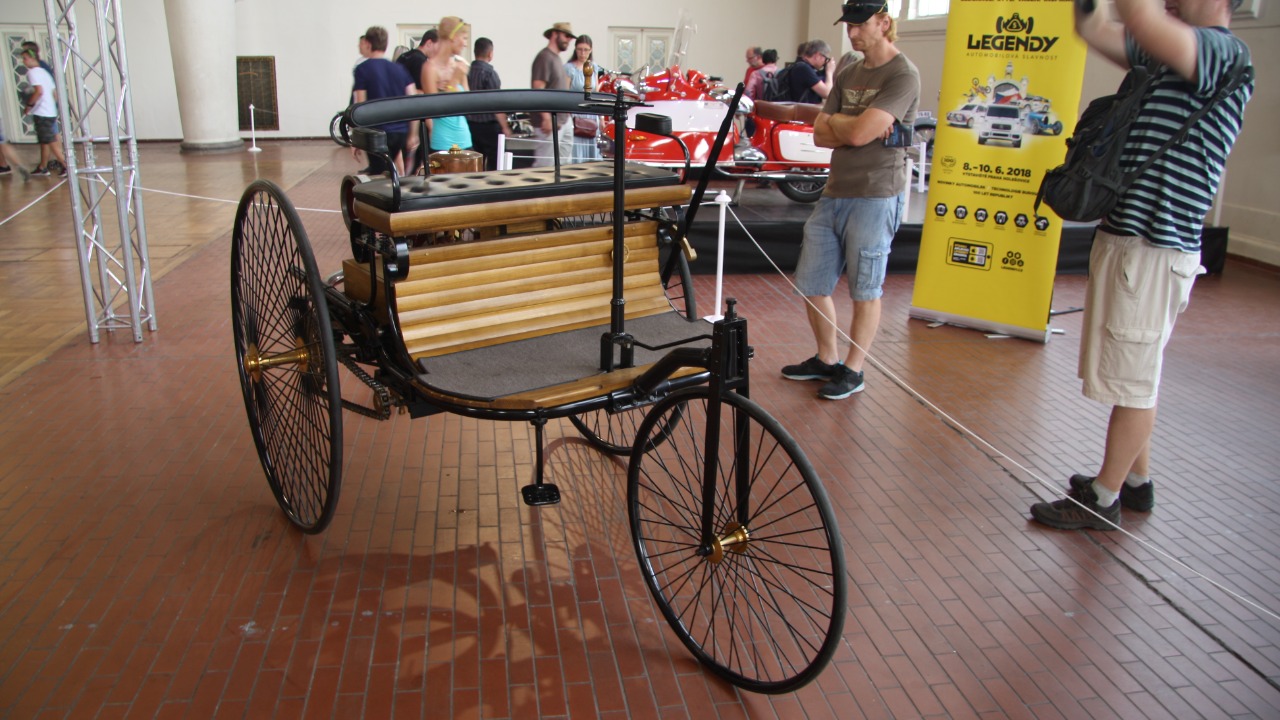
Karl Benz is often credited with creating the first true automobile with the invention of the Benz Patent-Motorwagen in 1885-1886. This vehicle was powered by an internal combustion engine fueled by gasoline, marking a significant departure from steam-powered vehicles. Benz’s design was innovative in several ways: it featured an electric ignition, a water-cooled engine, and differential gears, all of which are standard in modern automobiles. His passion for engineering and determination to create a reliable vehicle led him to develop a car that could be used for personal transportation.
The public demonstration of the Motorwagen came in 1888 when Benz’s wife, Bertha Benz, undertook a historic journey from Mannheim to Pforzheim, covering approximately 66 miles. This trip served not only as a test of the vehicle’s capabilities but also as a marketing strategy that showcased the automobile’s potential to the public. Bertha’s journey was fraught with challenges, including running out of fuel and overcoming mechanical failures, but it ultimately proved the practicality of the automobile. Her adventure helped change public perception, slowly turning skepticism into acceptance as people began to see the automobile as a viable mode of transportation.
The Impact of the Automobile on Society
The introduction of the automobile had a profound impact on society, leading to significant economic changes. The automobile industry created millions of jobs, not only in manufacturing but also in sectors such as sales, maintenance, and service. Companies like Ford transformed production methods, introducing assembly line techniques in the early 20th century with the Model T, which made automobiles affordable for the average person. This economic boom was accompanied by the rise of supporting industries, such as oil, rubber, and steel, further embedding the automobile into the fabric of modern life.
Urban development was also dramatically influenced by the automobile. Cities began to expand outward, as people no longer needed to live near their workplaces. The rise of suburbs became possible as automobiles allowed for easier commuting. Infrastructure adapted as well; roads, highways, and parking lots sprang up to accommodate the increasing number of vehicles on the roads. As a result, city planning evolved to prioritize automobile traffic, fundamentally reshaping the landscape of urban areas.
The Rivalry and Competition in Early Automobile Manufacturing
The early days of the automobile industry were marked by intense rivalry and competition among inventors and manufacturers. Henry Ford emerged as a key player by revolutionizing production with the introduction of the assembly line in 1913. This innovation drastically reduced the time it took to build a car, allowing Ford to lower prices and make vehicles accessible to a larger audience. The Model T became synonymous with the American dream, symbolizing freedom and mobility.
As competition intensified, so did the race to innovate. Automakers engaged in legal battles over patents, with figures like Ford and Benz often at the forefront. These disputes highlighted the importance of intellectual property in automotive design and technology. The competition led to a diversification of automobile models, with manufacturers catering to various consumer needs—from luxury vehicles to economical options. This era of innovation set the stage for the diverse automotive market we see today.
Challenges and Controversies in Early Automobile History
Despite the excitement surrounding the invention of the automobile, early history was fraught with challenges and controversies. One major concern was safety; early automobiles were often unstable and difficult to control, leading to accidents and fatalities. Public fear of these new machines was prevalent, and many cities implemented speed limits and restrictions on where automobiles could travel. As the number of vehicles on the road increased, discussions around safety regulations became more urgent.
Environmental impact also emerged as a topic of concern, even in the early days of automobile history. With the rise of gasoline-powered vehicles, pollution levels began to climb, leading to discussions about the ecological footprint of the automobile. While these conversations were not as pronounced as they are today, they laid the groundwork for future environmental regulations and the push for cleaner technologies.
The Legacy of the First Real Automobile
The legacy of the first real automobile extends far beyond its initial invention. Early innovations paved the way for modern automotive technology, influencing everything from engine designs to safety features. The groundwork laid by pioneers like Benz and Ford continues to resonate in today’s industry, as manufacturers strive to meet the demands of an increasingly complex and competitive market. Innovations such as electric vehicles and autonomous driving technology can trace their roots back to the original ideas and challenges faced by early automakers.
Furthermore, the design and functionality of the first automobile have left an indelible mark on future generations of vehicles. The fundamental principles established by the Benz Patent-Motorwagen are still evident in contemporary car designs, from the layout of the engine to the overall concept of personal transportation. The automobile has evolved into a cultural icon, symbolizing freedom, adventure, and progress in contemporary society. It represents not just a mode of transportation but a lifestyle choice that has shaped our interactions and experiences.
The journey from the first real automobile to the advanced vehicles we see today is a testament to human ingenuity and the relentless pursuit of innovation. As we continue to navigate the complexities of modern transportation, it is essential to reflect on the remarkable story behind the automobile’s inception and the myriad ways it has transformed our world.
More from Fast Lane Only
- Unboxing the WWII Jeep in a Crate
- 15 rare Chevys collectors are quietly buying
- 10 underrated V8s still worth hunting down
- Police notice this before you even roll window down
*Research for this article included AI assistance, with all final content reviewed by human editors.