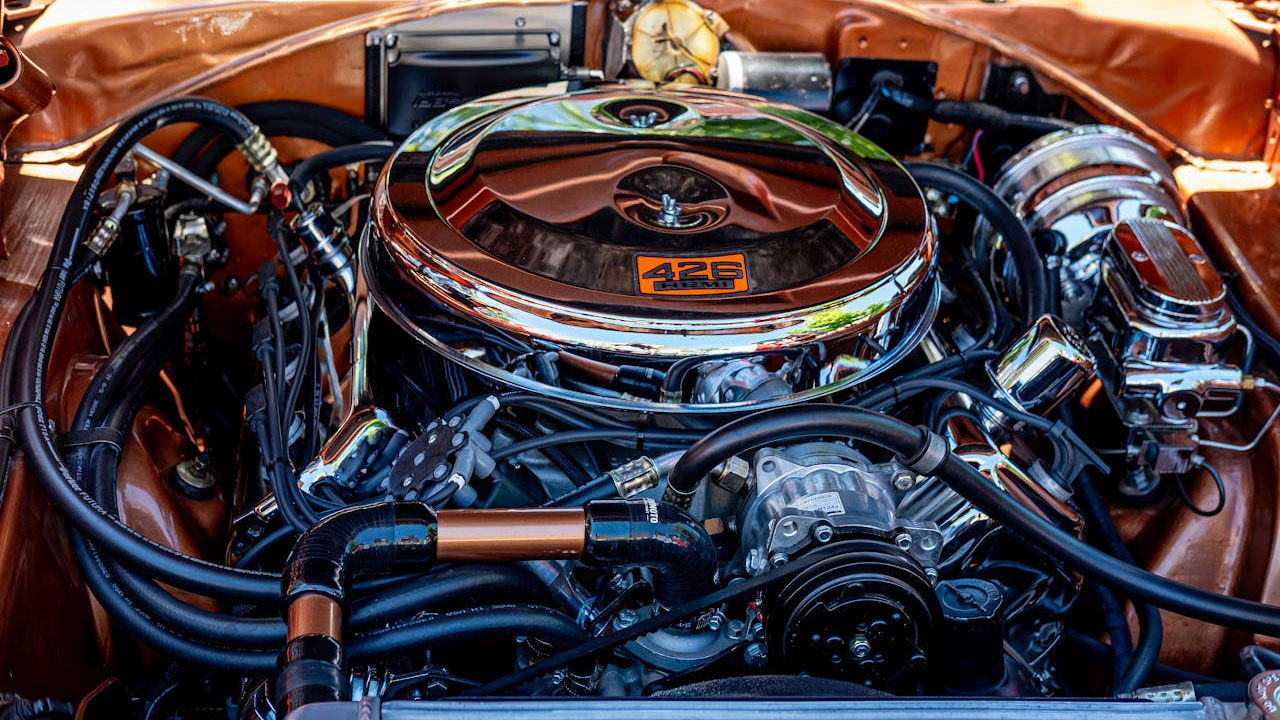
The history of the American V8 is filled with legendary engines that helped define entire eras of performance. Some earned their reputations through years of racing success, while others gradually won over enthusiasts through proven durability and power. Every so often, however, an engine arrives that changes perceptions almost immediately. Its impact is so dramatic that buyers, competitors, and even manufacturers are forced to rethink what a production performance car can be.
One of the clearest examples came during the muscle car era, when a rare high-performance V8 appeared and instantly altered expectations. At a time when horsepower wars were escalating across Detroit, this engine raised the bar so dramatically that rivals spent years trying to catch up.
Performance expectations were already rising
By the mid-1960s, American manufacturers were locked in an increasingly intense battle for horsepower supremacy. Every major brand wanted to offer the fastest and most powerful cars on the street.
Big-block V8s were becoming larger, stronger, and more sophisticated. Buyers could choose from a growing list of high-performance options, and automakers competed fiercely for attention in showrooms and on racetracks.
Yet even in this environment, some engines stood apart. They offered more than just additional displacement. They introduced entirely new levels of performance that forced enthusiasts to redefine what was possible.
The 426 Hemi arrived with serious intentions
When Chrysler introduced the 426 Hemi to the street, it immediately became one of the most talked-about engines in America.
Its hemispherical combustion chamber design gave it significant airflow advantages compared with conventional V8s. Combined with massive cylinder heads, large valves, and race-developed engineering, the engine was built with performance as its primary objective.
Officially rated at 425 horsepower, the Street Hemi carried specifications that suggested far greater potential. Even before buyers experienced it firsthand, the engine’s reputation was spreading rapidly through the performance community.
Racing success built instant credibility
Unlike many production engines, the 426 Hemi entered the market with proven racing credentials.
The engine’s development was heavily influenced by competition, where power, durability, and high-speed performance mattered above all else. Success on major racing circuits helped establish its credibility before many enthusiasts even had an opportunity to see one in person.
When buyers realized they could purchase a street-legal car powered by an engine closely related to Chrysler’s racing efforts, demand and excitement grew quickly.
The connection between race cars and showroom models gave the Hemi an aura few rivals could match.
Real-world performance exceeded expectations
What truly changed perceptions was how the engine performed outside of advertising materials.
Drivers quickly discovered that Hemi-powered cars delivered acceleration that felt extraordinary even by muscle car standards. The combination of abundant torque, impressive high-rpm power, and relentless straight-line speed created an experience that few competitors could equal.
Magazine tests and drag strip results consistently reinforced the engine’s reputation. Buyers who expected a powerful V8 often found themselves experiencing something that felt far more serious than the specifications alone suggested.
Rarity increased the mystique
Part of the Hemi’s influence came from the fact that it was never a common sight.
The engine carried a significant price premium, making it an expensive option for many buyers. Insurance costs and rising concerns about fuel consumption further limited its appeal among mainstream customers.
As a result, relatively few Hemi-powered vehicles were produced compared with more conventional performance models. That scarcity helped create an exclusivity that added to the engine’s growing legend.
Enthusiasts knew they were looking at something special, and the rarity only amplified its reputation.
Competitors were forced to respond
The arrival of the 426 Hemi placed pressure on rival manufacturers throughout Detroit.
Chevrolet, Ford, Pontiac, Oldsmobile, and others were already developing increasingly powerful engines, but the Hemi became a benchmark that everyone had to acknowledge. It represented the extreme edge of factory performance and demonstrated what could be achieved when engineering priorities focused almost entirely on speed.
Even manufacturers with their own impressive big-block engines found themselves compared against Chrysler’s formidable creation.
That level of influence is one reason the Hemi remains such an important part of muscle car history.
The engine became larger than the cars it powered
Many famous engines are remembered because of the vehicles they appeared in. The 426 Hemi followed a different path.
Over time, the engine itself became a cultural icon. Whether installed in a Plymouth Road Runner, Dodge Charger, Plymouth Cuda, or another performance model, the Hemi often received more attention than the vehicle surrounding it.
Its name became synonymous with power, helping establish a legacy that extended far beyond a single model or production year.
For many enthusiasts, the word “Hemi” continues to represent the ultimate expression of classic American V8 performance.
Collectors still chase them today
Decades after production ended, original Street Hemi vehicles remain among the most desirable muscle cars in the world.
Collectors value them not only for their rarity but also for their historical significance. They represent a period when manufacturers pushed performance boundaries with remarkable ambition and relatively few compromises.
Auction results continue to demonstrate the engine’s enduring appeal, with genuine Hemi-powered cars often commanding substantial premiums compared with otherwise similar models.
Their value reflects both scarcity and the lasting impact the engine had on the automotive world.
The V8 that redefined factory performance
The 426 Hemi did more than deliver impressive horsepower figures. It changed expectations almost overnight by proving that a production car could offer performance once associated primarily with dedicated race machines.
Its combination of advanced design, racing heritage, extraordinary power, and limited production helped create one of the most influential engines ever produced. Long after the muscle car era ended, enthusiasts continue to view it as a benchmark against which other performance V8s are measured.
Few engines have altered the automotive landscape so quickly. Fewer still have maintained that influence for generations. The rare 426 Hemi accomplished both, securing its place as one of the most important V8s in performance history.
More from Fast Lane Only
- Unboxing the WWII Jeep in a Crate
- 15 rare Chevys collectors are quietly buying
- 10 underrated V8s still worth hunting down
- Police notice this before you even roll window down
*Research for this article included AI assistance, with all final content reviewed by human editors