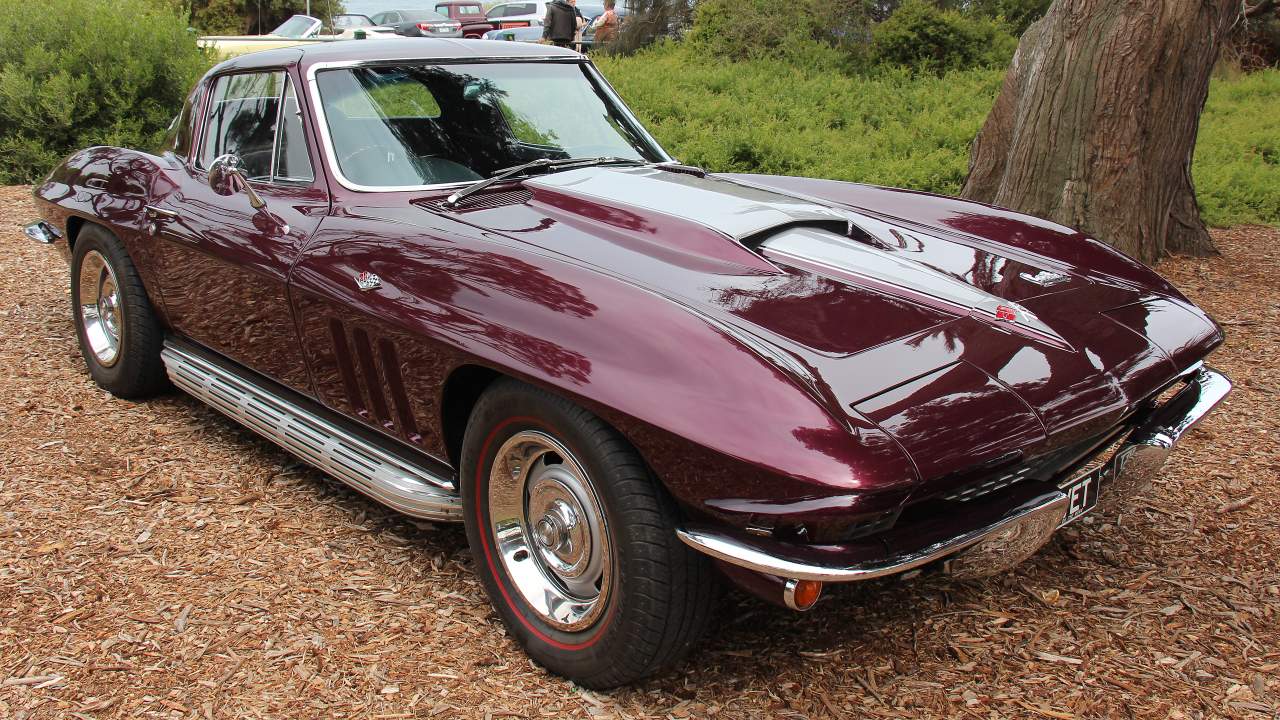
The small block L79 327 has become one of the most coveted powerplants ever fitted to a mid‑year Corvette, combining everyday drivability with serious performance. For collectors and drivers alike, knowing exactly which years Chevrolet built L79‑equipped Corvettes, and what those cars trade for now, is essential to judging whether a given example is correctly represented and fairly priced.
I will walk through the production window for the L79 327 in Corvettes, how it fit into the broader C2 and early C3 eras, and what recent market data says about values today, from driver‑grade cars to top‑flight originals.
When the L79 327 arrived and how long Chevrolet kept it in Corvettes
The L79 version of Chevrolet’s small block arrived as a factory option in the mid‑1960s, part of a broader push to offer high output V8s that could challenge larger displacement engines. Reporting on the History of the package notes that the L79 was first installed into GM cars in 1965, pairing the 327 cubic inch block with performance‑oriented internals and breathing. That timing aligns with the mid‑cycle maturity of the C2 Corvette, which meant the engine landed in a chassis already proven on the street and track, giving buyers a lighter alternative to the big blocks that were starting to dominate showroom talk.
Coverage of the L79’s run describes it as a stalwart option from 1965 through 1968, with the 327 configuration continuing to appear in multiple Chevrolet models during those years. A technical overview of the 327 highlights how this engine, in L79 tune, gave big block cars “a run for their money,” which helps explain why Chevrolet kept it in the catalog across several seasons. A separate deep dive into the 1965‑’68 L79 program characterizes the engine as “The Underdog,” emphasizing that it was often underestimated compared with headline‑grabbing big blocks even though it remained in production through that 1968 cutoff, a span that covered the final C2 years and the launch of the C3.
How the L79 fit into the C2 and early C3 Corvette timeline
To understand the specific Corvette years that carried the L79 327, it helps to line up the engine’s lifespan with the generational changeover. The C2 Corvette ran through the 1963 to 1967 model years, with the L79 option joining the lineup partway through that generation. Market data focused on the C2 327 and 350 horsepower configuration shows dedicated tracking for 1965 and 1966 cars, which confirms that by 1965 the L79 was firmly embedded in the Corvette order sheet and remained a distinct configuration at least through the following year.
The next chapter came with the third generation. The Chevrolet Corvette (C3) is documented as the third generation of the Corvette sports car that was produced from 1967 until 1982 by Chevrolet, and that timeline, starting from 1967, overlaps with the final years of the L79 program. Reporting on the 1965‑’68 L79 engine confirms that the option continued through the early C3 period, which means 1967 and 1968 Corvettes could still be ordered with the high‑revving small block even as styling and chassis details evolved. Taken together, the sources support a Corvette L79 window that runs from 1965 through 1968, covering late C2 and the first two C3 model years.
Why the L79 327 became a cult favorite among Corvette buyers
Within that four‑year span, the L79 327 built a reputation that has outlasted many bigger and flashier engines. A retrospective on the 1965‑’68 package describes the L79 as “The Underdog,” a label that reflects how it often surprised owners of larger displacement cars in real‑world driving. The same analysis notes that for other highly touted, super fast muscle cars and the like, those that could outrun an L79 generally did so by a narrow margin and with more drama, while the small block combination delivered its performance with a smile, a balance that endeared it to drivers who valued usable power over bragging rights.
That mix of civility and speed shows up again in more recent technical coverage of the 327 L79, which emphasizes how the engine’s specifications made it a sweet spot between mild and wild. The piece, dated Aug 10, 2023, on the Engine and its Production Numbers, underscores that the L79 combined a relatively common displacement with carefully chosen camshaft and head combinations, making it both accessible and special. A period story on a 1966 L79 Corvette, published on Jul 24, 2012, reinforces that appeal by noting how the sleek lines of a mid‑year car paired naturally with the responsive small block, turning what could have been a simple cruiser into a serious performance machine.
Current market values for L79 Corvettes
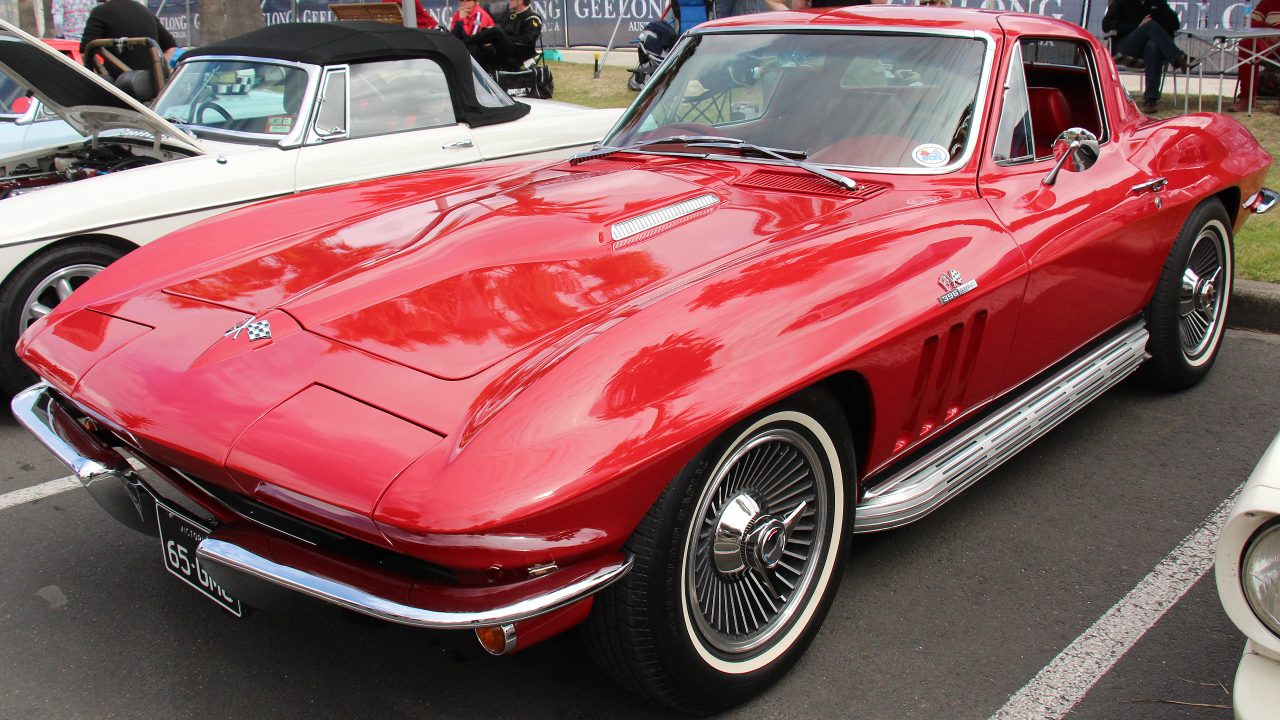
Today, the market treats L79‑equipped Corvettes as a distinct slice of the C2 and early C3 universe, with pricing that reflects both their performance credentials and relative scarcity. A dedicated market page for the C2 Chevrolet Corvette 327/350 configuration tracks recent sales and calculates a CLASSIC.COM Market Benchmark, or CMB, that aggregates transaction data into a representative figure. For the 1966 Chevrolet Corvette L79 (327/350), that CMB is listed at $86,806, a number that signals how far these cars have climbed from their used‑car days and places them firmly in serious collector territory.
Zooming out from a single year, the broader C2 L79 market shows similarly strong numbers. The same benchmark tool notes that the average value for the Chevrolet Corvette 327/350 C2 configuration is $85,517, with individual sales ranging above and below that depending on condition and originality. One highlighted example is a 1965 Chevrolet Corvette 327/ L79 Convertible described as Original and Highly Original with 63k mi TMU, a Manual transmission and left‑hand drive, which sold for $69,000‑plus, illustrating how even cars with some mileage and unknown exact odometer history can command strong money when the specification is right.
What drives price differences: originality, body style and broader Corvette trends
Within the L79 subset, values can swing widely based on originality, body style and documentation. A detailed listing for a 1966 Corvette Sting Ray Coupe 327/ L79 shows how these factors stack up. The car is described as a Chevrolet Corvette 327/ L79 Coupe that is Original and Highly Original with 57k mi TMU, a Manual gearbox and left‑hand drive, and it sits within a group of 252 Chevrolet Corvette Comps tracked for this configuration. Reported sales for similar cars in that dataset reach as high as $119,500, underscoring how a well‑documented coupe can outpace a comparable convertible if the history and preservation line up with collector expectations.
Broader Corvette pricing trends also shape what buyers are willing to pay for an L79 car. A discussion of the current market for C2 Vettes, dated Jun 26, 2025, captures the sentiment that C2 Vettes may be the best looking cars ever manufactured in the U.S., and that their collectability crosses generations. Participants in that conversation note that finding a solid example for less is increasingly difficult, a point that aligns with the benchmark figures for L79 cars and suggests that the days of budget mid‑year Corvettes are largely over. When contrasted with valuation tools for later models, such as a 1979 Chevrolet Corvette Base in the Hagerty Common Questions section, which emphasizes how condition, mileage, options and history can produce a wide range of outcomes, it becomes clear that the L79 premium is not just about age but about a specific blend of performance and desirability that the market continues to reward.
How the L79 legacy shapes restoration and replica builds
The strength of the L79 market has also influenced how enthusiasts approach restoration and engine builds. A recent feature on replicating the L79 327, dated Oct 6, 2024, notes that Success came quickly and in abundance for Chevrolet’s small blocks, as trackside conquests translated immediately to the street and the market for performance parts exploded. That history has encouraged builders to recreate the L79 specification using modern components, aiming to capture the original driving feel without necessarily chasing factory‑correct casting numbers, a strategy that can appeal to owners who want the experience of an L79 Corvette without paying benchmark prices for a numbers‑matching car.
Technical guides on the 327 L79 layout explain how builders can start with a later 350ci block and use 461 heads and appropriate camshaft choices to approximate the original power curve. Those same resources stress that you do not have to chase rare original parts to enjoy L79‑style performance, which is an important distinction for buyers evaluating modified cars. A Corvette that has been upgraded to an L79‑like specification will not command the same CMB figures as a documented factory L79, but the underlying appeal of the engine’s character means such cars can still find a ready audience at more accessible prices.
More from Fast Lane Only: