The Chevrolet Kingswood Estate occupies a sweet spot in American car history, bridging the era when full-size wagons were family workhorses and the moment they became coveted collectibles. When Chevrolet introduced the Kingswood line, it was answering a very specific demand for space, style, and status, and today those same traits are driving a quiet surge in values for well-kept examples.
To understand when the Kingswood Estate wagon arrived and what it is worth now, I need to trace how the Kingswood name emerged in Chevrolet’s lineup, how the Estate trim evolved into a woodgrain flagship, and how recent auction and market data reveal what collectors are actually paying.
From Yeoman to Kingswood: How Chevrolet’s big wagon found its place
Chevrolet did not create the Kingswood in a vacuum. The model stepped into a slot opened when the Yeoman was dropped, reflecting how quickly American buyers were embracing large, multi-row wagons as family and road-trip tools. Reporting on a junkyard discovery notes that The Kingswood debuted in 1959, right after the Yeoman was discontinued, which places its birth squarely in the boom years of postwar suburbia. That timing matters, because it shows Chevrolet positioning the Kingswood as a fresh answer to growing families who wanted more than a basic hauler.
Chevrolet also did not rely on a single wagon nameplate. The same reporting explains that The Kingswood was sold alongside the Brookwood, which shared showroom space but targeted a different buyer profile. By offering The Kingswood next to the Brookwood, Chevrolet could separate a more upscale, feature-rich wagon from a simpler alternative, a strategy that foreshadowed how the Kingswood Estate would later become the premium expression of this formula. The coexistence of The Kingswood and Brookwood in the lineup underscores how central wagons were to Chevrolet’s full-size strategy at the time, rather than being niche add-ons.
When the Kingswood Estate name arrived and what set it apart
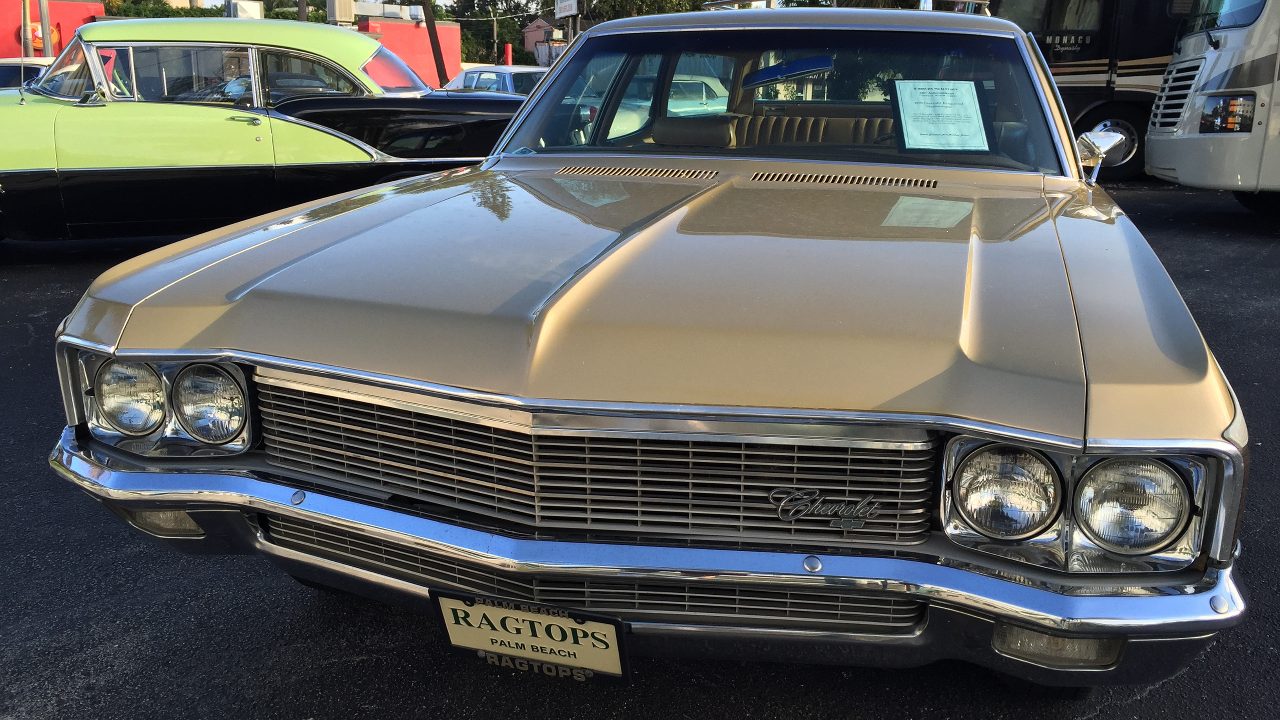
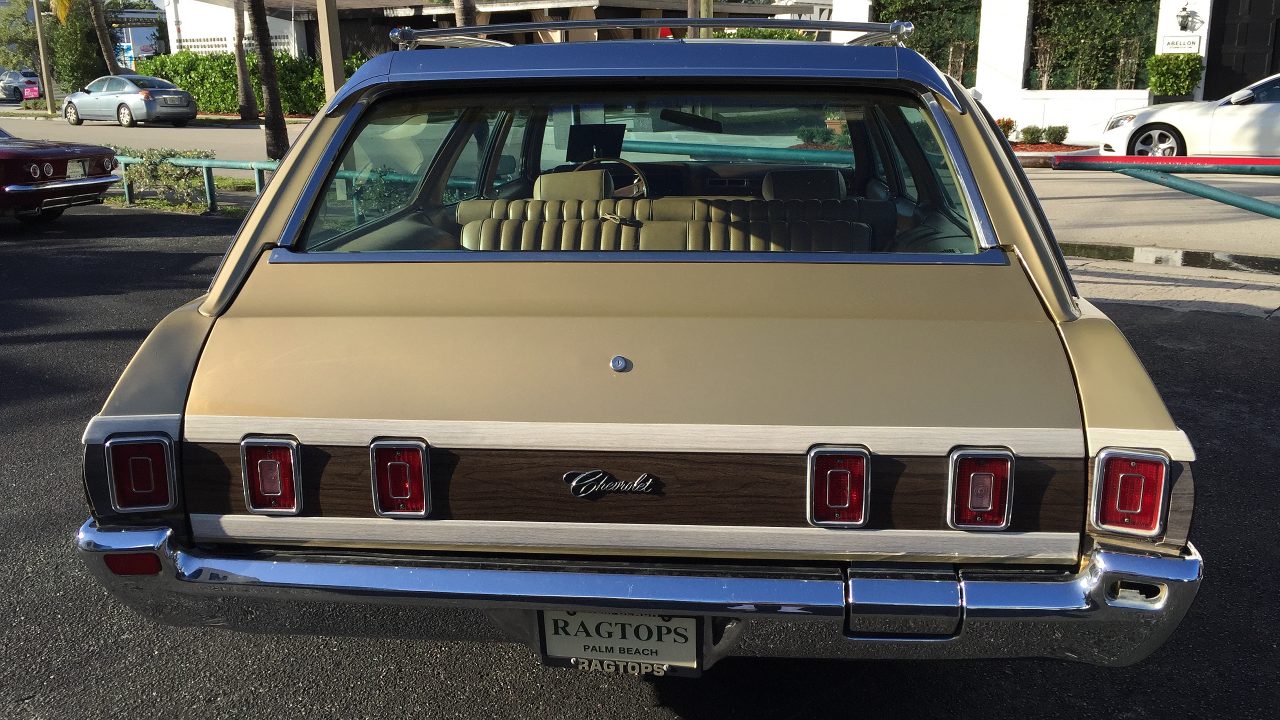
The Kingswood Estate badge signaled that Chevrolet was not just selling capacity, it was selling image. A detailed owner discussion of a 1969 Chevrolet Kingswood Estate Wagon makes the distinction clear. The post emphasizes that “This is a Kingswood Estate” and notes that “The Estate version had the woodgrain paneling,” which turned a practical wagon into a visual statement. That woodgrain treatment, applied to the sides, was a deliberate callback to earlier wood-bodied wagons, but executed in a way that fit late 1960s styling and mass production.
By the time that 1969 Chevrolet Kingswood Estate Wagon appeared, the Estate label had become shorthand for the top-tier configuration. The same discussion of the Kingswood Estate highlights how The Estate stood apart from a standard Kingswood, not only through woodgrain paneling but also through its positioning as the fully dressed family flagship. In practice, that meant buyers who chose the Kingswood Estate were opting into the most luxurious interpretation of Chevrolet’s big wagon formula, a move that helps explain why collectors now focus on these Estate versions when they search the market for standout examples.
Production span and the Kingswood Estate’s place in Chevrolet history
To pin down the Kingswood Estate’s era, I look to aggregated market data that tracks the model across its full run. A dedicated market overview lists the Chevrolet Kingswood Estate (1959 to 1972), framing those years as the bookends for the nameplate’s presence in Chevrolet’s portfolio. That 1959 starting point aligns with the earlier reporting that The Kingswood debuted in 1959, while the 1972 endpoint marks the close of a long chapter in which full-size wagons were still central to family transportation before vans and later SUVs began to dominate.
Within that 1959 to 1972 window, the Kingswood Estate evolved alongside Chevrolet’s broader full-size line, eventually intersecting with models like the Caprice at the top of the range. A sale listing for a 1972 Chevrolet Kingswood Estate Wagon categorizes the vehicle under MakeChevrolet and ModelChevrolet Caprice, and places it in the Era1970s and CategoryStation Wagons. That pairing of Kingswood Estate with Caprice in the same description underlines how, by the early 1970s, Chevrolet was effectively blending its premium full-size sedan identity with its top-spec wagon, reinforcing the Estate’s role as a halo family car rather than a stripped-down utility vehicle.
How the Kingswood Estate is valued in today’s collector market
Modern interest in the Chevrolet Kingswood Estate is no longer hypothetical, it is measurable in auction results and market tracking. The same market overview that defines the Chevrolet Kingswood Estate (1959 to 1972) also compiles sales data and identifies the highest recorded prices for the model. While the full figure is not detailed in the summary, the presence of a “top sale price” entry for the Chevrolet Kingswood Estate confirms that certain examples are commanding premium results relative to more ordinary station wagons from the same era. That kind of tracking, which aggregates individual transactions into a broader picture, is a key signal that the Kingswood Estate has moved from used-car status into recognized collectible territory.
Individual auction results help put real numbers to that trend. A recent listing for a 1972 Chevrolet Kingswood Estate Wagon in the USA notes that it was Sold for USD $17,525, with the entry also recording the figure “65” in its summary. That $17,525 result, recorded on Mar 11, 2025, shows that a clean, late-production Kingswood Estate can attract mid-five-figure attention from bidders who value originality, condition, and specification. When I set that sale alongside the broader Chevrolet Kingswood Estate (1959 to 1972) market data, it suggests that well-presented wagons, especially those tied to the Caprice identity and carrying the full Estate treatment, are now firmly on collectors’ radar.
Why enthusiasts chase specific years and trims of the Kingswood Estate
Not every Kingswood Estate is valued equally, and the reasons often trace back to styling details and period-correct features. The 1969 Chevrolet Kingswood Estate Wagon example, highlighted in a post dated May 2, 2018, underscores how much weight enthusiasts place on authenticity. The description’s insistence that “This is a Kingswood Estate” and that “The Estate version had the woodgrain paneling” shows that collectors are not just looking for any Kingswood, they are hunting for the exact combination of nameplate and visual cues that define the Estate identity. That focus on woodgrain paneling, trim-specific badging, and correct presentation helps explain why some years and configurations trade at a premium.
Mechanical specification also shapes desirability, even when it is not fully documented in the summaries. The junkyard story about a 1970 Chevrolet Kingswood, which notes that The Kingswood debuted in 1959 and that the car in question hides a big-block surprise under the hood, hints at the performance potential that some buyers now seek out. While the precise engine details are Unverified based on available sources, the very idea of a big-block Kingswood aligns with the broader pattern of collectors gravitating toward wagons that combine family-friendly packaging with muscle-era hardware. When those mechanical upgrades intersect with the visual drama of the Kingswood Estate’s woodgrain treatment and the cachet of a Caprice-linked 1972 Chevrolet Kingswood Estate Wagon that was Sold for USD $17,525, the result is a subset of wagons that feel far removed from their original role as anonymous family transport.
More from Fast Lane Only: