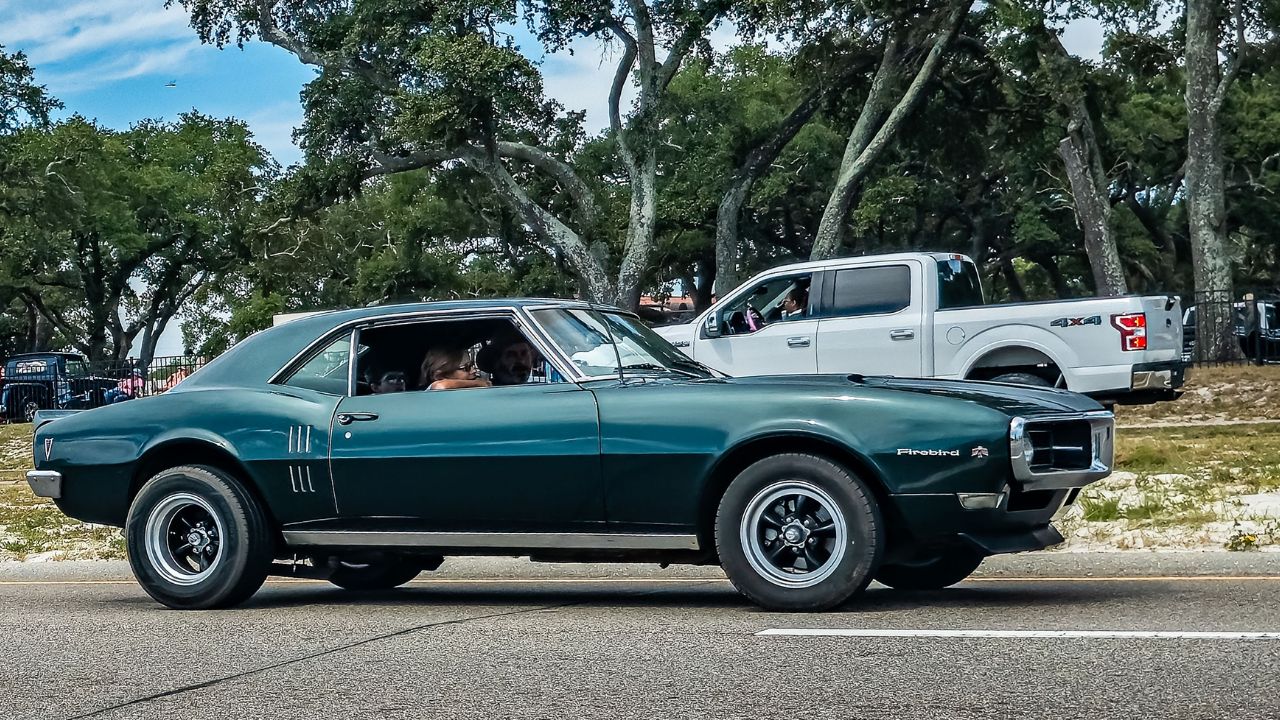
Pontiac’s overhead-cam Firebird Sprint occupies a narrow but fascinating slice of muscle car history, combining a high-revving inline six with pony car styling at the height of the horsepower wars. Collectors today are rediscovering how short that production window really was and how sharply values can swing between driver-quality cars and top-tier restorations. I want to walk through when Pontiac actually built the Firebird Sprint OHC, how it fit into the broader engine program, and what recent market data says about what these cars are worth now.
How the OHC six set the stage for the Firebird Sprint
The Firebird Sprint story starts with Pontiac’s decision to build a very different kind of six-cylinder. Instead of a traditional pushrod design, engineers created an overhead-cam inline engine that used a single camshaft running in journals within an aluminum valve cover, a layout that gave the motor a distinctly modern character for the mid‑1960s. As one technical overview of The Pontiac straight‑6 notes, the camshaft rode directly in the cover without separate bearing shells, underscoring how far the division was willing to go to differentiate this engine from the typical economy six.
That engineering push was not a one‑off experiment. A detailed history of the program explains that the ohc6 engine was only offered from 1966 through 1969 model years as the standard engine for the Pontiac Tempest and LeMans, and it also appeared in other models as an option. Within that short run, Pontiac created a hotter version branded Sprint, pairing the OHC layout with performance‑oriented tuning. By the time the Firebird arrived, the division already had a proven overhead‑cam six and a clear plan to market it as something more than basic transportation.
The exact years Pontiac built the Firebird Sprint OHC
When Pontiac launched the Firebird, it immediately slotted the overhead‑cam six into the lineup, and the Sprint package became the enthusiast’s choice for buyers who did not want a V8. A period analysis of the first‑year cars notes that both the 1‑bbl OHC six and the 4‑bbl Sprint became available on the new Firebird in 1967, tying the pony car directly to the overhead‑cam program that had started earlier in the decade. That same report points out that the OHC engine was enlarged to 250 cubic inches during its life and confirms that the OHC six family itself was built for only a few years, from 1966 to 1969.
Within that broader engine timeline, the Firebird Sprint OHC run is even more focused. A deep dive into the Sprint six, published on Feb 11, 2014, explains that the model year 1967 saw another increase in power for the Sprint 6, now up to 215 hp, and that for 1968 the OHC‑6 was stroked to 250 cubic inches. That same history stresses that the OHC 6 was simply not suited to the changing market by the end of the decade, which aligns with the separate documentation that the ohc6 engine was only offered from 1966 through 1969 model years. Taken together, the sources show that Pontiac produced the Firebird Sprint OHC specifically for the 1967 and 1968 model years, with the underlying OHC six program itself ending after 1969.
How the Sprint OHC fit into the broader Firebird lineup
To understand why those two years matter, it helps to see where the Sprint sat in the Firebird hierarchy. A comprehensive guide to All Pontiac Firebird Models and their Body Styles by Year lays out the Generations and Model Years, showing how quickly the car evolved from its 1967 debut through later, more powerful V8‑dominated trims. Against that backdrop, the Sprint OHC appears as a niche configuration, aimed at drivers who wanted European‑style responsiveness rather than brute torque, at a time when most buyers were gravitating toward big‑cube engines.
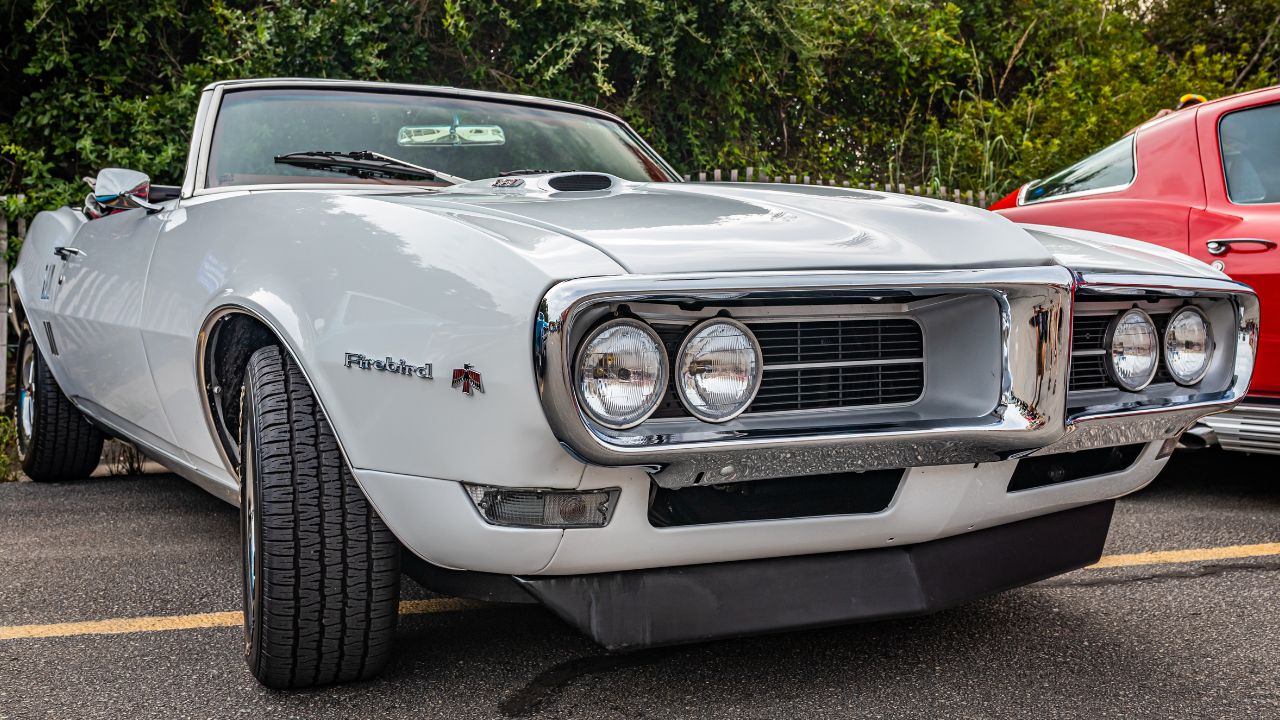
Contemporary coverage of a 1967 Firebird Sprint convertible reinforces that positioning. The feature notes that in 1967 both the base OHC and the hotter Sprint were offered, and that the OHC engine was enlarged to 250 cubic inches over its short life, a detail that underscores how Pontiac kept refining the package even as it remained a minority choice. Another historical piece on the Sprint six, again dated Feb 11, 2014, describes how the Sprint’s 215 hp rating for 1967 put it in credible company with some small‑block V8s, yet the market still saw it as an alternative rather than the default. That combination of respectable output and limited take‑rate is a big reason the Firebird Sprint OHC is rarer today than many of its V8 siblings.
Real‑world examples and current market pricing
Recent sales and listings give a clearer picture of what Firebird Sprint OHC cars bring today. One detailed listing for a 1967 Pontiac Firebird Sprint shows an asking price of $34,995, with Stock 4237‑DFW and an Engine Size of 230 c.i OHC 6 Cylinder, backed by a 3 Speed Manual Transmission and showing 65,010 miles (Unknown). That example illustrates how a clean, driver‑ready Sprint with its original style drivetrain can sit in the mid‑$30,000 range, a level that reflects both its rarity and the fact that it is not yet priced like the most coveted V8 muscle cars.
The 1968 model year shows even more variation. A market snapshot for 1968 Firebirds highlights a specific 1968 Pontiac Firebird Sprint, described as Original and Highly Original, with 183 m TMU, an Automatic transmission and LHD, that sold for $56,000. That sale, for a low‑mileage, highly authentic car, shows how the very best Sprint OHC examples can push well beyond the mid‑$30,000 range when originality and condition line up. Broader pricing data for 1968 Pontiac Firebird Classic Cars for Sale lists 1968 Pontiac Firebird Classic Cars for Sale with Pontiac Firebird Pricing that breaks down as Low $16,000, Average $58,021, and High $150,000, with Filte options that cover a range of trims. While those figures apply to all 1968 Firebirds rather than Sprint OHC cars alone, they frame the Sprint’s place in the market: typically above the low end, often near or slightly below the overall average, and only occasionally approaching the very top of the spectrum when condition and provenance are exceptional.
How condition tiers shape Firebird Sprint OHC values
Condition is the single biggest factor separating a mid‑$20,000 Sprint from a six‑figure Firebird, and valuation tools make that clear. A detailed 1968 Pontiac Firebird valuation chart breaks the market into four tiers: Perfect Condition, Excellent Condition, Good Condition, and Fair Con. For 1968 Firebirds, it lists Perfect Condition values between $36,300 and $253,000, Excellent Condition between $25,300 and $36,300, Good Condition between $18,000 and $25,300, and Fair Con at lower levels. Those ranges cover all engine options, but they map neatly onto what I see in Sprint OHC sales: driver‑quality cars often fall into the Good or lower Excellent bands, while the rare, highly original Sprint can edge into the upper Excellent or even Perfect territory.
Broader Firebird data helps put those numbers in context. A valuation tool for a later 1979 Pontiac Firebird, presented under Common Questions, notes that values for that generation vary widely depending on condition, mileage, options, and history, and that the average sale price over the last three years was $14,850. Compared with that, even a mid‑tier Sprint OHC from 1967 or 1968 typically commands a premium, reflecting both its earlier build date and its unusual powertrain. When I line up the condition‑based valuation ranges with real‑world examples like the $34,995 1967 Sprint and the $56,000 1968 Sprint, the pattern is consistent: originality, documentation, and mechanical correctness can move a Firebird Sprint OHC from the middle of the pack into the upper reaches of the market, even if it will usually trail the most coveted big‑block V8 cars in absolute price.
More from Fast Lane Only