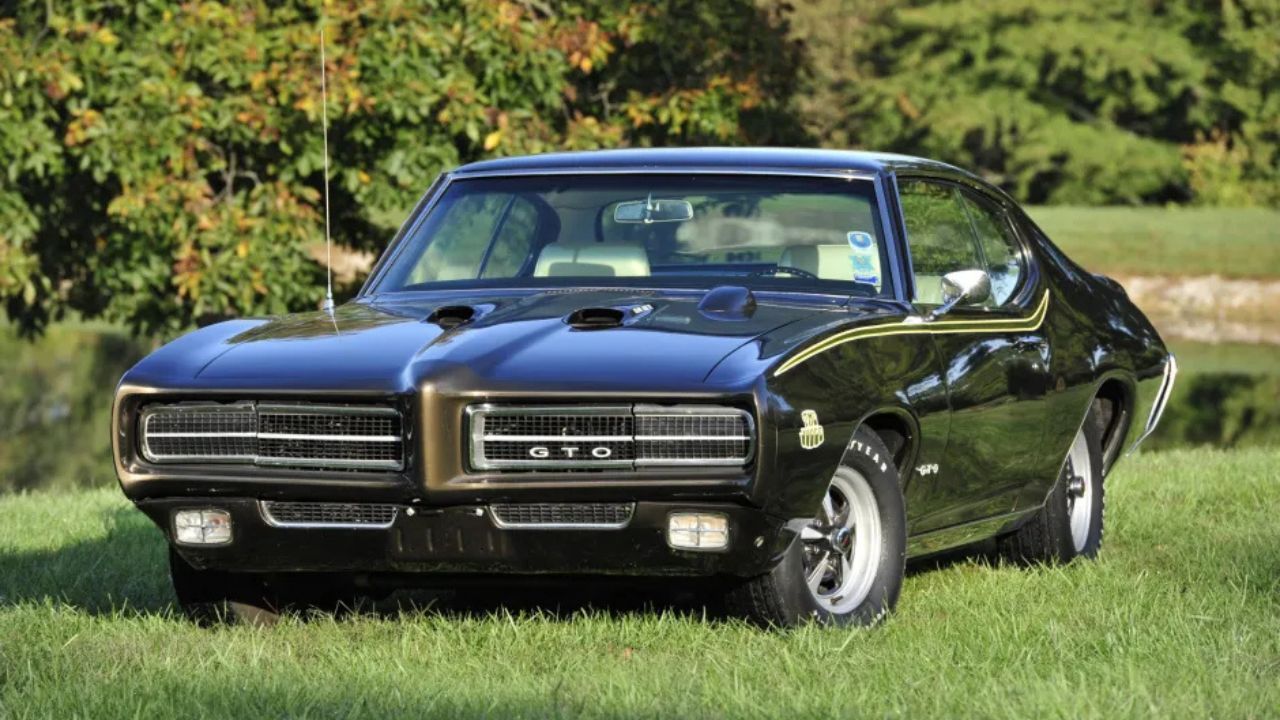
The 1969 Pontiac GTO Judge Ram Air IV arrived at the height of the muscle car wars and quickly became one of General Motors’ most coveted performance machines. Built in limited numbers and engineered with a race-bred V8, it turned a marketing gimmick into a genuine street terror. Today, that combination of rarity, factory performance and cultural impact has pushed the Ram Air IV Judge into the top tier of collectible American muscle.
What happened
When Pontiac introduced the GTO Judge package for 1969, the goal was to create a cheaper, youth-oriented version of the standard GTO that could compete directly with budget performance models like the Plymouth Road Runner. The Judge name, bright graphics and wild colors were meant as a tongue-in-cheek pop culture reference, but the hardware under the skin was serious. The most extreme configuration paired the Judge package with the Ram Air IV engine, a 400 cubic inch V8 tuned far beyond the base powertrain.
The Ram Air IV was a factory hot rod. Pontiac engineers specified high-flow cylinder heads, a more aggressive camshaft, forged internals and a revised induction system that fed cooler outside air to the carburetor. Period ratings listed the Ram Air IV at 370 horsepower, a figure that enthusiasts and testers have long considered conservative once real-world dyno numbers are taken into account. In a mid-size A-body chassis, that output turned the GTO Judge into one of the most potent street cars in the General Motors portfolio.
Production of Ram Air IV Judges remained low compared with the broader GTO line. While Pontiac sold tens of thousands of GTOs in 1969, only a small fraction received the Ram Air IV option, and fewer still combined that engine with the distinctive Judge trim. Collectors now place the Ram Air IV Judge alongside the rarest factory Pontiacs, a group that includes limited-run performance specials highlighted among the rarest Pontiac muscle models.
The Judge package itself amplified the car’s presence. Carousel Red paint, bold side stripes, a rear spoiler and unique badging turned the GTO into a rolling billboard for Pontiac’s performance image. Inside, buyers could specify a close-ratio four-speed manual transmission, bucket seats and a full gauge package, which reinforced the car’s intent as a serious driver’s machine rather than a simple appearance package.
On the street and at the drag strip, the Ram Air IV Judge quickly earned a reputation. Contemporary road tests recorded quarter-mile times that put the car in direct contention with other top-tier Detroit muscle, including big-block Chevrolets and Hemis from Chrysler. That performance, combined with the car’s distinctive look, cemented its status among the most powerful Pontiacs ever to leave a factory assembly line.
Why it matters
The 1969 GTO Judge Ram Air IV matters because it represents the moment when Pontiac distilled its performance ambitions into a single, highly focused package. The original GTO had already set the template for the muscle car format by dropping a big V8 into a mid-size body. By the late 1960s, the market was crowded with imitators, and Pontiac needed something that would stand out both visually and mechanically.
The Ram Air IV Judge delivered that distinction. While other GTOs offered strong performance, the top-spec engine and Judge trim turned the car into a halo model that drew attention to the rest of the lineup. Later analyses of Pontiac’s performance history consistently rank the Ram Air IV Judge among the brand’s most significant achievements, placing it alongside other legendary muscle cars like the Firebird Trans Am and early GTOs.
Rarity is another part of the story. Limited production has always influenced collector interest, but with the Ram Air IV Judge that scarcity is layered on top of genuine performance pedigree. Surviving cars with original drivetrains, correct Judge trim and documented histories are now treated as blue-chip assets within the muscle car market. Auction results reflect that premium, with well-restored or highly original examples commanding prices that far exceed more common GTOs with lesser engines.
The car’s significance also reaches beyond raw numbers. The GTO line is often described as America’s original muscle car, and enthusiasts have cataloged at least fifteen key milestones in its evolution, from early tri-power setups to later high-compression engines and special packages. Lists of GTO facts routinely single out the Judge and the Ram Air IV option as turning points that pushed the model from trendsetter to icon.
From a design perspective, the Judge Ram Air IV captures the late 1960s performance aesthetic more clearly than many of its peers. The bright colors, functional hood scoops, spoilers and stripes were not subtle, but they aligned perfectly with the era’s appetite for bold, youth-oriented styling. At the same time, the car remained usable as a daily driver, with a full interior, available air conditioning and power accessories when ordered that way. That dual character helped the GTO reach a wide audience while still satisfying serious performance buyers.
The legacy of the Ram Air IV Judge also shapes how later generations view Pontiac as a brand. Even after the division’s closure, enthusiasts continue to measure new performance cars against benchmarks set by Pontiac’s late-1960s output. Discussions of the brand’s high points often circle back to this specific combination of GTO, Judge trim and Ram Air IV powertrain as evidence of what Pontiac could achieve when engineering and marketing aligned.
What to watch next
Interest in the 1969 GTO Judge Ram Air IV shows little sign of fading, and several trends are likely to influence how the car is valued and preserved in the coming years. One key factor is documentation. As prices rise, buyers have become more discerning about build sheets, original engine stampings and period-correct components. Cars with complete paperwork and matching-number drivetrains will likely continue to outpace similar examples with gaps in their histories.
Restoration standards are another area to watch. Early restorations often focused on cosmetic appeal, sometimes at the expense of factory accuracy. Modern specialists have shifted toward meticulous, reference-correct work that replicates original finishes, hardware and assembly methods. For a car as closely scrutinized as the Ram Air IV Judge, that level of detail can have a substantial impact on value, especially at high-profile auctions where bidders compare cars side by side.
There is also a growing split between collectors who prioritize untouched originality and those who favor sympathetic restoration. Survivor-grade Judges, with original paint and interiors, are increasingly rare, and some owners now choose preservation over full cosmetic refreshes. How the market continues to reward originality compared with show-quality restorations will shape decisions about cars that remain unrestored today.
Younger enthusiasts are influencing the conversation as well. Many grew up seeing GTO Judges in video games, model kits and online content rather than on the street. For that audience, the Ram Air IV Judge stands as a symbol of unfiltered, analog performance, with a big-cube naturally aspirated V8 and manual transmission that contrast sharply with modern turbocharged or electrified performance cars. As this group gains purchasing power, its tastes will help determine whether values plateau or continue to climb.
Finally, the broader context of Pontiac’s muscle era keeps the Ram Air IV Judge in the spotlight. Enthusiast media frequently revisits the brand’s back catalog, ranking the most significant and rarest models and reinforcing the idea that the 1969 GTO Judge Ram Air IV sits near the top of Pontiac’s performance hierarchy. As long as collectors and historians continue to revisit that golden age, this particular GTO configuration is likely to remain one of General Motors’ most desired muscle cars, both as an artifact of engineering ambition and as a vivid reminder of how far a factory street car could be pushed in the late 1960s.
More from Fast Lane Only