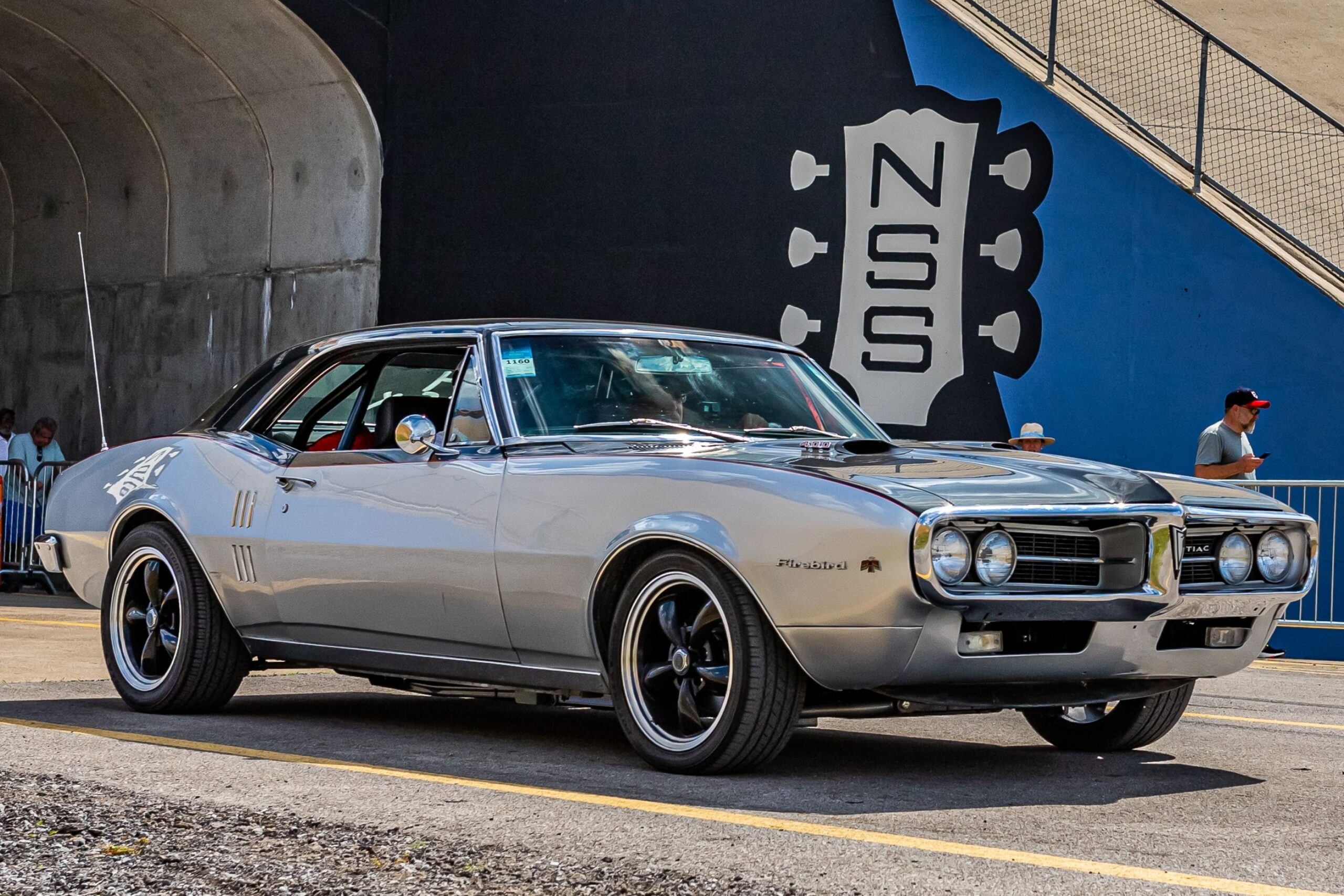
Every era has that one car that looks like it should’ve been the hero, but the magazines acted like it showed up late and forgot its cape. In the late ’60s, that role fell on the Pontiac Firebird 400—especially the early cars that got judged by tidy brochure numbers and sometimes-fussy test procedures. Yet out on real roads, with real people behind the wheel, it routinely punched above its “official” weight.
It wasn’t that the Firebird was ignored. It was that it lived in the shadow of louder headlines, bigger reputations, and one very famous sibling from the same GM family. But if you talk to longtime owners, street racers, and anyone who’s actually tried to hustle one down a two-lane, the story changes fast: the “low-rated” Firebird 400 had a habit of feeling quicker than it had any right to be.
Why the numbers looked underwhelming (on paper, anyway)
Start with the horsepower ratings. Back then, manufacturers used “gross” horsepower figures, which sounded huge but were tested under ideal conditions that didn’t reflect real accessories, exhaust systems, and street setups. Pontiac, though, had a reputation for being more conservative than some rivals, and certain 400 combinations didn’t chase the biggest headline numbers even when they had plenty of real-world muscle.
Then there’s the reality of magazine testing. A single test car could be slightly out of tune, saddled with tall gears, or paired with an automatic that wasn’t perfectly dialed in. Toss in tire technology that, by modern standards, was basically “best of luck,” and you can see how a car might look average in print but feel entirely different when conditions were right.
The Firebird 400’s secret weapon: torque you could actually use
Here’s the thing that doesn’t always show up in a simple horsepower headline: torque. A 400-cubic-inch Pontiac V8, even in milder trims, made the kind of midrange shove that makes a car feel alive in normal driving. You didn’t have to spin it to the moon, slip the clutch like a maniac, or wait for the second coming of the camshaft to wake up.
On the street, that matters more than most people admit. Rolling from 20 to 60, merging onto the highway, or blasting out of a corner on a back road—this is where the Firebird’s big-inch, big-torque personality showed up. If you’ve ever driven a car that “comes on the cam” only after you’ve already run out of road, you know why the Pontiac approach felt so satisfying.
It wasn’t the lightest, but it felt eager
The first-gen Firebird shared DNA with the Camaro, but Pontiac didn’t simply copy-paste the vibe. Depending on options, some Firebirds weren’t featherweights, and that likely didn’t help certain published acceleration numbers. But the chassis balance, the seating position, and the way the car responded to throttle often made it feel more eager than a spec sheet suggested.
Part of that is gearing. Plenty of these cars left the factory with gear ratios aimed at drivability, not drag-strip heroics. Yet the torque curve helped cover those choices, so you could cruise comfortably and still get that instant “oh, hello” surge when you put your foot down.
The street cared about feel, not just ET slips
Quarter-mile times are fun, but street dominance is its own sport. The Firebird 400 tended to shine in the messy, real-world situations where traction was imperfect and quick response mattered more than peak power. A hard launch on skinny bias-ply tires could turn any big-block dream into a smoke machine, but a torquey Pontiac with a smooth delivery could actually hook up and go.
And it sounded right doing it. Pontiac V8s have a tone that’s a little different—less high-pitched snarl, more deep-breathing punch. It’s the kind of sound that makes you glance at the tach and realize you’re going faster than you thought, which is both delightful and a tiny bit incriminating.
Underrated trims and “quiet” options made it sneakier
Not every Firebird 400 wore the loudest stripes or the boldest scoops. Some were ordered in understated colors with minimal badging, especially before the later-era graphic explosions. That meant plenty of them operated like sleeper cars before “sleeper” became a social-media category.
And Pontiac’s option sheets could be a rabbit hole. Certain combinations of carburetion, exhaust, rear gears, and suspension bits could dramatically change how the car behaved. Two Firebird 400s could share a badge and feel like different animals, which also helps explain why some tests didn’t tell the whole story.
It also had something you can’t dyno: confidence
A lot of muscle cars were fast in a straight line and a little sketchy everywhere else. The Firebird, especially when equipped with better suspension options, could feel more composed than people expected. It wasn’t a modern sports car, but it often gave drivers the sense that it wanted to play, not just survive.
That confidence adds speed in the real world. If a car communicates what the front end is doing, stays relatively settled over bumps, and doesn’t punish you for mid-corner throttle changes, you’ll drive it harder. And if you drive it harder, it suddenly becomes the car that “feels faster than the numbers,” which is exactly the Firebird 400’s reputation among folks who actually lived with one.
Why the Firebird 400 aged so well in enthusiasts’ memories
Time has been kind to cars that were more than one-dimensional. The Firebird 400 wasn’t always the undisputed king on a timeslip, but it delivered a blend: strong street torque, a willing chassis, and a personality that didn’t need to shout to be noticed. That mix tends to stick in people’s heads longer than a single impressive statistic.
It also benefited from being a little underestimated. When a car is hyped to the sky, it has to be perfect or it disappoints. When it’s rated low, every surprise win—every moment it pulls harder than expected, turns in cleaner than expected, or just feels better than expected—becomes part of its legend.
The bottom line: “low-rated” didn’t mean low-impact
The Pontiac Firebird 400 proved, repeatedly, that a car can be modestly rated and still be a street heavyweight. Paper stats and period tests captured only part of the experience, and sometimes not even the best part. Out where it mattered—stoplight sprints, rolling runs, back-road blasts—it delivered more than the headlines suggested.
Maybe that’s the real charm of classic muscle: the best ones aren’t always the ones that won the loudest arguments in 1968. Sometimes they’re the ones that quietly surprised everyone, one green light at a time.
More from Fast Lane Only