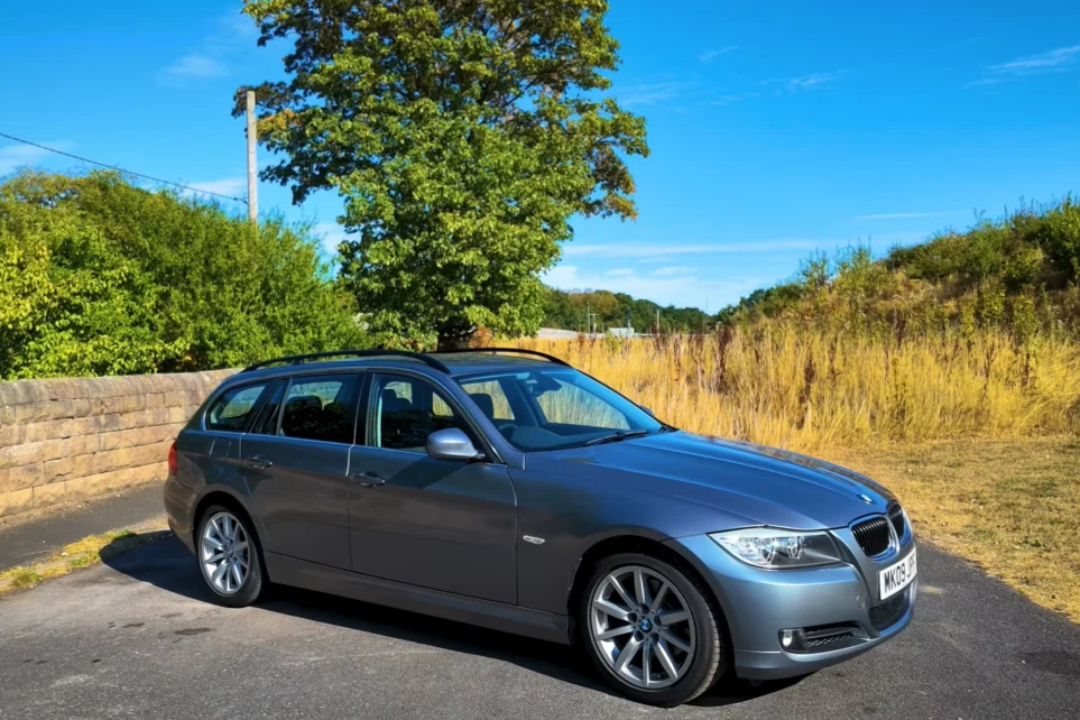
There’s a special kind of joy in a car that doesn’t shout. No hood vents the size of mailboxes, no wing that could double as patio furniture, no exhaust note that announces your arrival three zip codes early. And yet, press the throttle and suddenly it’s doing the kind of work people usually associate with “serious” performance badges.
That’s the story behind a factory-built sleeper that spent years being overlooked by perfectly reasonable shoppers. Not because it wasn’t quick, but because it was hiding in plain sight—parked between sensible commuters and family-haulers, looking like it was on the way to pick up groceries.
The sleeper that didn’t need a costume
Most sleepers are made, not born. Someone adds boost, swaps an engine, deletes half the interior, and hopes the neighbors don’t notice. This one didn’t need any of that; it rolled out of the factory already set up to surprise people.
That factory-built part matters. It means the power wasn’t a happy accident or a risky project—it was engineered, validated, and warranted (at least when it was new). The twist is that it didn’t advertise itself loudly, so plenty of buyers walked right past it without realizing what it could do.
Why so many shoppers missed the point
Timing played a big role. When crossovers started taking over driveways, a quiet, quick sedan or wagon didn’t look like the “smart” choice to a lot of households. The market was busy rewarding height, cargo space, and the psychological comfort of sitting up high.
Then there was the styling. The whole idea was subtlety—normal wheels, restrained trim, an interior that prioritized comfort over theatrics. If you weren’t reading spec sheets for fun, you could easily assume it was just another practical option with a little extra chrome.
Even enthusiasts sometimes overlooked it because it didn’t fit the usual performance narrative. No boy-racer vibe, no track-day marketing overload, no loud social media presence. It was the kind of car you notice only after it’s already pulled a car-length on you.
Factory performance, the quiet way
The magic wasn’t just horsepower, although it had plenty for its era. The real trick was usable torque delivered in a way that made everyday driving feel effortless. It didn’t need to be wrung out like a high-strung sports car to feel quick, which is exactly why it impressed owners who actually drove it daily.
On paper, it looked “respectable.” On the road, it felt sneakily fast, especially from a roll or when merging onto a short on-ramp with a couple passengers and a trunk full of stuff. It’s the kind of performance that doesn’t demand attention, but it earns it.
Handling that didn’t punish your spine
Here’s where a lot of buyers got pleasantly surprised: it could hustle without turning every pothole into a personal insult. The suspension tuning leaned toward composed rather than harsh. You could do a long commute, then take the scenic route home, and neither one felt like the car was compromising.
Steering and chassis balance weren’t about lap times as much as confidence. It stayed stable at speed, didn’t get flustered in quick transitions, and generally behaved like it had better manners than the average “fast” car. That’s a big deal if you want performance you’ll actually use.
The interior trick: normal on purpose
Inside, it didn’t scream “performance model,” and that was half the charm. Comfortable seats, sensible controls, and enough sound insulation to keep the cabin from turning into a drum. You could talk to passengers without raising your voice, even while the powertrain was quietly plotting something mischievous.
That normalcy helped it blend in on dealer lots. Shoppers often equate excitement with obvious cues—big bolsters, bright stitching, aggressive gauge graphics. This one looked like it wanted to be responsible, which made its real capability feel like a secret handshake.
Who it was perfect for (and who walked away)
It was a dream for the buyer who wanted one car to do everything: commute, road trip, haul, and still have enough punch to make a back road interesting. It also suited the person who didn’t want attention. No one’s trying to race you at every stoplight if your car looks like it belongs in a corporate parking lot.
But it wasn’t perfect for everyone. If someone wanted a dramatic exhaust, hyper-sharp ride, or the kind of styling that starts conversations at gas stations, this sleeper could feel too understated. And if a buyer’s priorities were purely fuel economy or lowest possible maintenance costs, a higher-output drivetrain might’ve looked like unnecessary complexity.
The “wait, this came like that?” factor
Part of the sleeper legend is the moment someone learns it’s stock. No tuning, no hidden modifications, no “previous owner says it’s got a little something done.” Just factory engineering delivering far more speed than the exterior suggests.
That’s also why it’s become more appreciated with time. As people look back and realize how rare it is to get genuine performance wrapped in a regular-person package, the appeal grows. Nostalgia helps, sure, but so does the simple fact that modern cars often broadcast their intent much more loudly.
What to look for if you’re shopping one now
If you’re hunting this kind of factory sleeper today, the smartest move is to focus on condition and maintenance history, not just the headline power number. These cars tend to attract owners who either babied them or used every bit of performance—sometimes both. Service records, fluid changes, and evidence of careful upkeep matter more than a shiny listing description.
It’s also worth checking for signs of “invisible” modifications. A sleeper that started life subtle can be tempting to tune, and not every upgrade is done thoughtfully. A pre-purchase inspection is the best money you can spend, because it can reveal the difference between a well-loved gem and a future headache with nice paint.
And finally, pay attention to the boring stuff: tires, brakes, cooling, and suspension wear. Performance is a system, not a single spec, and a neglected system makes even a quick car feel tired. A well-sorted example, though, still delivers that same grin—the one you get when a perfectly ordinary-looking car does something totally un-ordinary.
Why the sleeper idea still hits home
There’s something refreshing about performance that doesn’t need to perform for an audience. A factory sleeper is confidence without the costume, the kind of car that can be both grown-up and genuinely fun. It’s proof that “practical” and “quick” don’t have to live in separate garages.
And maybe that’s why so many buyers missed it at the time. It didn’t beg for attention; it just did the job—quietly, quickly, and with a wink you only notice when you’re paying attention.
More from Fast Lane Only