Modern engines are basically rolling science projects: turbochargers, direct injection, variable valve timing, cylinder deactivation, start-stop—the whole buffet. And yet one stubborn problem keeps showing up no matter how new the tech is: how do you move a lot of air and fuel efficiently across a wide RPM range without making the engine temperamental, thirsty, or both?
Here’s the funny part: a “forgotten” V8 layout tackled that exact issue decades ago with an elegant trick. It didn’t rely on software, sensors, or electrically actuated everything. It just used geometry, pressure waves, and smart packaging to make the engine breathe the way it wanted to, when it wanted to.
The problem that won’t quit: engines don’t breathe evenly
An engine’s intake system looks simple—air in, fuel in, spark, go—but the airflow inside isn’t smooth like a desk fan. It’s pulsing. Every time an intake valve opens, the cylinder takes a gulp, and that gulp sends pressure waves bouncing up and down the intake runners like sound in a hallway.
If those waves are timed right, they help ram more air into the cylinder (free power and better efficiency). If they’re timed wrong, they push air the wrong way, hurt torque, and create uneven cylinder-to-cylinder fueling. Even today, with computers correcting fuel trims in real time, uneven breathing still shows up as roughness, emissions headaches, and that annoying “why does it feel flat right here?” sensation in the powerband.
The old-school fix: a cross-ram intake on a V8
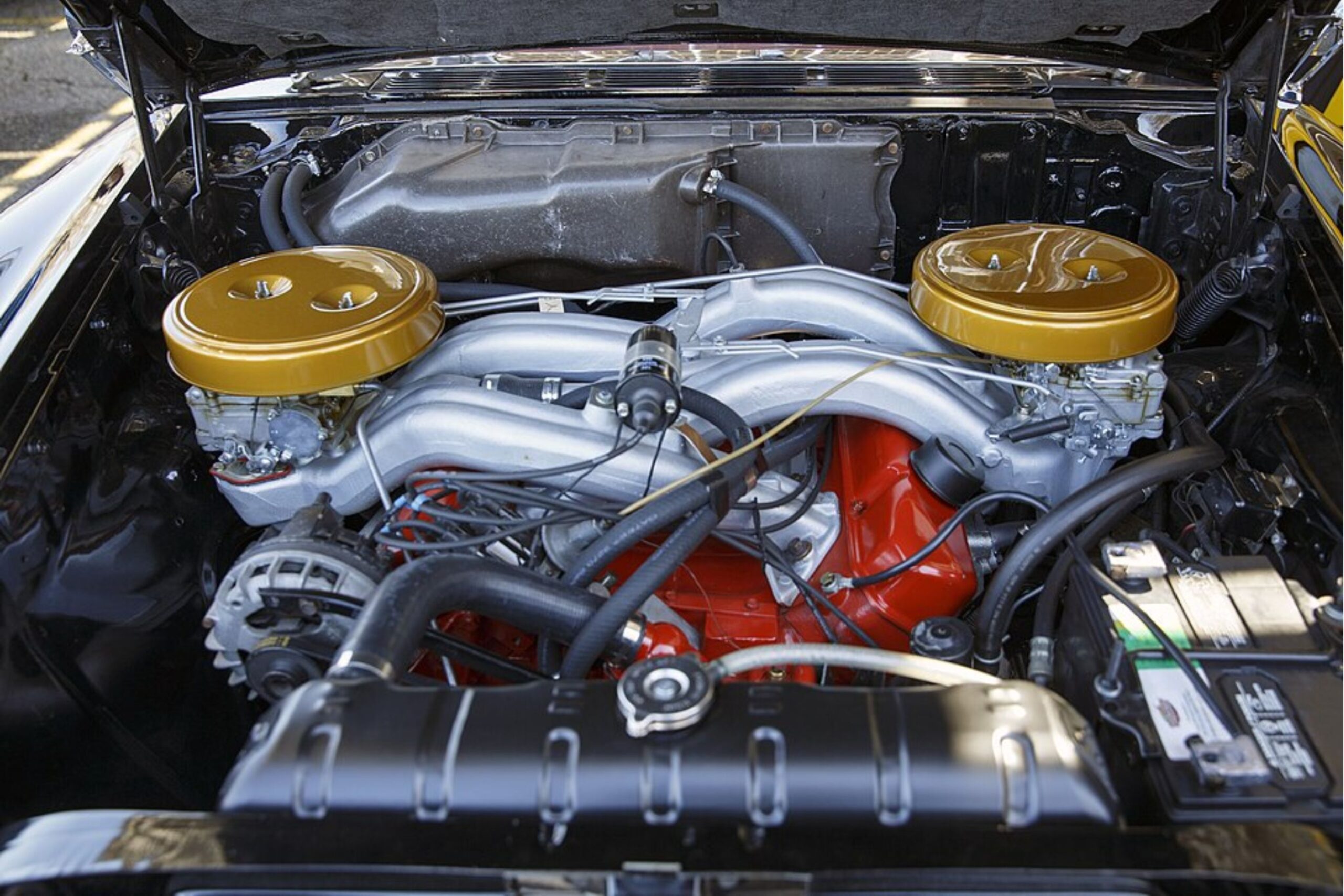
The forgotten hero is the cross-ram intake layout, a design where each cylinder bank’s intake runners don’t feed from the plenum sitting above that same bank. Instead, the runners cross over so the left-side cylinders breathe from a plenum on the right, and the right-side cylinders breathe from a plenum on the left.
At first glance, it looks like someone built an intake manifold while playing a practical joke. Long runners arching across the valley, big plenums perched outboard, and carburetors (or throttle bodies, if you modernize it) sitting like twin lunchboxes. But there was method in the madness.
Why crossing the runners actually helped
The cross-ram’s superpower was runner length without ridiculous height. Long intake runners are great for low- and mid-range torque because they tune those pressure waves to arrive at the intake valve at just the right time. The issue is packaging: making runners long often means making the intake tall, and tall intakes are how hoods end up with scoops, bulges, and excuses.
By crossing the runners, the design got length while keeping things relatively low and stable. It also gave each bank a plenum with less “neighborly interference” from cylinders firing in close sequence on the same side. In plain terms, it could calm down some of the intake chaos that makes mixture distribution uneven, especially when you’re using shared plenums and big throttles.
The modern problem it nailed: cylinder-to-cylinder imbalance
Ask anyone who tunes engines and they’ll tell you the same truth: “equal” fueling on paper doesn’t mean equal fueling in real life. One cylinder runs lean, another runs rich, and suddenly you’re chasing misfires, knock, or emissions spikes. Direct injection and wideband sensors help, but they can’t magically make airflow distribute perfectly inside a plenum at every RPM and throttle angle.
Cross-ram layouts were an early, mechanical way of nudging distribution in a better direction. With separated plenums and those long, sweeping runners, the intake pulses had more room and more time to settle. It wasn’t perfect, but it often meant fewer cylinders acting like they had their own opinions about air-fuel ratio.
Torque where you actually drive
Modern performance marketing loves peak horsepower numbers because they’re easy to brag about. But in real driving—merging, passing, climbing a hill, towing—torque in the middle matters more. Long runners are basically a cheat code for that, because they build cylinder filling where RPM is moderate and throttle openings are realistic.
The cross-ram design leaned into that reality. It traded some high-RPM breathing potential for strong midrange, the kind that makes a car feel eager without needing to scream. If you’ve ever driven something that feels “big” at half throttle, that’s the vibe this layout was chasing.
So why did it disappear?
It wasn’t because it didn’t work. It faded because the world moved on to priorities it couldn’t serve as well: compact packaging, lower cost, easier manufacturing, and tighter emissions control. A cross-ram is big, complex, and not exactly thrilled about fitting under low hoodlines or meeting pedestrian-impact rules.
Then fuel injection got smarter, intake manifolds went plastic, and variable intake systems became the new hotness. Instead of one long-runner setup, engineers could build dual-length runners, active flaps, and carefully shaped plenums that switch personality depending on RPM. Same goal, more flexibility, less weird-looking hardware sprawled across the engine bay.
How the same idea shows up today (just in a different outfit)
If the cross-ram sounds familiar, it’s because the underlying concept never really died. Modern engines still use tuned runner length, plenum volume tricks, and separated flow paths to manage pressure waves and distribution. They just do it with internal valves, resonance chambers, and CAD-optimized shapes instead of obvious crossovers you can point at.
You can also see echoes of it in some high-performance intake designs that prioritize equal runner length and consistent cylinder filling. Even when the runners don’t literally cross, the goal is the same: keep each cylinder from getting a different deal at the breathing table. The tech got quieter and more compact, but the physics didn’t change.
The quiet lesson from a loud V8
The cross-ram V8 design is a reminder that “old” doesn’t mean “primitive.” Sometimes it means someone solved the same problem with fewer tools and a clearer view of the fundamentals. Pressure waves, runner length, and airflow distribution are still the game, no matter how many sensors you bolt on.
And if nothing else, it’s proof that engineers have always been willing to do slightly unhinged-looking things in the name of better torque. Turns out that’s not a bug in the history of engines—it’s basically the whole story.
More from Fast Lane Only