The late 1960s muscle car era produced countless performance icons, but some of the most capable factory builds never received the spotlight they deserved. The Mercury Cougar Eliminator is one of those overlooked machines—a car built with serious intent, strong V8 power, and track-inspired upgrades, yet often overshadowed by its Ford Mustang cousin.
What happened
When Mercury launched the Cougar in the late 1960s, it was positioned as a more refined alternative to the Mustang. But in 1969, the Eliminator package changed that image completely. Instead of focusing on luxury or cruising comfort, Mercury created a performance-focused version aimed directly at the muscle car market.
The Mercury Cougar Eliminator came equipped with a range of V8 options, including high-output versions of Ford’s small-block and big-block engines. The most powerful configurations featured the 428 Cobra Jet V8, delivering serious straight-line performance that put it in competition with the era’s top muscle cars.
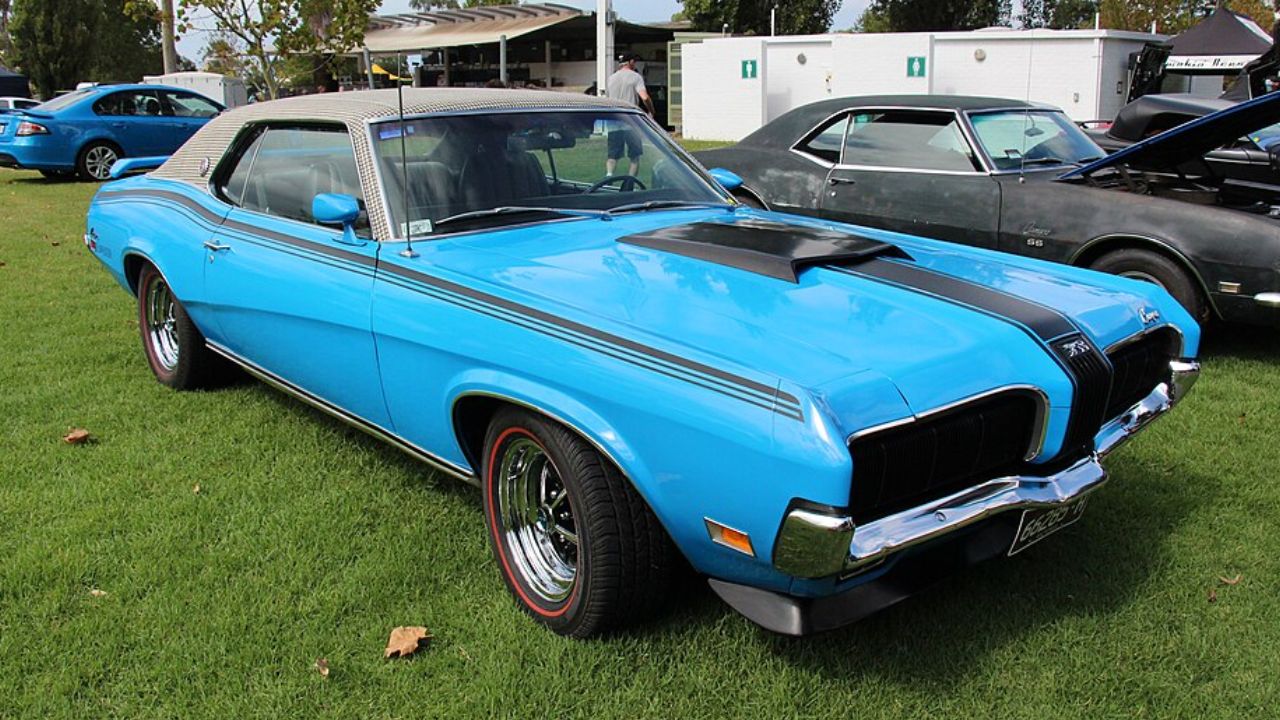
Unlike its more understated base models, the Eliminator adopted a bold visual identity. It featured aggressive stripes, a rear spoiler, hood scoops, and distinctive color options designed to signal performance intent. Despite this, it still retained the Cougar’s longer wheelbase and more upscale interior compared to the Mustang, blending muscle with a slightly more mature driving character.
On the road, the Eliminator delivered strong acceleration and highway performance, especially in big-block configurations. However, its slightly heavier platform meant it was not always as agile as lighter competitors. Instead, it leaned into stability and straight-line strength, making it a confident high-speed cruiser as well as a capable street performer.
In period testing and enthusiast circles, the Cougar Eliminator was respected but often overlooked in favor of more aggressive or better-publicized Ford performance models. That lack of attention would follow it for decades.
Why it matters
The significance of the Mercury Cougar Eliminator lies in its position within Ford’s performance hierarchy. While the Mustang captured most of the public attention, Mercury quietly built a machine that shared much of the same engineering DNA but with a different character.
This dual identity is part of what makes the Eliminator interesting today. It offered near-Mustang-level performance with a more premium feel, but without the same cultural spotlight. As a result, many buyers at the time gravitated toward more famous nameplates, leaving the Cougar underappreciated in both sales and long-term collector awareness.
The Eliminator also represents a broader theme in muscle car history: the “shadow performance” models. These were factory-built cars that had the hardware to compete with top-tier performance machines but lacked the marketing dominance or racing pedigree of their rivals. In many cases, they were just as capable, but not as widely recognized.
Over time, enthusiasts have begun to reassess that gap. The Cougar Eliminator is now appreciated for what it really was—a well-engineered, big-block-powered muscle car with strong straight-line capability and distinctive styling that set it apart from Ford’s more mainstream performance offerings.
What to watch next
Today, the Mercury Cougar Eliminator is increasingly viewed as a hidden gem in the late-1960s muscle car market. While it does not command the same widespread attention as Mustangs or Camaros, interest has steadily grown among collectors seeking rarer, less mainstream factory performance cars.
Originality and engine configuration are critical factors. Big-block-equipped Eliminators, especially those with the 428 Cobra Jet, are significantly more desirable than smaller-engine versions. As with many muscle cars of the era, survival rates are low due to decades of modification and hard use.
The Cougar platform itself is also gaining renewed appreciation for its balance of comfort and performance. It represents a slightly different interpretation of the muscle car formula—less stripped-down than pure drag-oriented machines, but still fully capable of serious acceleration.
Looking ahead, the Eliminator’s status is likely to continue rising as collectors expand their focus beyond the most famous nameplates. In that broader reevaluation of 1960s performance cars, the Cougar Eliminator stands out as a factory-built machine that delivered real capability, even if it never received the recognition it deserved at the time.
More from Fast Lane Only