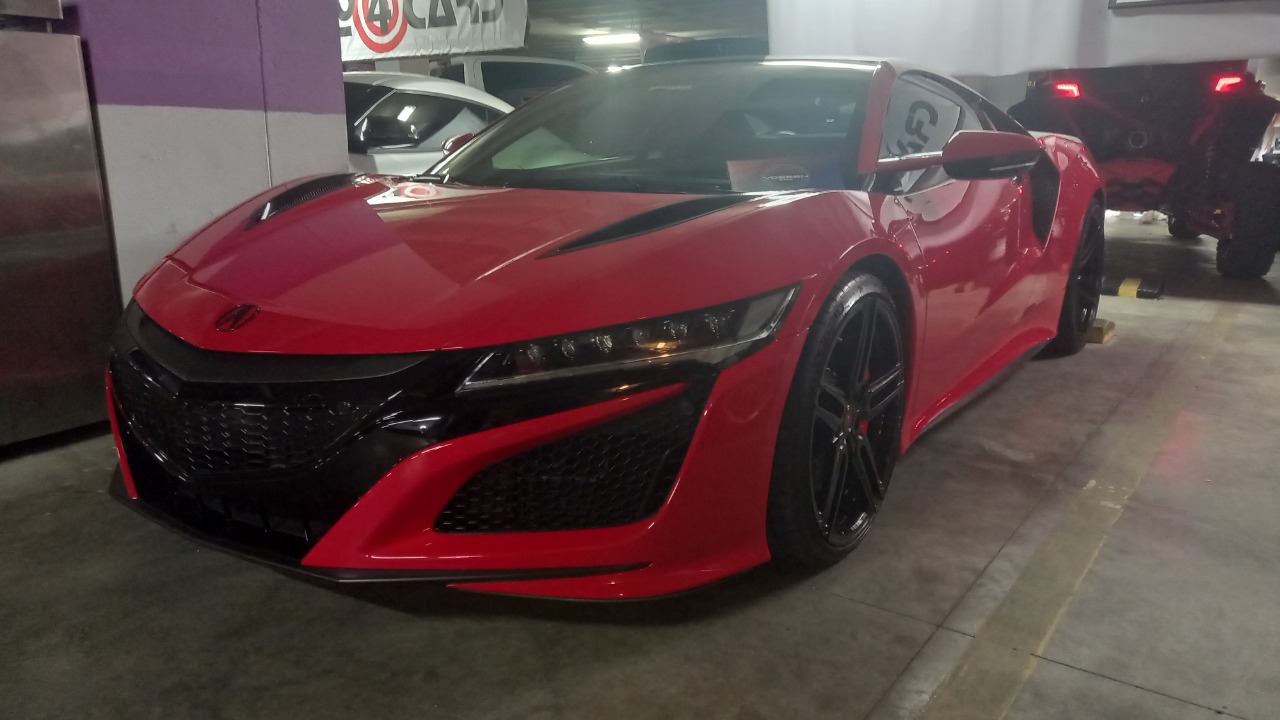
When the Acura NSX arrived, it didn’t just challenge Europe’s exotic car hierarchy—it quietly exposed a weakness that brands like Ferrari could no longer ignore: reliability. The Acura NSX proved that a supercar could deliver serious performance without the constant mechanical drama owners had come to expect from Italian exotics.
What happened
Developed during Japan’s late-1980s performance boom, the NSX was Honda’s answer to the idea that supercars didn’t need to be fragile or difficult to live with. Engineers focused on precision, durability, and everyday usability, while still delivering mid-engine balance and high-revving performance.
At its core, the NSX used a 3.0-liter V6 paired with VTEC technology, producing smooth, linear power delivery rather than explosive turbocharged surges. More importantly, it was engineered with an obsessive focus on build quality. Aluminum construction reduced weight while improving rigidity, and the chassis was tuned with input from racing legend Ayrton Senna, refining its high-speed stability and handling response.
What set the NSX apart, however, wasn’t just performance—it was consistency. Owners discovered that the car could be driven hard, cooled down, and driven again with minimal mechanical issues. Routine reliability levels were closer to daily drivers like the Honda Accord than traditional supercars of the era.
This stood in sharp contrast to many European rivals, including entry-level models from Ferrari at the time. While cars like the Ferrari 348 delivered emotional driving experiences, they were also known for frequent maintenance demands, including electrical issues, clutch wear, and cooling system sensitivity.
The NSX didn’t try to outperform Ferrari purely on horsepower. Instead, it redefined expectations by eliminating the unpredictability that owners associated with exotic ownership.
Why it matters
The arrival of the Acura NSX changed the conversation around supercars in a fundamental way. Suddenly, performance alone was no longer enough—reliability and usability became part of the comparison.
Ferrari, along with other European manufacturers, began facing a new kind of benchmark. Enthusiasts and journalists increasingly compared ownership experience, not just lap times or acceleration figures. In that context, the NSX stood out as a car that could be driven daily without constant mechanical concern.
This shift didn’t mean Ferrari cars were suddenly unreliable by design, but it did highlight differences in engineering philosophy. Italian exotics of the era often prioritized emotional character, mechanical engagement, and high-strung tuning. The NSX demonstrated that those qualities could coexist with long-term durability if engineering priorities were different.
Over time, this pressure contributed to gradual improvements across the supercar segment. Manufacturers began placing greater emphasis on build quality, heat management, and service intervals. Even Ferrari models that followed—particularly in the 2000s—showed noticeable improvements in usability and consistency compared to earlier generations.
The NSX also forced a broader rethink of what a supercar could be. It wasn’t just a weekend machine or a fragile collector piece—it was a precision-engineered vehicle that could be driven regularly without constant worry. That expectation gradually influenced the entire segment.
What to watch next
Today, the Acura NSX is widely regarded as one of the most important supercars ever built, not only for its performance but for its engineering philosophy. It remains a benchmark for balance, reliability, and usability in a segment once defined by compromise.
Its influence can still be seen in modern Ferrari models, which now combine high performance with dramatically improved reliability, service intervals, and electronics designed for long-term durability. While Ferrari still emphasizes emotion and performance, the gap in everyday dependability compared to the early 1990s has narrowed significantly.
The NSX ultimately didn’t “defeat” Ferrari in outright performance—but it changed the rules of comparison. After its arrival, reliability was no longer a footnote in supercar ownership. It became part of the conversation, and every manufacturer had to respond in some way.
In that sense, the NSX didn’t just compete with Ferrari. It quietly pushed the entire supercar industry toward a new standard—one where precision and dependability mattered almost as much as speed.
More from Fast Lane Only