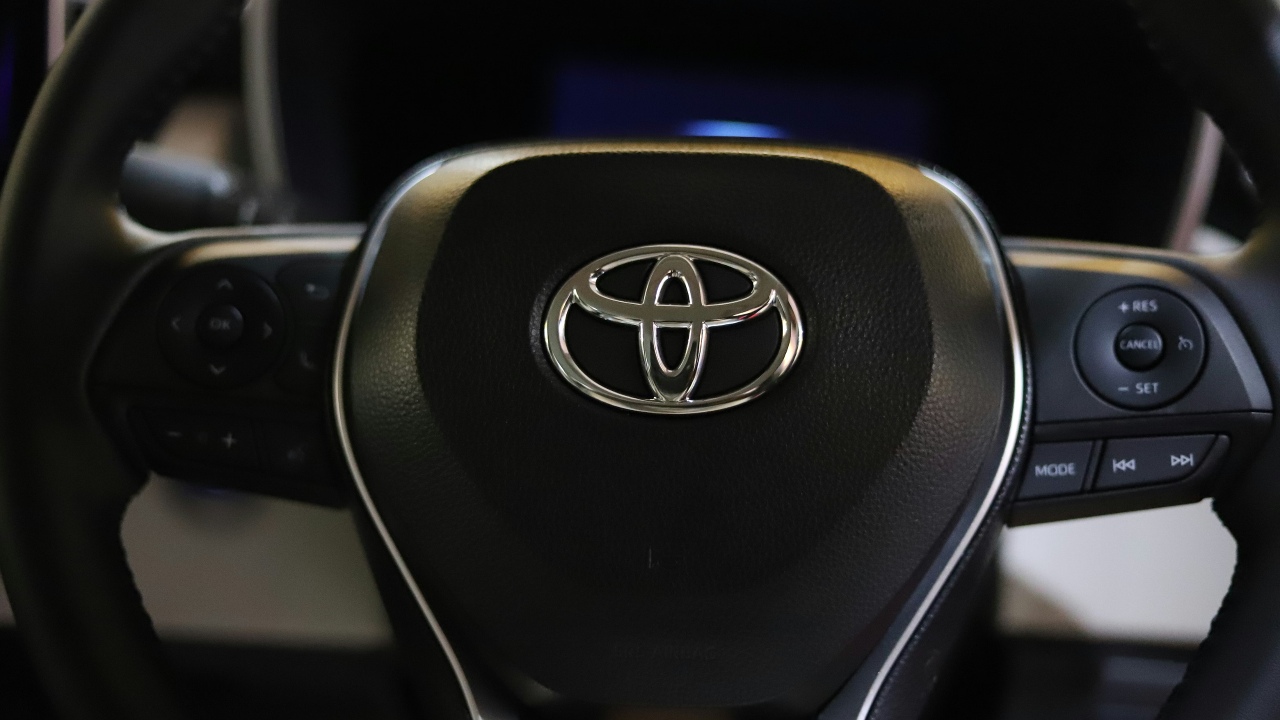
A Florida driver says he discovered his Toyota was quietly logging his every move and sharing that information with an insurance company, and he is now asking a court to decide whether the automaker crossed a legal and ethical line. His lawsuit, filed as a proposed class action, argues that what looked like a standard connected car feature was in fact a sophisticated surveillance system that turned routine commutes into a stream of monetizable data. The case lands at a moment when connected vehicles are rapidly becoming rolling computers, and when drivers are only beginning to grasp how much of their behavior is being recorded.
The complaint does more than describe one man’s shock at learning his driving history had been packaged and sold. It challenges the broader business model that has grown up around telematics, the industry term for the sensors and connectivity that now come standard in many new cars. If a court agrees that Toyota collected and shared this information without clear, informed consent, the ruling could reshape how automakers, insurers, and technology firms handle the data that modern vehicles constantly generate.
The Florida lawsuit that put Toyota’s tracking in the spotlight
According to the filings, a Polk County resident bought a Toyota, drove it as any owner would, and later learned that the vehicle had been quietly compiling a detailed record of his driving habits. He alleges that Toyota used a tracking device built into the car to gather what he describes as “vast amounts of information,” including his speed, braking, time of day, and location, then transmitted that data to Progressive Insurance without his permission. In his telling, he did not sign up for any telematics program, did not knowingly authorize data sharing, and only discovered the arrangement after Progressive began using the information to evaluate his risk profile.
The driver, identified as Siefke in court documents, has framed his case as a class action on behalf of other Toyota owners who may have been monitored in the same way. He contends that Toyota’s telemetry system pulled information from the camera, the speedometer, the GPS, and other onboard sensors, creating a minute by minute portrait of his behavior behind the wheel. His lawyers at Morgan & Morgan argue that this information was then sold or otherwise provided to Progressive Insurance, which allegedly used it to assess his driving without any explicit opt in. Toyota has been named alongside Progressive Insurance in related litigation that accuses both companies of participating in a data sharing pipeline that drivers never clearly agreed to.
What the car was allegedly collecting every time it started
At the heart of the complaint is a simple but unsettling claim: that the Toyota’s connected services turned the vehicle into a constant observer, recording not just where the driver went but how he behaved on the road. According to the lawsuit, the telemetry system captured speed, acceleration, braking, swerving, direction of travel, and the precise time and location of each trip. The reference to GPS and camera data suggests that the system did more than log basic mechanical readings, instead assembling a rich behavioral profile that could reveal daily routines, work schedules, and personal habits.
From a technical perspective, none of this is far fetched. Modern Toyotas are equipped with embedded cellular connections that support features such as remote start, emergency assistance, and vehicle health reports. The lawsuit alleges that the same pipeline used for those conveniences was also used to transmit driving data to third parties, including Progressive Insurance, without the kind of clear, separate consent that privacy advocates say is essential. In a separate class action in Texas, plaintiffs have accused Toyota North America of similar conduct, arguing that the company collected and shared telematics data with insurers and analytics firms without obtaining explicit permission for that specific use.
How insurers and automakers turned telematics into a business
To understand why a company like Toyota would want this information, I have to look at how telematics has evolved from a niche add on to a core part of the auto industry’s business model. Insurers such as Progressive Insurance have long offered voluntary programs that track driving behavior in exchange for potential discounts, using plug in devices or smartphone apps to measure hard braking, nighttime driving, and other risk indicators. The lawsuits now facing Toyota allege that, instead of relying solely on those opt in tools, insurers tapped directly into data streams coming from connected vehicles, effectively outsourcing the tracking to the car itself.
In the Texas class action, plaintiffs claim that Toyota North America entered into arrangements that allowed insurers to receive detailed driving data without drivers fully understanding what they had agreed to. The complaint references information such as speed, distance, direction, braking, and swerving, all of which can be used to build a risk score that influences premiums. The Florida case involving Siefke fits into this pattern, alleging that Progressive Insurance obtained his telematics data through Toyota and then used it to evaluate his driving, even though he never knowingly enrolled in a usage based insurance program. If those allegations are borne out, they would suggest that telematics has quietly shifted from a voluntary tool to a default surveillance layer embedded in the car.
The consent problem: what drivers think they agreed to
The legal crux of these cases is not whether Toyota can technically collect telematics data, but whether drivers like Siefke ever gave meaningful consent for that data to be shared with insurers. Automakers typically present buyers with lengthy terms and conditions when they activate connected services, and those documents often include broad language about data collection and sharing. The Florida lawsuit argues that such boilerplate is not enough, especially when the data is used for something as consequential as determining insurance rates. In the plaintiff’s view, a reasonable driver would not expect that enabling remote lock or navigation would also authorize the sale of detailed driving behavior to Progressive Insurance.
Privacy lawyers have seized on this gap between expectation and reality. One analysis of Toyota’s practices notes that most drivers think of their car as just that, a car, not a sensor platform feeding information to third parties. The same analysis warns that when companies bury critical disclosures in dense legal text, they risk running afoul of consumer protection laws that require clear, conspicuous notice for sensitive data uses. The Texas class action against Toyota North America echoes this concern, alleging that the company failed to obtain explicit permission for data sharing and that drivers were never clearly told that their daily commutes could be turned into a product for insurers.
Why this case could reshape the rules for connected cars
For me, the most striking aspect of the Florida lawsuit is how ordinary the underlying facts are. There is no allegation of hacking or a rogue employee, only a claim that a standard feature in a mainstream vehicle quietly did more than the owner realized. That ordinariness is precisely what makes the case so consequential. If a court finds that Toyota’s handling of telematics data violated privacy or consumer protection laws, the ruling could force automakers to redesign how they obtain consent, how they store and share data, and how transparent they are about the business relationships behind connected services.
The litigation also arrives amid growing public scrutiny of how much data modern vehicles collect. Reports cited in the Progressive Insurance and Toyota class action describe a landscape in which cars routinely log speed, location, direction, braking, and swerving, then transmit that information to corporate servers where it can be analyzed, sold, or combined with other datasets. The Florida complaint, along with the Texas case against Toyota North America, suggests that drivers are no longer willing to accept this as an invisible background process. Instead, they are asking courts to draw a clearer line between helpful connectivity and covert surveillance, and to decide whether companies like Toyota and Progressive Insurance crossed that line when they turned a single owner’s daily drives into a stream of data he never knew existed.
More from Fast Lane Only