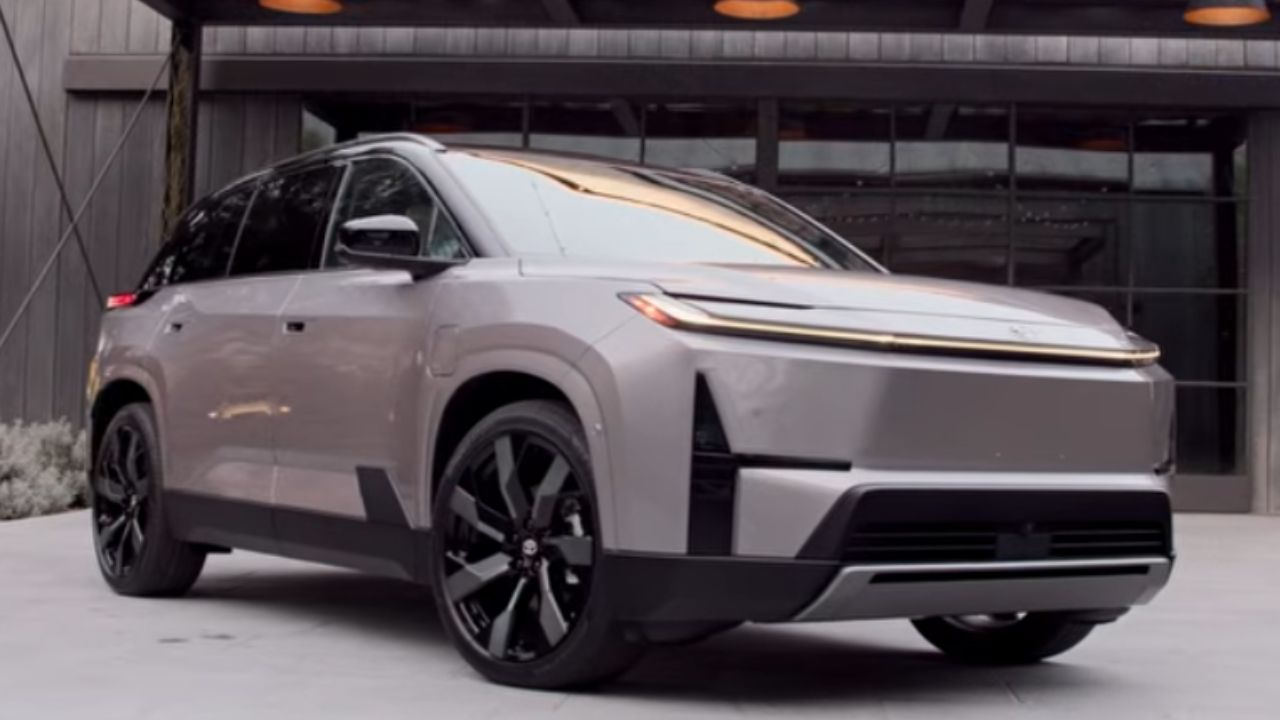
You are watching Toyota pivot one of its most familiar family haulers into a fully electric three row SUV, and the result is both ambitious and uneven. The first EV-only Highlander gives you real seating for seven and a serious battery, but it also mixes smart hardware with tech choices that feel half a step behind the best rivals.
If you are cross-shopping big family EVs, you now have to decide whether Toyota’s first three row electric SUV offers enough range, charging capability and in-cabin tech to justify moving away from hybrid comfort. The hardware story is strong, yet the software and interface experience feel more like a cautious evolution than a clean-sheet rethink.
What Toyota is actually launching
You are not getting a futuristic new nameplate here; you are getting a familiar badge that Toyota has pushed into its first fully electric configuration. Earlier this year, Toyota revealed the all-new 2027 Highlander and confirmed that for the first time ever this Highlander is fully electric and configured as a three row SUV. That means you can keep the basic formula you already know from the gasoline and hybrid Highlander, but you now plug in instead of filling up, and you gain a battery pack under the floor that frees the front for a closed grille and a more aerodynamic nose.
The company positioned this move as a historic shift for the nameplate, describing how the 2027 Toyota Highlander is going EV only and stepping into a segment that had been dominated by hybrids and traditional SUVs. You are effectively seeing Toyota retire the internal combustion Highlander in favor of a battery powered version that still aims to carry families, luggage and road trip gear across long distances, while also adding a NACS charging port so you can tap into high speed public networks that previously catered mostly to other brands.
Three rows, family space and the “middle child” personality
From a practicality standpoint, you are getting a genuine three row layout, not a token third bench. Toyota has framed this Highlander as the first three row electric SUV in its portfolio, and the proportions reflect that mission with a long roofline, upright tailgate and a stretched wheelbase to carve out legroom. When you look at the way the Toyota Highlander First describes the vehicle, you see a clear emphasis on that “middle child” role between smaller crossovers and larger body-on-frame SUVs, which is exactly how you are meant to use it: big enough for a family road trip, small enough to live with in a suburban driveway.
You also feel that middle child energy in the styling and packaging. The Toyota Highlander First material highlights a more assertive stance and full width lighting, yet the cabin still leans on familiar Toyota ergonomics rather than going all in on minimalism. You get a conventional steering wheel, physical controls for core functions and a seating position that keeps you upright and confident, which will appeal if you are coming out of a current Highlander or a similar family SUV.
Powertrain, charging and the “big” EV promise
Underneath, you are buying into Toyota’s attempt to go “big” on electric hardware for a family sized SUV. The company has been teasing a major three row EV for some time, and the new Highlander finally delivers on that by pairing a sizable battery pack with dual motor options and a focus on all wheel drive traction. Coverage of the reveal describes how Toyota goes “big” with a 3 row all, which signals that you should expect towing and load carrying to remain part of the equation, not just city commuting.
Charging tech is where you see both promise and compromise. On the plus side, Toyota confirms a NACS charging port, which instantly opens up a wide network of fast chargers and aligns the Highlander with an industry standard that many brands are now adopting. At the same time, Toyota is not chasing headline grabbing ultra fast charging figures or extreme performance claims, so if you are used to seeing aggressive DC numbers from newer EV startups, you may find the Highlander’s approach more conservative and focused on battery longevity than on sprinting from 10 to 80 percent in record time.
Cabin tech, infotainment and the “mixed features” reality
Once you climb inside, the tech story gets more complicated. You are greeted by a large central screen and a digital instrument cluster, but Toyota’s approach to infotainment leans on evolution rather than reinvention. When you look at how the current Grand Highlander’s interface performs, you see that Our Edmunds team drives 500,000 miles a year and rates the Driving experience at 7.5 out of 10, while also praising the climate controls for being easy to use and the built in assistant for handling general Google like queries. You can reasonably expect Toyota to carry that same philosophy into the electric Highlander, with physical climate keys and voice control doing much of the heavy lifting so you do not have to dig through submenus for basic tasks.
There are, however, likely to be some friction points. Other large SUVs already show how an ambitious screen can still deliver a clunky experience, as seen when Infotainment System Design highlights that Navigating through menus can sometimes feel unintuitive and slow. Toyota’s own software stack has been improving but still trails the most polished systems from pure EV brands, so you may find that smartphone mirroring remains your default for navigation and media, even as Toyota adds its own connected services and over the air update capability.
How this EV fits into Toyota’s wider tech strategy
You are not just choosing a single model; you are buying into Toyota’s broader view of how vehicles should integrate hardware and software. Industry voices such as Corrado Lanzone describe how the primary difference between traditional automotive products and new mobility services lies in the high technological content, both hardware and software, and their deep integration with the vehicle, a point captured in the discussion of future mobility. With the electric Highlander, Toyota is trying to move closer to that integrated model, yet it still relies heavily on proven mechanical engineering and a cautious rollout of software features rather than jumping straight into full self driving claims or radical subscription bundles.
You can see that balance in the way Toyota presents the launch on social channels. The company frames the reveal as a milestone, with posts like Meet the ALL NEW Toyota Highlander that goes fully electric for the first time and carries the familiar Toyota badge into a new era. At the same time, the legal and privacy scaffolding behind that digital push remains rooted in established media practices, as reflected in the terms of use and privacy notice that govern how content and data are handled when you engage with coverage of the Toyota Highlander First Look and The Middle Child Acts Out across platforms such as the Facebook sharer or the Bluesky compose link.
More from Fast Lane Only