San Jose is facing a new federal class action targeting the city’s fast-growing network of automated license-plate reader cameras, accusing officials of building a system of mass tracking without meaningful public debate. The lawsuit focuses on 474 cameras spread across the city and argues that police have been quietly logging the movements of residents and visitors in violation of constitutional and state privacy protections.
The case lands just as city leaders scramble to tighten rules on how license-plate data can be used, stored, and shared, turning San Jose into a high-profile test of how far local governments can go with automated surveillance on public streets.
What happened
The federal complaint, filed as a putative class action, challenges San Jose’s decision to deploy 474 automated license-plate readers (ALPRs) that capture passing vehicles, convert plate numbers into machine-readable data, and feed that information into law enforcement databases. Plaintiffs contend that the city’s system records drivers’ locations over time and allows police to reconstruct detailed travel histories without warrants or individualized suspicion, a practice they describe as “warrantless tracking” of ordinary motorists, according to federal lawsuit filings.
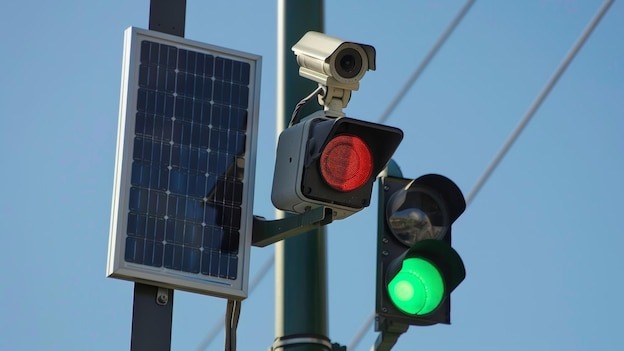
The suit claims that San Jose’s network of 474 cameras is not limited to specific crime hot spots or targeted investigations but instead casts a citywide net that sweeps up everyone who happens to drive past. That allegation builds on earlier local reporting that San Jose has been rapidly expanding its use of ALPRs supplied by vendors such as Flock Safety, with cameras mounted on poles and at intersections to capture inbound and outbound traffic at neighborhood and commercial corridors, as described in coverage of the city’s growing Flock camera network.
According to the complaint, the system is designed not only to flag stolen vehicles or cars linked to specific investigations but also to store plate scans for extended periods, which plaintiffs say allows the San Jose Police Department to analyze patterns of life for thousands of drivers. Civil liberties advocates argue that such long-term retention turns what might be a narrow investigative tool into a broad surveillance dragnet, a concern echoed in earlier challenges to San Jose’s license-plate cameras described in a separate local lawsuit.
The new federal case follows a series of legal and political fights over how ALPR data is used across California. Privacy groups have warned that plate scans can be shared with other agencies and potentially with federal partners, raising fears that local traffic cameras could be repurposed to track immigrants, protesters, or people visiting sensitive locations such as clinics and religious institutions. The plaintiffs in San Jose argue that the city has not put adequate safeguards in place to prevent such secondary uses of the 474-camera system.
City officials have defended license-plate readers as a valuable crime-fighting tool, pointing to their role in recovering stolen vehicles and identifying suspects in serious cases. Police departments around the Bay Area have embraced similar systems, often arguing that automated scans are more efficient and accurate than officers manually entering plate numbers into their onboard computers. In San Jose, the rapid buildout of ALPRs has been framed as part of a broader effort to modernize policing technology, even as critics warn that the city moved faster on deployment than on public oversight, a pattern highlighted in earlier coverage of privacy complaints about the cameras.
The class action seeks to represent all drivers whose plate data has been captured and stored by the San Jose system, not just those who have been stopped or questioned by police. Plaintiffs are asking the court to declare the city’s practices unlawful and to order changes in how ALPRs are operated, including stricter limits on when and how data can be collected, searched, and shared.
Why it matters
The San Jose case matters well beyond city limits because it tests how courts will apply constitutional standards to a technology that is spreading rapidly across the country. Automated license-plate readers sit at the intersection of two long-running debates: whether people have a reasonable expectation of privacy in their movements on public roads, and how much data police can collect in bulk before it becomes an unreasonable search.
In previous rulings on cellphone location data and GPS tracking, courts have suggested that long-term monitoring of a person’s movements can raise serious Fourth Amendment concerns even when each individual observation occurs in public. Plaintiffs in San Jose argue that a 474-camera grid that logs vehicles across the city every day functions in a similar way, allowing authorities to reconstruct a detailed portrait of where residents live, work, worship, and socialize.
California also has its own privacy framework that shapes how ALPRs can be used. State law already requires agencies to adopt usage and retention policies for license-plate data, and lawmakers have debated stricter rules on data sharing and oversight. In parallel with the lawsuit, San Jose’s City Council has moved to impose new guardrails on its system, voting to restrict how long plate data can be stored and to narrow the list of agencies that can access it, according to a report on how the city restricts use of.
Those local restrictions were shaped in part by criticism that San Jose had previously allowed plate data to be shared with hundreds of outside agencies, including departments in other states, without clear public disclosure. Advocates argued that such sharing undermined local control and increased the risk that data from San Jose drivers could be used in ways that conflict with California’s own privacy and immigration policies. The new rules aim to reduce that exposure, but the federal class action suggests that, for critics, policy tweaks may not be enough.
The lawsuit also arrives at a moment when communities across the country are rethinking how they use automated enforcement and surveillance technologies. In Pierce County, Washington, for example, a new state law that tightened rules on traffic camera programs led to the shutdown of an automated ticketing system that had generated significant revenue, as described in a report on how the law shut down Pierce. While that case involved speed and red-light cameras rather than ALPRs, it illustrates how quickly public sentiment and legal frameworks can shift once residents see automated systems as more intrusive than helpful.
For San Jose, the stakes are not only legal but also political. City leaders have tried to reassure residents that the 474-camera network is being recalibrated to focus on serious crime and that new oversight mechanisms will prevent abuse. At the same time, civil liberties groups argue that once such an infrastructure is in place, it is hard to roll back and easy to repurpose for broader surveillance. The class action forces the city to defend not just its policies on paper but its entire approach to data-driven policing.
The case may also influence how other California cities structure their own ALPR programs. If a federal court finds that San Jose’s practices violate constitutional or state privacy protections, agencies from Los Angeles to Sacramento could face pressure to reduce data retention periods, limit sharing, or scale back camera deployments. Even a settlement that falls short of a sweeping legal ruling could set a practical template for what cities feel comfortable doing with license-plate data.
What to watch next
One key question is how San Jose responds in court. The city is expected to argue that license-plate readers capture information that drivers expose to anyone on the road and that using technology to record those plates does not fundamentally change the legal analysis. Officials are also likely to emphasize recent policy changes, including shorter retention and tighter sharing rules, as evidence that the city is acting responsibly with the 474-camera network.
Observers will be watching whether the judge allows the case to proceed as a class action, which would significantly raise the stakes by treating the claims of thousands of drivers together. A class certification decision could hinge on how uniformly the ALPR system is used across the city and whether all affected motorists share the same alleged injuries, such as the creation of long-term travel profiles.
More from Fast Lane Only
- Unboxing the WWII Jeep in a Crate
- 15 rare Chevys collectors are quietly buying
- 10 underrated V8s still worth hunting down
- Police notice this before you even roll window down
*Research for this article included AI assistance, with all final content reviewed by human editors.