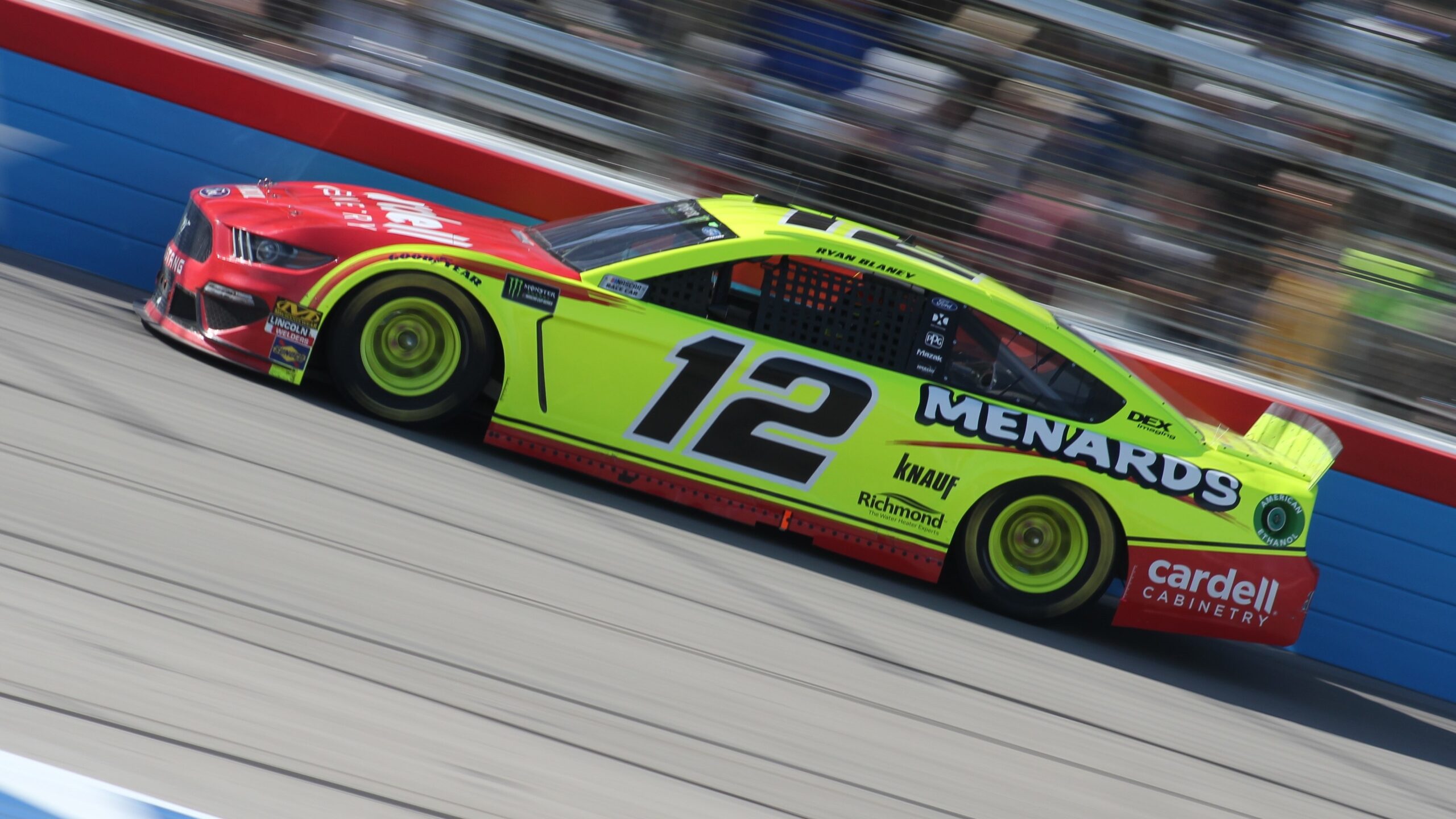
Team Penske is shaking up Ryan Blaney’s pit crew ahead of the NASCAR Cup Series race at Kansas Speedway, targeting one of the few weak spots for the reigning champion. The organization is not overhauling the entire unit, but a key role change on the wall signals that Blaney’s title defense has already reached a point of urgency.
Though the season is still in its early stages, the decision to adjust personnel on Blaney’s No. 12 Ford reflects both frustration with execution and confidence that a small tweak can unlock the speed the car has already shown on track.
What happened
Team Penske has reassigned jackman Graham Stoddard off Ryan Blaney’s No. 12 pit crew and moved him to Austin Cindric’s No. 2 team, inserting a new jackman on Blaney’s car beginning with the Kansas weekend. The change, reported as a focused swap of jackman duties rather than a full crew overhaul, is designed to tighten up pit stop performance for the defending Cup Series champion.
The move follows a run of races where Blaney’s team showed race-winning pace but gave up track position on pit road through slow stops and isolated execution errors. According to detailed pit road reporting, Penske leadership identified the jack position as the most logical pressure point for an immediate adjustment, leading to the decision to place a different athlete on the No. 12 wall while keeping the rest of the group largely intact.
Penske has framed the switch as a performance-based personnel move, not a disciplinary action, and emphasized that Stoddard remains a valued crew member within the organization. By shifting him to Cindric’s crew, the team preserves his experience inside the system while testing a new chemistry for Blaney’s stops at a track where clean pit work is often decisive.
Multiple reports have described this as a long-discussed tweak that Penske had considered earlier in the year, with the Kansas race chosen as the moment to pull the trigger because of its intermediate layout and the importance of maintaining track position under green-flag pit sequences. One detailed breakdown of the decision called it a long-awaited change to Blaney’s pit crew, noting how the team weighed the move for several weeks before committing to it for Kansas, as reflected in the analysis of Penske’s long-awaited change.
The adjustment also comes amid broader scrutiny of Penske’s early season execution. Blaney has shown competitive speed, yet the No. 12 group has not converted enough of those runs into top finishes, and pit road miscues have drawn particular attention from both internal evaluators and outside analysts.
Direct reporting on the personnel shuffle confirms that the jackman change is locked in for Kansas and that the team expects the new alignment to be in place for at least the near term. A detailed pit-lane report on the move notes that Blaney “gets new jackman for Kansas,” tying the swap specifically to the upcoming race and outlining how Stoddard’s shift to the No. 2 car fits into Penske’s broader crew rotation strategy, as described in the breakdown of Blaney’s new jackman.
Why it matters
For a reigning champion, the margin between another deep playoff run and an early exit often comes down to details like pit crew performance. Blaney’s title last season was built on a combination of race pace, strategy, and cleaner execution late in the year, and any regression in one of those areas has an outsized impact on his chances of repeating.
The early part of this season has not been a disaster for the No. 12 team, but it has been uneven enough to trigger concern inside Penske. Analysts have pointed to a mix of pit road penalties, slow stops, and small mistakes that cost Blaney track position at critical moments. When a car is capable of running inside the top five, losing several spots on pit road can flip a potential win into a mid-pack finish, which compounds in the standings and in playoff seeding.
Detailed coverage of Penske’s internal evaluation indicates that Blaney’s status as a defending champion has increased the pressure on the organization to respond quickly to any weak link. One report explicitly tied the crew change to Blaney’s ongoing title bid and the early season pressure on Penske, describing how team leadership felt compelled to act before bad luck and small errors turned into a larger narrative, as outlined in the context of Blaney’s title bid.
In NASCAR’s current format, playoff points, stage wins, and race victories all matter heavily by the time the postseason begins. A cleaner pit crew can help convert raw speed into those tangible advantages. If Blaney’s team can avoid the kind of 1- to 2-second delays that have popped up on some stops this year, the No. 12 car is far more likely to control restarts from the front row instead of fighting through traffic.
The decision also sends a message across the Penske campus. By moving quickly to adjust a key role on the defending champion’s crew, leadership is signaling that no seat on the wall is guaranteed if performance slips, regardless of past success. That can sharpen focus for every over-the-wall member, but it also raises the stakes for the new jackman stepping into a high-pressure role on one of the most scrutinized teams in the garage.
For Blaney personally, the move carries both opportunity and risk. A more consistent pit crew could reduce the frustration of losing spots under yellow or green, which in turn can help a driver stay calmer and more strategic over long runs. Yet any continued issues on pit road will now draw even more attention, since Penske has already made a visible change aimed at solving the problem.
The impact extends to Austin Cindric as well. By moving Stoddard to the No. 2 team, Penske is effectively betting that his skill set can help stabilize another crew while a different jackman potentially elevates Blaney’s group. How both teams respond will shape not only their individual seasons but also the perception of whether this swap was a smart reallocation of talent or a disruption of existing chemistry.
What to watch next
Kansas Speedway is a demanding test case for any pit crew change. The 1.5-mile layout often features long green-flag runs that force teams into high-pressure, full-service stops under race pace. Any bobble on the jack or a miscue in synchronization can cost several seconds and multiple positions once the cycle completes.
Observers will be watching Blaney’s average pit stop times and position changes on and off pit road from the first practice session through the race. Even a small improvement in consistency, with fewer outlier slow stops, would suggest that the jackman adjustment is paying off. If the No. 12 team continues to lose ground during service, however, the focus will shift to whether deeper changes are needed across the crew or in Penske’s broader pit road program.
Another storyline to monitor involves how quickly the new jackman meshes with Blaney’s existing crew members. Pit stops rely on rhythm and trust, from the driver’s marks in the stall to the timing of the jack drop and the tire changers’ exit. Any hesitation as the group adjusts to a new cadence could show up in those first few races together, particularly on high-stress stops late in stages or under caution.
For Cindric, the addition of Stoddard provides a fresh variable for a team that has also been searching for more consistent results. Analysts will track whether the No. 2 car’s pit performance improves with the new jackman, which would strengthen the argument that Penske is optimizing talent across its three-car lineup rather than simply upgrading one star driver at another’s expense.
Strategically, Kansas could influence how aggressive Blaney’s team is willing to be on pit calls. If early stops go smoothly, crew chief decisions on two-tire calls, fuel-only gambles, or short-pitting under green may become bolder, reflecting increased confidence in the group on the wall. Should issues persist, the team may opt for more conservative calls that minimize exposure to high-risk pit scenarios.
More from Fast Lane Only
- Unboxing the WWII Jeep in a Crate
- 15 rare Chevys collectors are quietly buying
- 10 underrated V8s still worth hunting down
- Police notice this before you even roll window down
*Research for this article included AI assistance, with all final content reviewed by human editors.