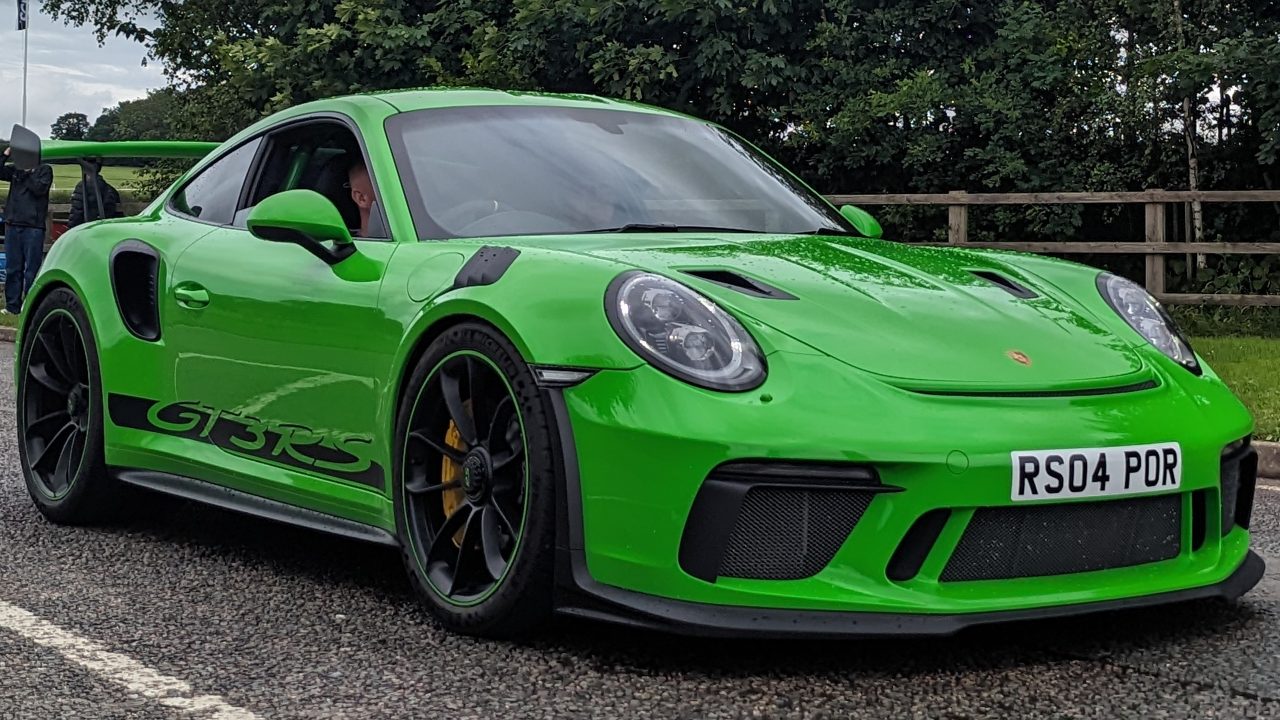
Track specials used to be barely disguised race cars, punishing on public roads and tolerable only in short bursts. Today, a new breed of supercar can set lap times that would shame old competition machinery yet still feel composed, even almost relaxed, in everyday traffic. I want to look at a handful of these machines that promise circuit thrills while remaining unexpectedly civil when the helmet comes off and the speed limit signs appear.
Porsche 911 GT3 RS: race car focus, road car familiarity
When I think about a car that blurs the line between pit lane and parking garage, the Porsche 911 GT3 RS sits at the top of the list. It is unapologetically track focused, with aggressive aero, a screaming engine and a chassis tuned for lap times, yet it still carries the 911’s familiar usability that owners rely on for school runs and commutes. Recent reporting on the current 911 GT3 RS highlights how its suspension, steering and stability systems are engineered to provide “unparalleled agility and precision” on circuit, while still being homologated for the road, a balance that has defined the RS lineage since it was first introduced in 2003 as a bridge between the track and the street.
What keeps the 911 GT3 RS from feeling feral in daily use is not a softening of its character but the way Porsche layers control and feedback. The 2023 to 2024 evolution, often referred to as the 911 G in some technical shorthand and internally coded as 992, is described as carrying the 911 DNA into a better driver’s car rather than a harsher one. That means the same precision that lets it clip apexes with millimetric accuracy also makes it easy to place in a narrow lane or thread through city traffic. Owners are not wrestling a temperamental toy; they are working with a tool that feels natural at 30 mph as well as at triple-digit speeds, which is exactly why the GT3 RS keeps appearing in conversations about supercars that genuinely can be driven rather than stored.
Lamborghini Huracán Performante: wild looks, surprisingly friendly manners
The Lamborghini Huracán Performante is the sort of car that looks like it should be miserable on a public road, all sharp edges, fixed wings and track intent. Yet behind the wheel, it reveals a more nuanced personality that fits this theme of circuit-bred cars that do not punish their owners between track days. On a fast circuit, the Hurac Performante feels entirely at home, with its active aerodynamics and chassis tuning working together to deliver the kind of high-speed stability and grip that make even demanding tracks feel approachable. That same stability translates into a sense of security on the highway, where the car tracks straight and true instead of tramlining or fidgeting over imperfections.
What surprised me most in the reporting is how the Huracán’s calibration flatters the driver rather than exposing every flaw. Despite the race car-like looks and the aggressive setup, the Performante is described as making its pilot “look like a hero behind the wheel,” which is not the usual experience in a hardcore supercar. The steering is direct but not nervous, the brakes are powerful yet progressive, and the power delivery is linear enough that you can meter it out on a damp back road without feeling like you are walking a tightrope. That combination of drama from the outside and reassurance from the driver’s seat is exactly what allows a car this extreme to feel almost tame when you are simply heading home after a long day.
Audi R8: track-capable, grand tourer at heart
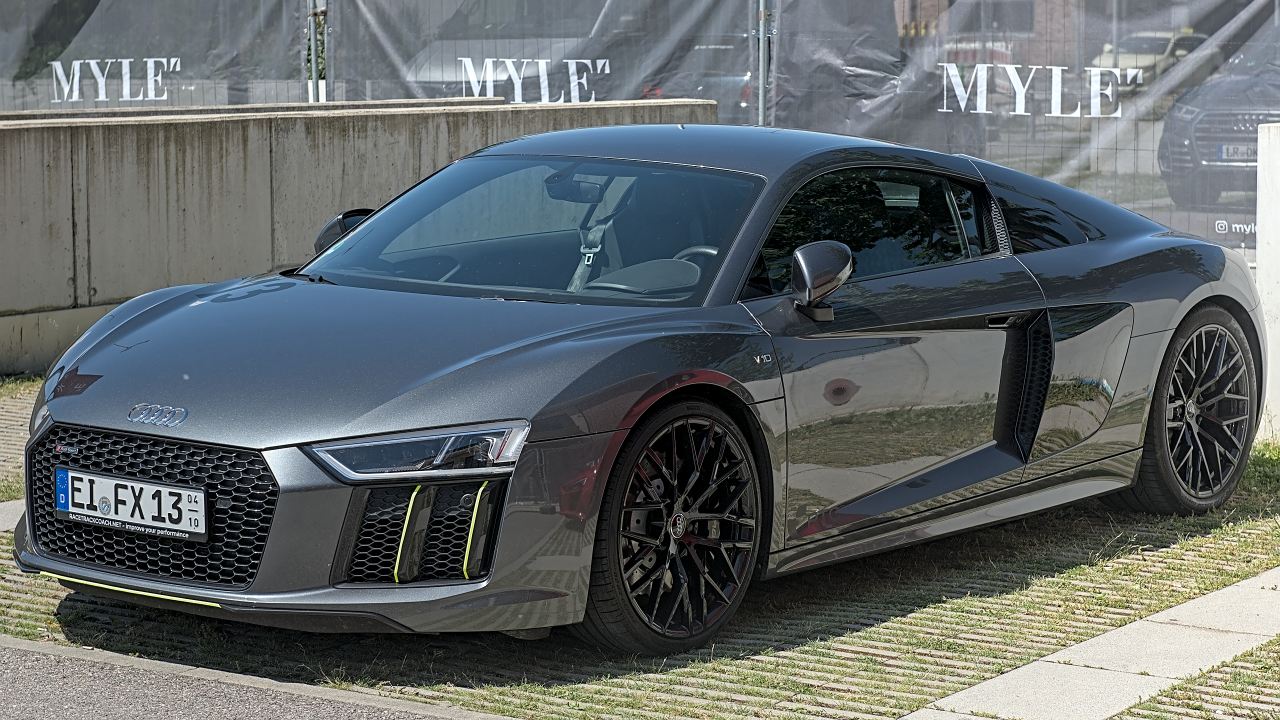
Not every car in this conversation wears a giant rear wing or shouts its intent with lap-record marketing. The Audi R8 has always played a subtler game, but in its latest performance guise it has the hardware and tuning to hold its own on a circuit while still behaving like a refined grand tourer on the open road. Reports on the 2021 Audi R8’s dynamics describe an on-road demeanor that “manages to strike a rare balance between track-worthy and road-trip capable,” placing it in the same breath as swift grand tourers like the BMW M8. That is a telling comparison, because it frames the R8 not just as a weekend toy but as a car you could comfortably drive across a continent before spending a day lapping a circuit.
From my perspective, what makes the Audi so effective in this dual role is its underlying philosophy. The chassis is stiff enough to support serious cornering loads, yet the suspension tuning and cabin refinement keep fatigue at bay on long journeys. The steering and brakes are communicative without being hyperactive, which means that on track you can lean on the car’s abilities with confidence, while on the street you are not constantly reminded of every pebble and camber change. That equilibrium is rare in a segment where “track package” often translates to “daily compromise,” and it is why the R8 deserves a place among supercars that can genuinely do both jobs without feeling compromised in either direction.
Mercedes-AMG GT R Pro: hardcore hardware, disciplined composure
The Mercedes-AMG GT R Pro is one of the more overtly track-biased cars to wear a license plate, yet it still fits the brief of feeling unexpectedly disciplined on public roads. Developed as a sharper, more focused evolution of the already serious AMG GT R, the Pro variant layers on stiffer suspension components, more aggressive aerodynamics and weight-saving measures that clearly target lap times. Reporting on this model groups it among track-focused supercars that remain street legal, emphasizing its exclusivity and performance as key reasons it has become a coveted addition to enthusiast collections.
What keeps the AMG GT R Pro from crossing the line into outright impracticality is the way its engineers have preserved a baseline of road manners beneath the track upgrades. The car’s adaptive suspension and carefully tuned electronics allow it to absorb real-world surfaces with more grace than its specification sheet might suggest, so the driver experiences precision rather than punishment. In practice, that means you can exploit its capabilities on a circuit, then dial back the aggression and settle into a controlled, predictable rhythm on the drive home. It is still a serious machine that demands respect, but it does not turn every commute into an endurance test, which is a crucial distinction for owners who want to use their cars rather than simply admire them.
Nissan GT-R: everyday “Godzilla” with track credentials
At the more attainable end of the supercar spectrum, the Nissan GT-R has long been proof that you do not need a fragile exotic to enjoy track-ready performance. Often nicknamed “Godzilla” because it is a performance legend that punches above its weight, the Nissan GT-R has built its reputation on brutal acceleration and immense grip. Yet reporting that looks at some of the cheapest supercars in markets like India notes that the GT-R still manages to feel like a dream ride rather than a punishing one, which is a testament to how carefully its road manners have been considered alongside its lap time potential.
From my own reading of the car’s character, the GT-R’s dual nature comes from its blend of advanced electronics and a relatively practical layout. The all-wheel-drive system and stability controls work quietly in the background to keep the car composed, whether it is launching hard out of a corner on track or threading through traffic in the rain. Inside, there is usable space and a driving position that feels more grand tourer than stripped-out racer, so owners can realistically use it for long journeys without dreading every mile. That is why, even as newer and more exotic machinery arrives, the Nissan GT continues to be mentioned as a supercar that can handle both the circuit and the school run without losing its identity as “Godzilla.”
What unites the Porsche 911 GT3 RS, Lamborghini Huracán Performante, Audi R8, Mercedes-AMG GT R Pro and Nissan GT-R is not just their speed but their civility. Each has been engineered to deliver serious performance on a circuit, yet each also respects the reality that most miles will be logged on ordinary roads. As a driver, I find that balance more compelling than ever: the idea that you can enjoy a car’s full character at legal speeds, then peel off to a track day and discover new layers of ability without needing a second, dedicated machine. In an era of increasingly specialized performance cars, these are the rare supercars that still feel like companions rather than occasional indulgences.