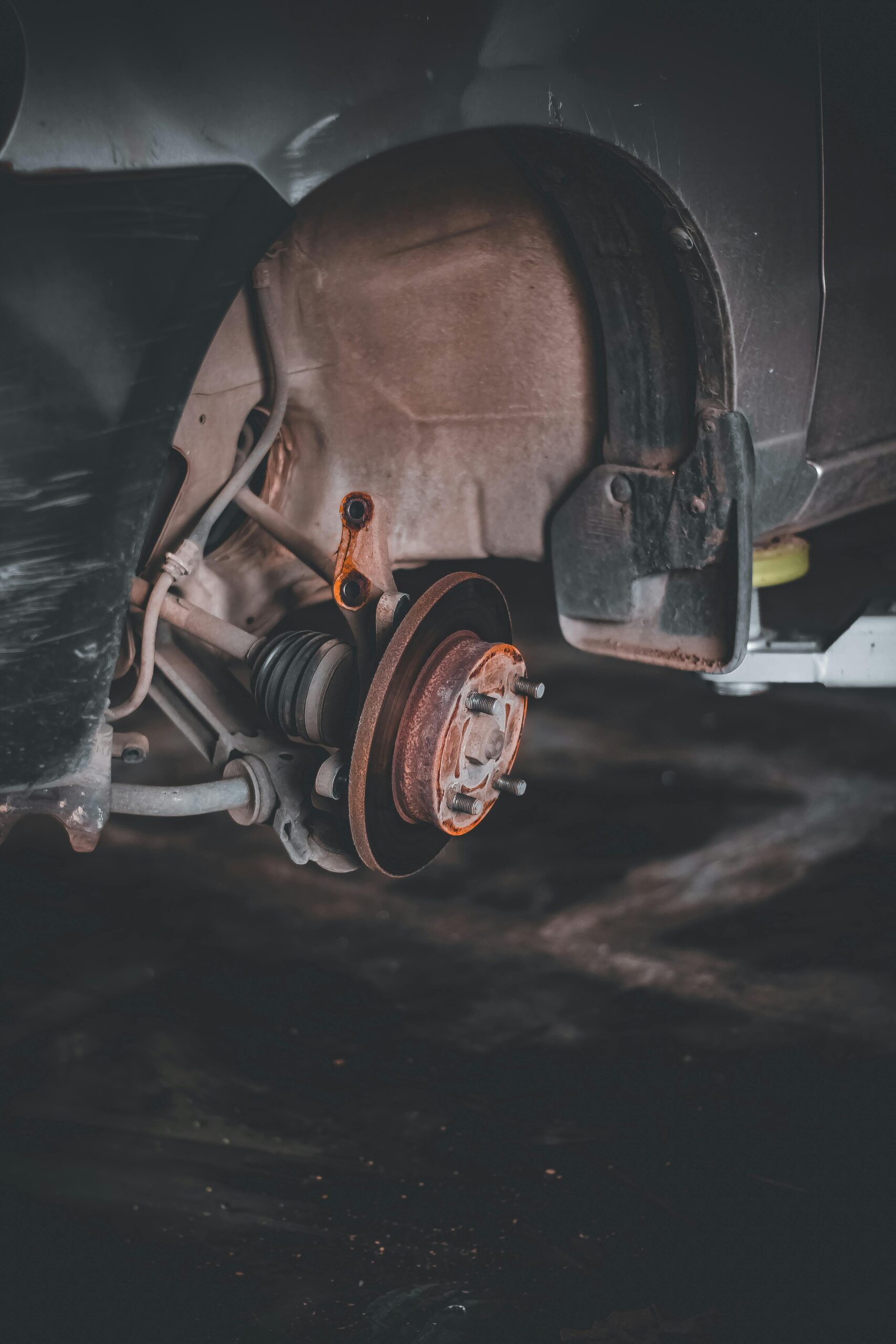
It started like a totally normal tow: a truck, a trailer, and a downhill stretch that didn’t seem like a big deal. Then the brake pedal changed. Not a little “hmm, that feels different,” but the kind of soft, sinking pedal that makes your stomach drop before the truck even does.
By the time he got pulled over safely, the culprit wasn’t hard to spot. A brake line near the rear axle had burst, and the metal around it looked like it had been slowly losing a long fight with rust. It’s the sort of failure that feels sudden in the moment, but usually has a long backstory.
A downhill tow turns into a “why isn’t this stopping?” moment
He described the pedal as going “soft” while towing downhill, which is classic “something’s not holding pressure” territory. On a steady grade with extra weight behind you, you’re on the brakes more often and for longer stretches. That adds heat and stress to a system that’s supposed to be sealed, firm, and boring.
Instead of the pedal pushing back like it normally would, it began to travel farther with less resistance. That’s the scary part: the truck may still slow a bit at first, but it doesn’t feel predictable. When your foot can’t “find” the brakes the way it usually does, every second feels louder.
What a “soft brake pedal” usually means
Most modern pickups use hydraulic brakes, which rely on brake fluid pressure to clamp pads onto rotors (and sometimes activate rear drums, depending on the setup). When you press the pedal, you’re basically pushing fluid through lines to each wheel. That fluid doesn’t compress much, so the pedal should feel solid.
A soft pedal often means the system can’t build or hold pressure. Sometimes it’s air in the lines, sometimes it’s a failing master cylinder, and sometimes it’s the most dramatic option: fluid leaking out somewhere. A sudden soft pedal on a downhill tow leans heavily toward “there’s a leak,” because demand is high and weaknesses get exposed fast.
The break that did it: a rusted brake line near the rear axle
In this case, the failure point was near the rear axle, a common place for brake lines to take a beating. Road salt, mud, wet debris, and temperature swings tend to collect around frame rails and axle areas. Even if the rest of the truck looks fine from ten feet away, those hidden sections can be quietly corroding.
Brake lines are typically steel with protective coatings, but coatings don’t last forever—especially in winter climates or coastal areas. Rust can start as surface pitting and turn into deep scaling that thins the metal. Once it gets weak enough, a hard stop or prolonged braking can be all it takes to pop the line like a soda can that’s been left in the freezer.
Why towing downhill makes the timing worse
Towing adds weight and momentum, and downhill driving adds gravity to the mix. That means you’re asking the brakes to convert more kinetic energy into heat, over and over again. Even with trailer brakes, the truck’s brake system still works harder than it would on a flat commute.
As components heat up, brake fluid and rubber hoses can behave a little differently, but the bigger issue is stress on the hydraulic system. Higher pressures and more frequent brake applications can turn a “barely holding on” line into a “not holding at all” line. It’s not that the hill caused the rust—just that it exposed the weak link at the worst possible moment.
How the truck could still stop at all
People are often surprised to learn that many vehicles have split braking systems, so a leak doesn’t always mean instant total brake loss. Depending on the design, one circuit might handle the front brakes and another the rear, or it might be split diagonally. That redundancy can buy precious stopping power, but it’s still a major emergency.
When a line bursts near the rear axle, it may mostly take out the rear circuit, leaving the fronts doing the heavy lifting. The pedal will travel farther, stopping distances grow, and the truck can feel unstable—especially with a trailer pushing from behind. It’s the automotive version of trying to jog while carrying groceries: possible, but you really don’t want to find out during an emergency.
The telltale signs a brake line is in trouble
Rusty brake lines don’t always announce themselves with a warning light early enough. Sometimes the first obvious clue is a soft pedal or a sudden need to “pump” the brakes. But there are a few quieter hints that can show up beforehand.
Brake fluid spots under the truck—especially near the rear wheels or along the frame—are a big red flag. A brake fluid reservoir that slowly drops over weeks is another. And if a mechanic ever mentions “heavy corrosion” on brake lines, that’s not a note to file away for next year; that’s a fix to schedule before the truck schedules it for you.
What to do if your brake pedal suddenly goes soft
If the pedal suddenly feels soft or sinks, the goal is to slow down safely without panic braking. Ease off the throttle, turn on hazard lights, and look for a safe spot to pull over. If you have room, downshifting to a lower gear can help use engine braking to reduce speed without relying solely on the brakes.
Pumping the brake pedal can sometimes restore a bit of pressure temporarily, but if there’s an active leak, it’s usually a short-lived improvement. Keep a wide following distance, avoid sharp steering, and don’t assume you can “just make it home.” Once you’re stopped, the safest next step is calling for a tow—because driving with compromised brakes is one of those gambles that never pays out.
Why this happens so often near the rear axle
The rear axle area is a perfect storm for corrosion: it’s exposed, it gets sprayed by the rear tires, and it doesn’t always get a close inspection during routine oil changes. On many trucks, the brake lines run along the frame and then drop down toward the axle, creating clips and bends where moisture can sit. Those little brackets can become rust incubators.
Also, trucks that tow often may see more suspension movement and vibration, which can flex lines and fittings over time. Combine that with rust thinning the metal, and the line can fail at a connection point or where it’s rubbed slightly for years. It’s not glamorous, but it’s real-world physics—and road grime.
Repair isn’t just “patch the leak”
When a brake line bursts, the repair usually involves replacing the damaged section and then properly bleeding the brake system to remove air. But a smart shop won’t stop there. If one section failed from corrosion, nearby sections may be in similar shape, especially if they’re the same age and have lived in the same salty environment.
Many technicians recommend replacing multiple lines at once when rust is widespread, because it’s cheaper than playing whack-a-mole with failures. New lines may be made from more corrosion-resistant materials, and fittings can be upgraded too. It’s one of those repairs that hurts once, then pays you back every time you have to stop quickly—so, basically every day.
A small inspection that can prevent a big scare
The frustrating part is that brake line rust is often visible if someone actually looks, especially on older trucks. A quick inspection during tire rotations or seasonal maintenance can catch heavy scaling, wetness around fittings, or lines that look more like crusty twigs than metal tubing. If you tow, that check is even more worth it.
This incident ended with a lesson instead of a wreck, which is the best kind of close call. A downhill tow didn’t create the problem, but it did reveal it—loudly. And if there’s any upside here, it’s that a rusty brake line is a fixable problem, as long as it’s found before the pedal goes soft at exactly the wrong time.
More from Fast Lane Only
- Unboxing the WWII Jeep in a Crate
- 15 rare Chevys collectors are quietly buying
- 10 underrated V8s still worth hunting down
- Police notice this before you even roll window down
*Research for this article included AI assistance, with all final content reviewed by human editors.