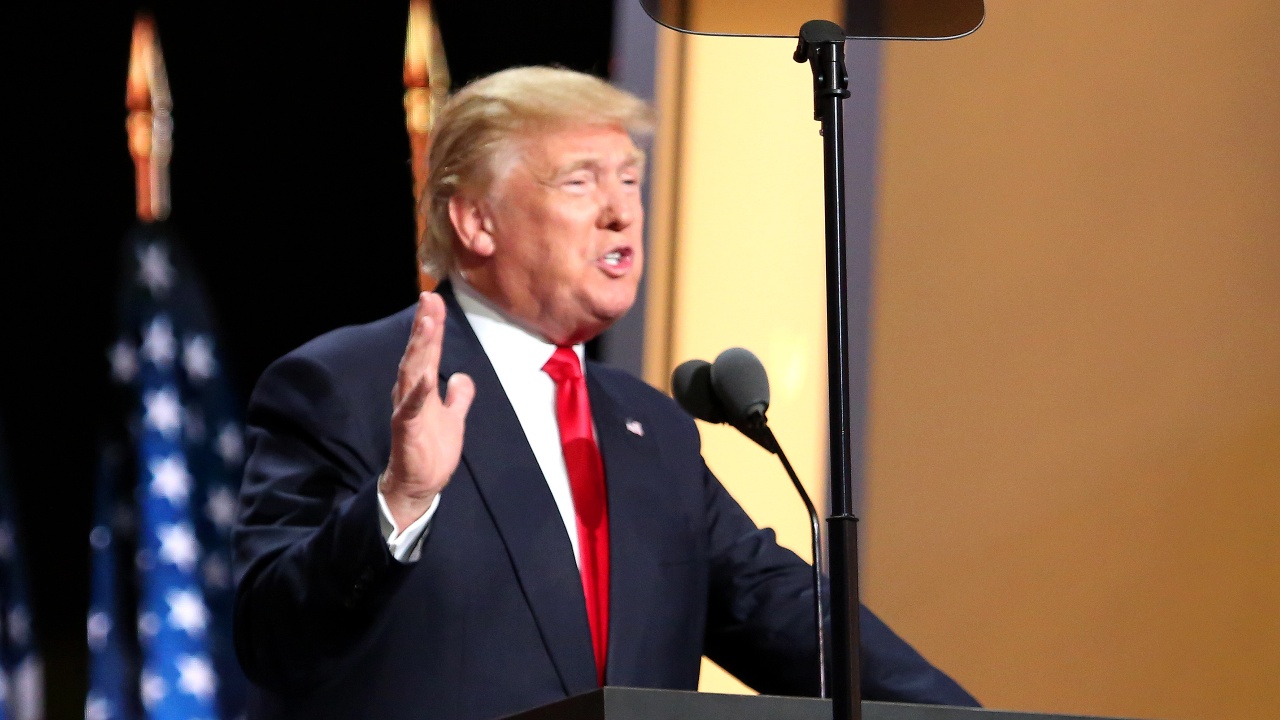
President Donald Trump went to the heart of American carmaking and told the industry to welcome its fiercest rival. Speaking in Detroit, he urged U.S. automakers to “let China come in” and build plants on American soil, casting the idea as a path to jobs and leverage over foreign competitors. The remark, delivered in a city that has lived every boom and bust of auto manufacturing, crystallized his evolving vision of protectionism that mixes steep tariffs with an unexpected invitation to Chinese capital.
Trump’s Detroit pitch: tariffs plus foreign plants
In Detroit, President Donald Trump framed his auto agenda as a hard‑edged bargain: foreign companies could face punishing tariffs at the border or invest directly in American factories and workers. He highlighted that the U.S. government has imposed heavy tariffs on imported vehicles, including a rate of 100% on cars made in China, and presented that wall of duties as leverage to force production into the United States. In his telling, if Chinese and Japanese automakers want access to American buyers, they should build in places like Michigan, pay local wages, and live under U.S. rules rather than ship finished vehicles from overseas.
That logic underpinned his now‑viral line that the country should “let China come in,” a phrase he paired with a similar invitation for Japan. In a clip from Detroit, he said, “Let China come in. Let Japan come in. They are. And they’ll be building plants but they’re using our labor,” turning the usual nationalist script on its head by arguing that foreign rivals can be harnessed as engines of domestic employment instead of treated solely as threats. The message fit with his broader claim of a “booming investment” revival in Detroit, where he arrived to celebrate what he described as historic manufacturing momentum even as auto manufacturing jobs have fallen every month since Liberation Day, a disconnect that hangs over his optimistic narrative.
From “save the auto industry” to “let China come in”
I hear an evolution in Trump’s rhetoric when I compare his latest Detroit appearance with his earlier promises to rescue American carmaking. In a previous speech to the Detroit Economic Club, he cast himself as the last line of defense for U.S. auto workers, vowing to “save” the industry from what he described as unfair foreign competition and overbearing regulation. He floated ideas such as making interest on car loans fully deductible from taxes and pledged to restore a sense of security that he argued had eroded since the days when he contrasted his record with that of Barack Obama. The emphasis then was on shielding domestic producers and punishing offshoring, not on inviting foreign manufacturers to set up shop.
By the time he returned to Detroit this week, the tone had shifted from pure protection to a more transactional openness. At the Detroit Economic Club, President Donald Trump spent a large portion of his roughly hourlong speech talking about tariffs and the way they shape suppliers’ sourcing and investment decisions, but he also leaned into the idea that Chinese and Japanese automakers could be part of the solution if they agreed to build plants in the United States. His “let China come in” line, amplified by social media posts that warned he was opening the door to a foreign adversary, captured that pivot. He was no longer simply promising to wall off the U.S. auto market; he was inviting rivals inside the walls, on his terms, to bolster local payrolls.
Why Detroit heard opportunity and alarm
Detroit’s reaction to Trump’s invitation was always going to be complicated, and the context on the ground helps explain why. President Donald Trump arrived in the city to hail what he called “booming investment,” pointing to new projects and expansions as proof that his tariff‑heavy strategy is working. Yet auto manufacturing jobs in the region have been slipping month after month since Liberation Day, a trend that undercuts his celebration and leaves workers wary of grand promises. When he toured the Ford River Rouge Complex in Dearborn, a site that symbolizes both the glory and fragility of American carmaking, the image of a president walking an assembly line contrasted sharply with the reality of shrinking payrolls and rising anxiety about the shift to electric vehicles.
Against that backdrop, the idea of Chinese automakers building plants in Michigan lands as both a potential lifeline and a provocation. Some local voices, including commenters responding to a post from Senator Gary Peters that highlighted Trump’s “Let China come in” remark, argued that foreign‑owned factories would indeed “create jobs” and that using American labor is better than watching production move to Mexico or stay in Asia. Others saw the same quote as proof that the president was ready to “open the door to foreign adversaries like China” who could undercut domestic automakers on cost and technology. The split reflects a city that has been burned by globalization but is also desperate for new investment, even if it comes with a Chinese or Japanese badge on the gate.
The China and Japan equation in Trump’s auto vision
Trump’s invitation to Chinese and Japanese automakers is not a free pass; it is anchored in a tariff regime that he presents as both shield and bargaining chip. He has repeatedly stressed that imported vehicles from China face a 100% tariff, a figure he cites as evidence that he is not going soft on Beijing even as he tells Detroit to welcome Chinese plants. In his Detroit remarks, he paired “Let China come in” with “Let Japan come in,” signaling that he sees both countries as targets of the same strategy: keep their finished cars out with high duties, then entice their companies to cross the Pacific and build inside the tariff wall. He has even singled out Japan’s tiny kei cars as models he wants sold in the United States, but only if they are produced here and “using our labour,” as one account of his comments put it.
That approach tries to square two political imperatives that usually collide. On one side, Trump wants to maintain his image as a hard‑liner on China, a leader who confronts what he and his allies describe as a foreign adversary rather than accommodating it. On the other, he is chasing visible factory announcements and groundbreakings that he can point to as proof of a manufacturing comeback, even if the corporate logos on those plants are Chinese or Japanese. His critics, including Senator Gary Peters, argue that inviting Chinese automakers into the U.S. market, even as manufacturers of record inside American borders, risks undercutting domestic brands and giving Beijing‑linked firms a deeper foothold in a strategic industry. Supporters counter that with tariffs in place and unions and regulators watching, foreign‑owned plants could still be harnessed to American interests.
What Trump’s auto gamble means for workers and policy
As I weigh Trump’s Detroit message, I see a high‑stakes bet that the symbolism of foreign flags on factory roofs will matter less to voters than the reality of paychecks. For a worker in Dearborn or on the outskirts of Detroit, a job at a Chinese‑owned assembly plant paying competitive wages might feel little different from a job at a legacy U.S. brand, especially after years of layoffs and plant closures. Trump is effectively arguing that the national interest is served if the work is done in Michigan, Ohio, or Kentucky, regardless of where the corporate headquarters sit, so long as tariffs keep imported vehicles at bay. His earlier promise to make interest on car loans fully deductible from taxes, though still lacking detail, fits into that same worker‑centric framing: use the tax code and trade policy to tilt the playing field toward American consumers and factories.
More from Fast Lane Only