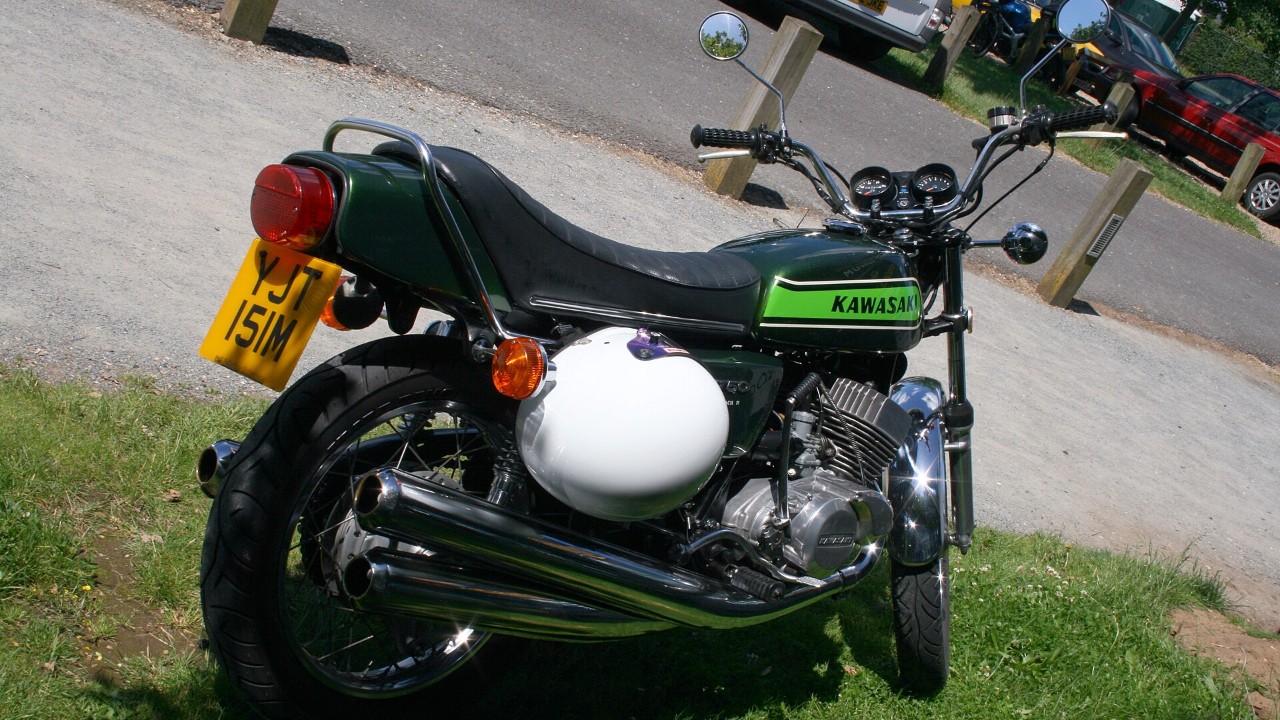
The Kawasaki H2 Mach IV could run a standing quarter mile in about 12 seconds in stock form, and it earned a nickname to match. Two-stroke street bikes like it gave the 1970s its wildest acceleration. They also burned their oil along with their fuel, which is a big reason makers phased them out wherever emissions rules got strict.
Today those same bikes are hot property with collectors, and many of them deserve the attention. However, a fun bike to look at is not always a sensible bike to buy. Some have handling that period testers worried about, others carry known engine faults, and a few are simply hard to keep running.
These are our picks, eight two-strokes we would think twice about, and why. The verdict on each one is our own opinion, not a measured fact. Every reason we give, though, comes from a road test, a mechanic’s teardown or the maker’s own spec sheet. We also close each entry with the buyer advice we would give a friend.
1. 1974 Kawasaki H2 Mach IV
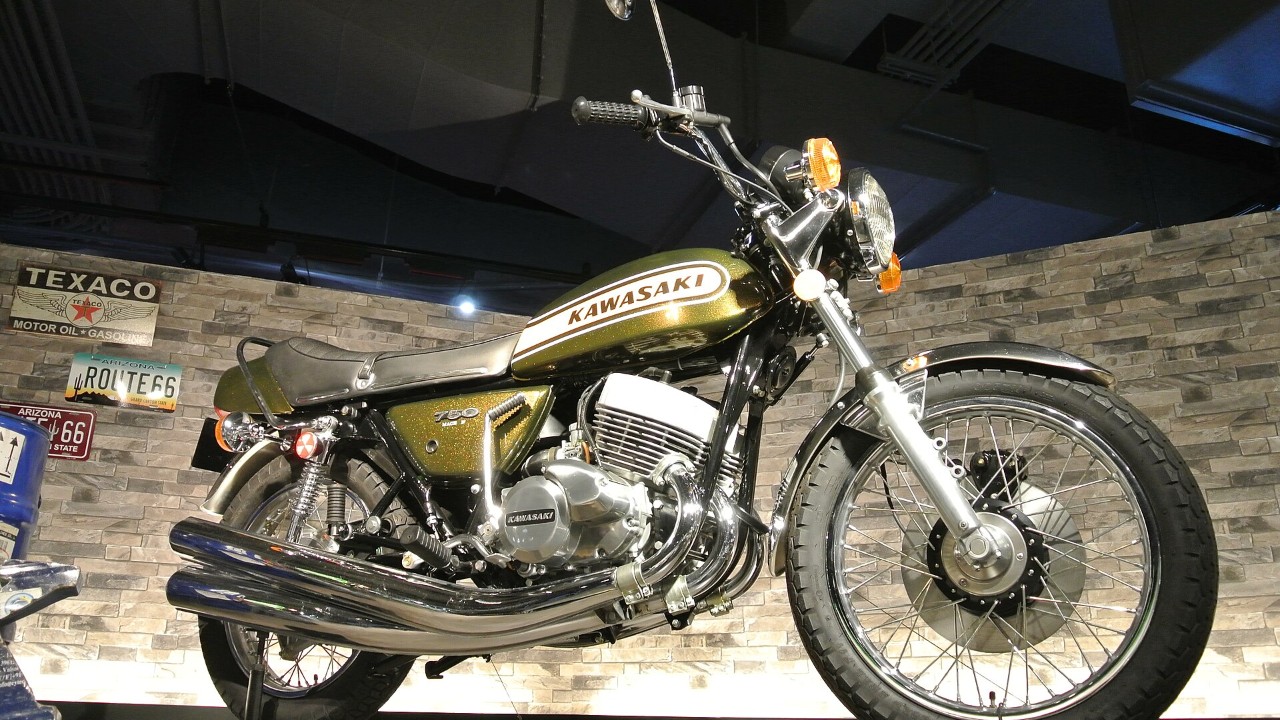
The 748 cc Kawasaki H2 Mach IV triple made a claimed 74 hp in 1972. The trouble was how it arrived. According to Jalopnik’s history of the H2, the engine stayed docile below about 4,000 rpm and then surged hard. In a corner, that surge could break rear traction or set off a high-speed wobble. A light front end, a short wheelbase and a flexing frame made it worse.
Kawasaki fixed a lot of that for 1974. It lengthened the swingarm and cut steering rake from 28 to 26.5 degrees, while power dropped to 71 hp. The 1974 H2B also got revised carburetors and oil injection to reduce smoke, as Motorcycle Classics notes. Still, it burned gas at about 30 mpg.
In our view, even the tamed 1974 bike is a lot of motorcycle to manage for the money. Jalopnik reports that pristine 1972 bikes sell for $30,000 to $50,000 or more, so the later H2 is the cheaper door in. Even so, it remains an expensive, thirsty way to learn old-school throttle control.
Buyer advice: if you want an H2, the 1974 or 1975 is the calmer choice, and a working steering damper is a must.
2. Yamaha RD400
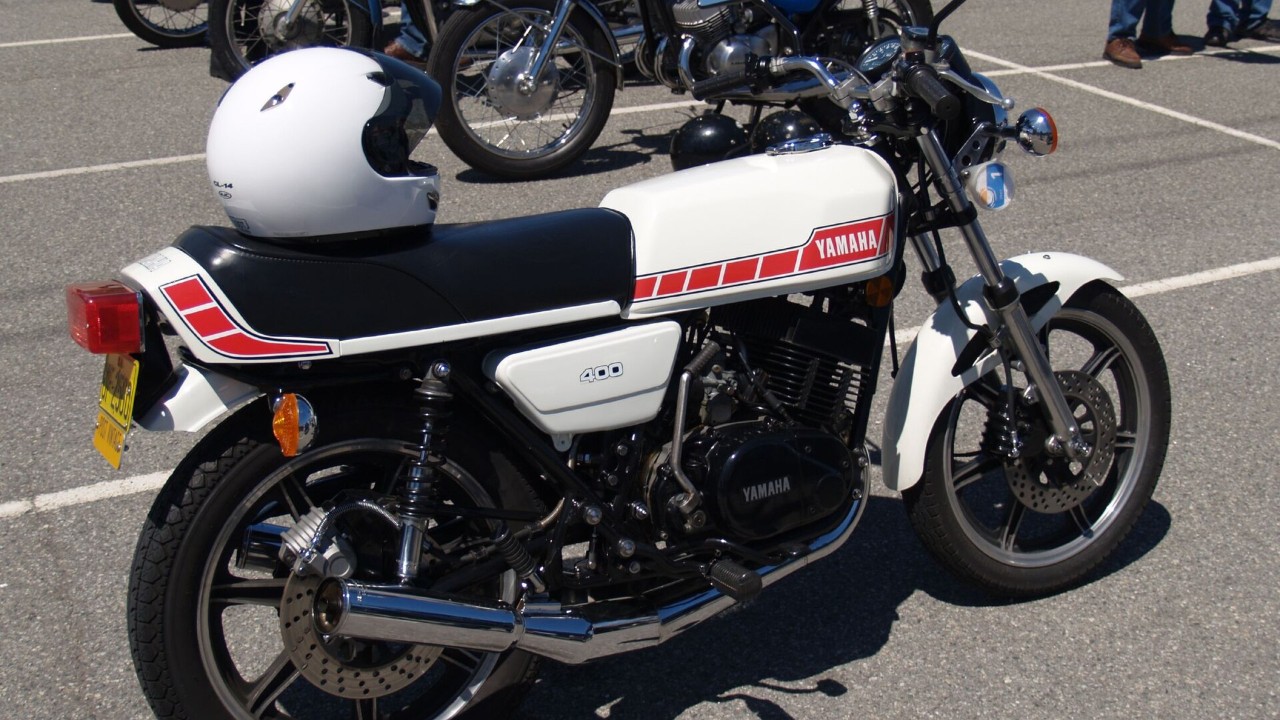
The RD400 is the most usable bike here, and Yamaha built it from 1976 to 1979. Its 399 cc air-cooled twin made 44 bhp at 7,000 rpm. The first RD400C also made history as the first motorcycle from a major maker offered with cast wheels.
So why is it on this list? The answer is the law more than the bike. Yamaha ended the RD series in the USA because of new emissions rules in the early 1980s. Like most two-stroke street bikes, the RD burns its lubricating oil along with its fuel, and that oily exhaust is what those rules squeezed out. As a result, a US owner is maintaining a design that its maker could no longer sell new.
Our take: we would pass on an RD400 as your only bike. It is a great weekend toy, but it smokes, it drinks two-stroke oil and it asks for regular carburetor care. We also think many buyers underestimate how much fiddling an old two-stroke needs to stay crisp.
Buyer advice: seek a 1978 RD400E or later, which added electronic CDI ignition, and keep a spare spark plug set in the tool kit.
3. 1985 Yamaha RD500LC

On paper, the RD500LC is the dream: a 499 cc, 50-degree, twin-crank V4 two-stroke with Yamaha’s YPVS power valves, built from 1984 to 1986. It made 88 hp at 9,500 rpm. Yamaha could not even sell it in the United States, because of EPA rules.
The trouble starts inside the cases. Writing in Classic Motorcycle Mechanics, a rebuilder called the right-hand main bearings a design fault. In his experience, they typically crack around the circlip groove at roughly 21,000 to 23,000 miles. He also found that clutch hub nuts were no longer available from Yamaha. Meanwhile, a broken clutch-hub spring pillar affects many bikes.
The bike’s own instruments hint at another issue. Its combined temperature and fuel gauge is a very useful feature, given how much fuel these V4s use.
In our opinion, the RD500LC is a collector’s machine first and a rider second. Expect specialist rebuild costs and a long hunt for parts.
Buyer advice: ask for proof that the main bearings have been replaced, and never buy one with a modified, over-bored engine.
4. 1986 Yamaha TZR250
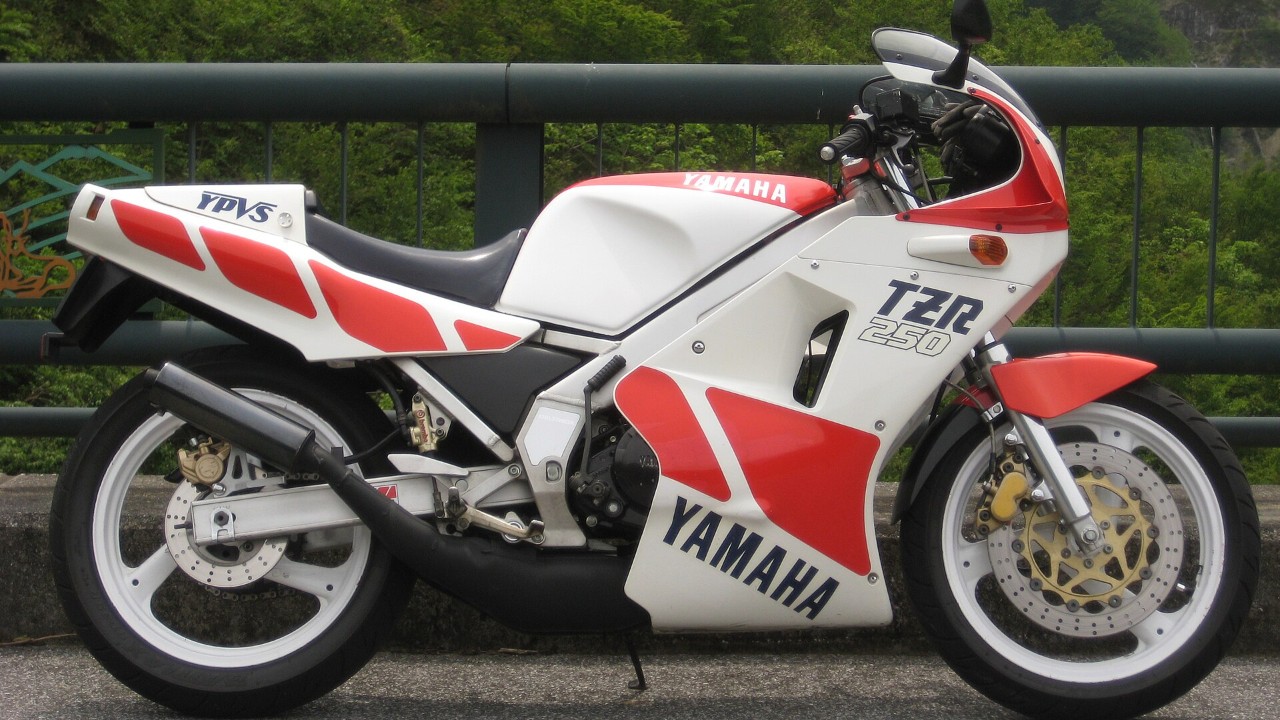
Production of the TZR250 began in June 1986. Its 249 cc parallel twin made 45 hp as sold, held back by the standard exhausts and ignition boxes. It was also an expensive bike for a 250 when new.
The bigger problem today is knowing what you are buying. The Japanese 1KT model carried a more restrictive CDI to meet Japan’s limits on 250 cc bikes. Meanwhile, the UK got the 2MA variant. After that came the reverse-cylinder 3MA in 1989 and the V-twin 3XV. As a result, a seller’s “TZR250” could mean any of several quite different machines.
We think the TZR is a brilliant small sportbike for a skilled rider who knows two-strokes. For anyone else, it is a high-revving, high-maintenance bike with a tight power band. Above all, it does not suit a commuter.
Buyer advice: check the frame code before you agree a price, and assume a 1KT will need ignition work to match the export bikes.
5. Kawasaki 250 S1 Mach I
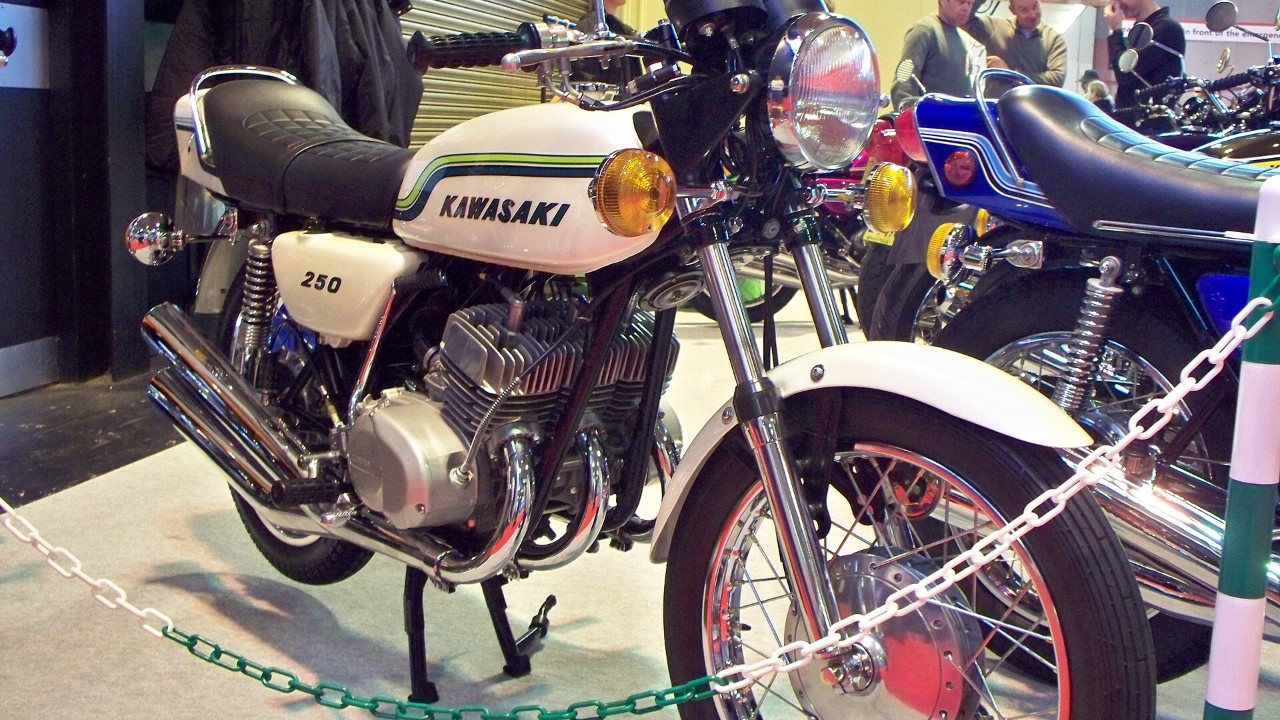
Kawasaki launched the S1 in 1972 as the smallest of its two-stroke triples. Then it updated the bike almost every year, with S1A, S1B and S1C versions through 1975. That makes it look like an easy, friendly way into triple ownership.
In practice, the S1 shares the family’s temper. Detractors complained that the Kawasaki triples handled poorly and liked to wheelie. For inexperienced riders, the power curve gave little response until a rush of power at about 5,000 rpm. On top of that, Kawasaki toned down each model year after 1974 to meet new emissions rules.
Our take: three cylinders and a peaky power band are a lot to keep in tune on a 250. In addition, it rewards revs more than most new riders expect. We would rather point a beginner at a simpler twin.
Buyer advice: the later KH250, built until 1980, shares the same basic recipe. Budget for a careful tune-up on any of them.
6. Suzuki GT250
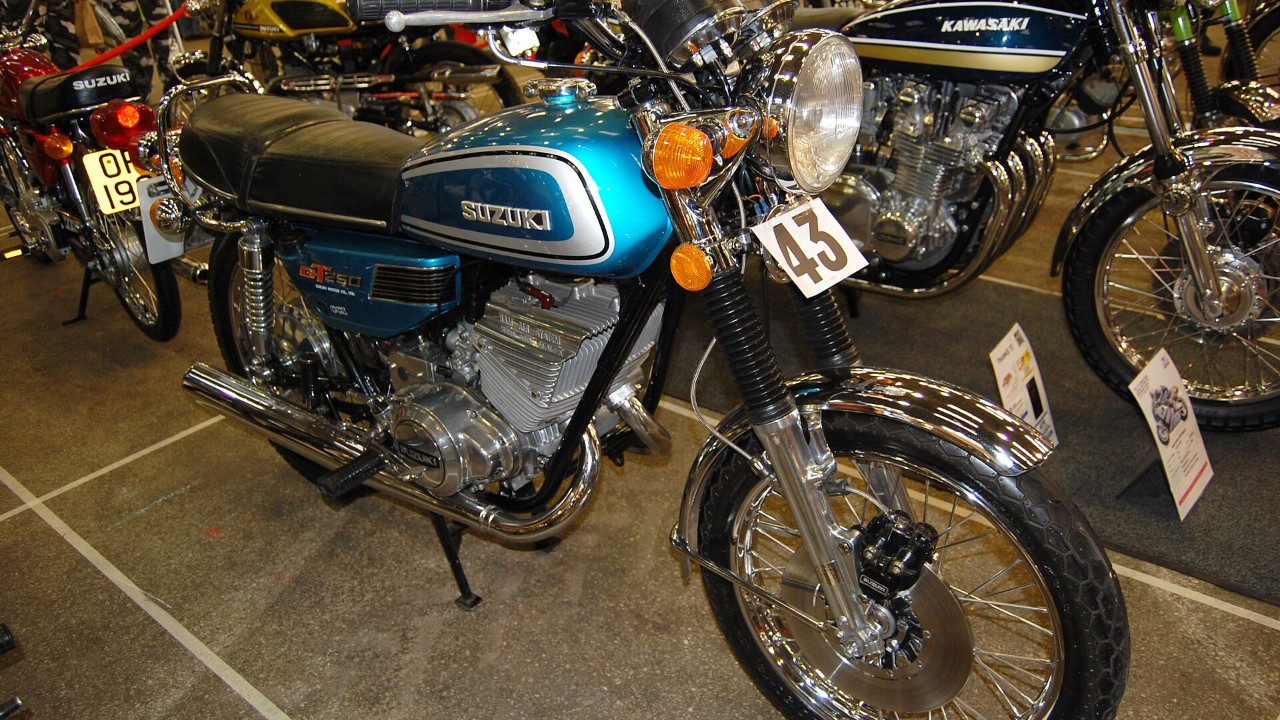
The GT250 ran from 1971 to 1981, and US buyers knew it as the Hustler. Its 247 cc twin carried Suzuki’s “Ram Air” cooling cowl. Even now, owners debate whether the Ram Air system really improved cooling or was mostly for show.
That is not the only weak spot. Suzuki added a single front disc in 1972, but that disc suffered from poor wet-weather performance. The 1976 revision was faster, yet it lacked power below 4,000 rpm. Earlier, in 1973, export exhausts were modified to meet noise and emission rules, which also cost power.
In our view, the early disc-braked GT250 is a pleasant classic for dry Sundays and a poor choice for real-world riding. The later GT250 X7 of 1978 was lighter and more compact. Better yet, it could reach 100 mph in favourable conditions, so it is the one we would choose.
Buyer advice: skip the early bikes if you ride in rain, and look for a well-kept X7 instead.
7. Kawasaki 500 H1 Mach III
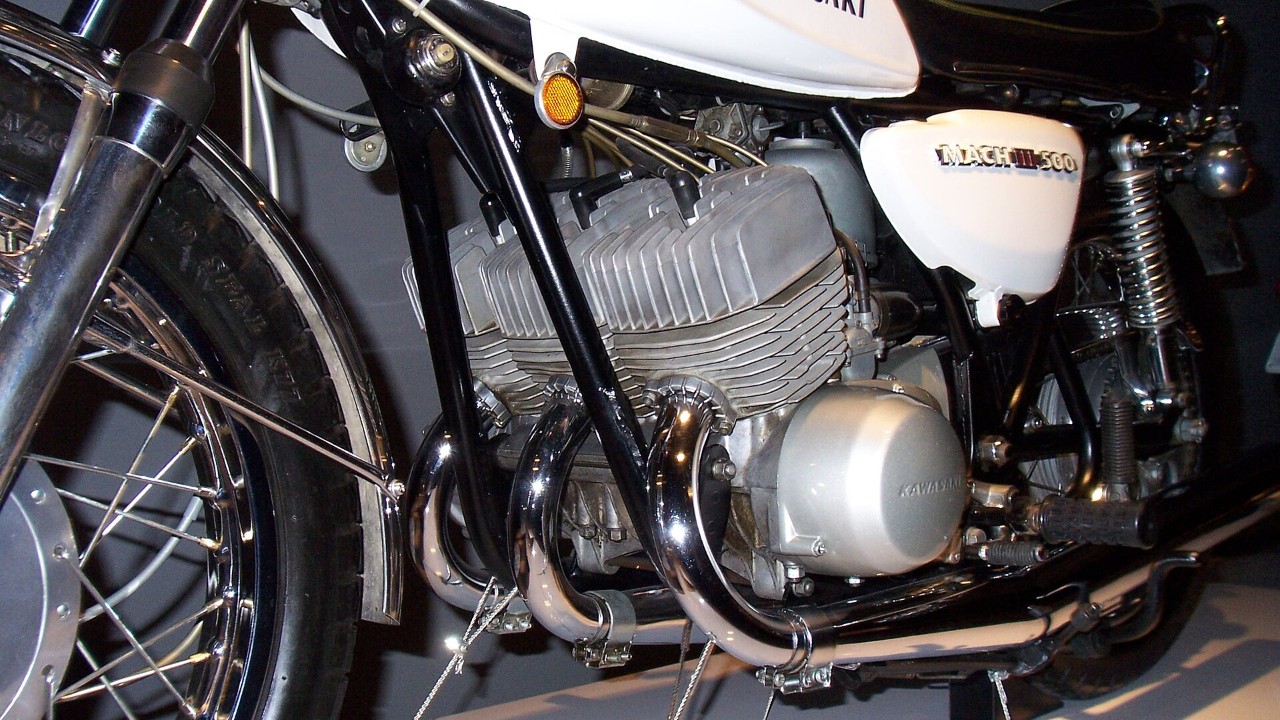
The H1 started the Kawasaki triple story in 1969, and Kawasaki built it through 1975. Its 499 cc engine was designed to make 60 hp, and that is exactly the problem. The chassis never kept up with the motor.
One retrospective review called the H1’s handling “decidedly marginal in every situation.” Early bikes also had drum brakes at both ends, and the front disc did not arrive until the 1972 H1B. In addition, critics noted an odd gearbox with neutral below first. For a fair comparison, our list of vintage motorcycles that were faster than anyone admitted shows how few rivals matched its straight-line pace.
Our take: the H1 is a landmark, and we love seeing one at a show. As a rider, though, we would avoid an early drum-brake bike entirely. If you ride it, ride it as a straight-line toy with plenty of space around you.
Buyer advice: choose a 1972-or-later bike with the front disc, and fit modern tires and fresh brake parts before your first ride.
8. 1972 Suzuki T500

The T500 was a 492 cc twin that Suzuki built from 1968 to 1975. It claimed 47 bhp at 7,000 rpm and a top speed of 105 mph. It was also sold under several names, including Titan, Cobra and Charger. In fact, Ford and Shelby objected to “Cobra,” and Dodge objected to “Charger.”
We list it for its weak spots more than its character. The original T500/Five suffered handling problems, so Suzuki lengthened the swingarm on the Mk II. Some engines suffered piston failures, and Suzuki fitted stronger GT750 pistons as a fix. Fourth- and fifth-gear failures also led Suzuki to increase the gearbox oil capacity in 1973.
In our opinion, a 1972 bike sits just before that gearbox fix, which makes it the riskier buy. For more bikes we would approach with caution, see our list of American motorcycles to avoid at all costs.
Buyer advice: ask whether the pistons and gearbox have been updated, and check the gearbox oil level first. Suzuki itself dropped the restyled GT500 in 1978, as emissions rules made two-strokes harder to certify.
More from Fast Lane Only