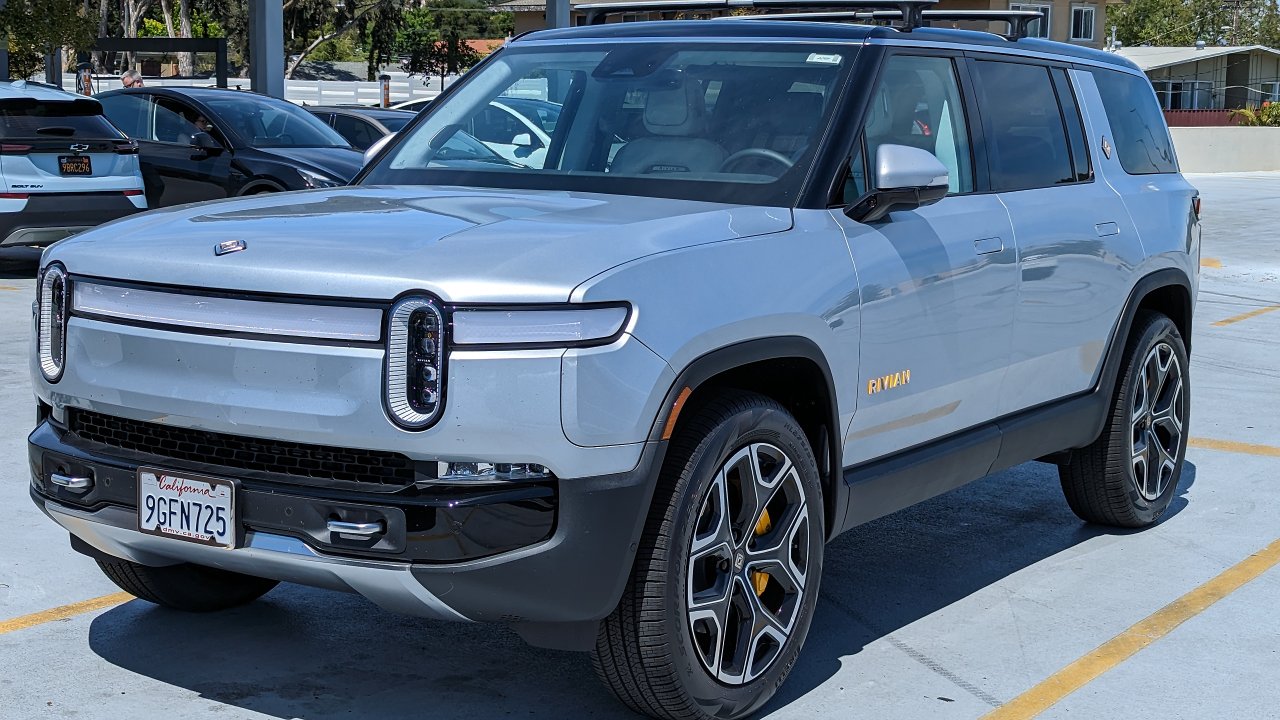
You are watching one of the largest bets yet on driverless ride hailing take shape. Uber plans to invest up to $1.25 billion in Rivian and commit to as many as 50,000 R2 electric SUVs that would operate as fully autonomous robotaxis on its platform. For you as a rider, driver, investor, or city resident, the deal signals how quickly the business model of urban mobility could shift over the next few years.
What Uber and Rivian actually agreed to
At the core of the partnership, Uber says it will invest up to $1.25 billion in Rivian through 2031, tied to specific performance milestones for autonomous driving. The companies describe a plan to deploy up to 50,000 fully autonomous robotaxis based on Rivian’s upcoming R2 SUV, which you would access exclusively through the Uber app in participating markets. According to the joint announcement, the vehicles are intended to be fully driverless and integrated directly into Uber’s ride hailing and delivery products.
The official description from Uber and Rivian frames the agreement as a long term collaboration on both vehicle supply and autonomy technology. Uber’s investment is structured so that capital flows into Rivian only as certain autonomous capabilities are demonstrated and cleared by regulators. For you, that means the headline figure is a ceiling, not a lump sum transfer on day one.
How the money and vehicles line up
Look at the numbers and the scale is striking. Multiple accounts describe Uber’s commitment as up to $1.25 billion, with Rivian expected to provide as many as 50,000 autonomous R2 SUVs for Uber’s network. One report notes that Uber plans to buy 50,000 R2 SUVs to use as robotaxis, while another highlights the same 50,000 target as part of a broader autonomy push across dozens of cities by 2031. Uber Technologies has also said publicly that it plans to invest $1.25 billion in Rivian for 50,000 robotaxis and aims to have the fleet in operation by the end of 2031.
The structure matters if you follow the financial side. Uber characterizes the capital as an investment in Rivian Automotive rather than a simple purchase order, which gives Uber exposure to Rivian’s future value but also to its execution risk. A detailed breakdown from a News Editor describes Uber as “betting as much as $1.25 billion” on the electric vehicle maker, with the companies announcing the plan on a Thu in Mar, which captures the speculative nature of the commitment.
Why Uber is turning to Rivian specifically
If you are wondering why Uber chose Rivian, the answer starts with product and supply chain. Rivian’s R2 is an all electric SUV platform designed for both consumer and fleet use, and the company emphasizes a US centric manufacturing footprint even though many components still come from global suppliers. Reporting that cites Rivian founder and CEO RJ Scaringe notes that the automaker is building out a supply chain that can support volume production of the R2 while maintaining tight integration between hardware and software.
For Uber, that combination of electric efficiency, SUV form factor, and integrated technology stack is attractive for a robotaxi service that needs long daily utilization. One analysis of the deal explains that Uber is tapping Rivian to build thousands of robotaxis based on the upcoming R2, with the partnership described as ambitious and “brimming with risk and challenges.” That same account highlights that Uber is kicking off the collaboration with an initial capital injection, while Rivian commits to providing up to 50,000 autonomous R2 SUVs over time, as summarized in Image Credits coverage of the agreement.
What “fully autonomous” means for you
The companies repeatedly describe the future R2 fleet as “fully autonomous,” which for you as a passenger means no human driver behind the wheel once the system is cleared for commercial service. In their joint statement, Uber and Rivian talk about deploying up to 50,000 fully autonomous robotaxis that would operate exclusively through the Uber platform. The vehicles are expected to integrate advanced sensor suites and software capable of handling urban traffic without a safety driver, subject to regulatory approval and performance thresholds.
From your perspective, that could translate into shorter wait times in dense areas, especially during peak hours when human drivers often log off or chase surge pricing in other parts of the city. It also raises questions about how you will interact with the vehicle, from unlocking doors and setting climate controls to managing accessibility needs. The official Rivian announcement suggests that the companies intend to build those user flows directly into the app experience.
Where and when you might see these robotaxis
So far, Uber and Rivian have framed the deployment as a multi year rollout that stretches through 2031. Some reports describe a plan to reach 25 cities by that time across the United States, Canada, and Europe, with an emphasis on markets that already have strong Uber usage and relatively supportive regulatory environments for autonomous testing. Another account focuses specifically on California, where Uber is expanding its role in the state’s autonomous vehicle experiments and positioning the Rivian partnership as part of a broader push into robotaxis for cities like San Francisco and Los Angeles.
In San Francisco, you already see robotaxis from other companies on the road, and local coverage has described the new Uber and Rivian SUV style rides as a fresh entrant into an already contentious debate over congestion, safety, and fair competition. One story by Rachel Swan, identified as “By Rachel Swan, Staff Writer March,” uses the image of a dog looking out the window of a Rivian all electric SUV at the Rivian Adventure Ne facility to illustrate how quickly these vehicles are moving from niche novelty to everyday presence. For you as a resident, that means the R2 robotaxis are likely to show up first in tech forward, regulation heavy markets where cities are already grappling with driverless services.
How this affects drivers, riders, and cities
If you drive for Uber today, the idea of 50,000 autonomous R2 SUVs can feel like a direct threat to your income. Uber has not detailed exactly how it will balance human drivers with robotaxis, but the scale of the Rivian commitment suggests that a significant share of future trips in some markets will be handled by autonomous vehicles. Analysts who follow Rivian Automotive and Uber argue that the companies are betting that lower operating costs per mile, higher vehicle utilization, and fewer accidents will outweigh the political and social friction that comes with displacing human drivers.
For riders, the impact is more mixed. You might benefit from more consistent pricing, fewer cancellations, and cleaner vehicles, especially if the R2 fleet is maintained centrally. You also lose the human element that many riders rely on for safety checks, assistance with luggage, or navigating complex pickup zones. City officials will have to decide how to regulate a fleet of 50,000 robotaxis that are controlled by software rather than individual drivers. One detailed corporate release from Uber’s investor site notes that the vehicles will operate exclusively through the Uber platform, which concentrates control and data in a single corporate stack.
The strategic stakes for both companies
If you follow markets, you know that Rivian has been under pressure to prove a path to scale and profitability. Commentators analyzing what Uber’s $1.25 billion investment means for Rivian’s future argue that the deal gives Rivian a long term demand anchor for the R2 platform and validates its strategy of pairing with large mobility partners. One breakdown framed the agreement with the phrase “Under the” to highlight that Uber plans to invest up to $1.25 billion in Rivian through 2031, contingent on meeting specific autonomous development milestones, and placed it alongside Rivian’s earlier alliance with Volkswagen.
More from Fast Lane Only