Volkswagen’s VR6 engine squeezed six cylinders into a block narrow enough to wear a single cylinder head. The trick was a V angle of just 15 degrees, with the two banks staggered so they could share one head. That layout let Volkswagen put six-cylinder power into compact front-drive cars built around four-cylinder engine bays.
The engine arrived in 1991 and stayed in the lineup for more than three decades. Along the way, it grew in size, gained valves and even spawned a five-cylinder offshoot. Here is how the design worked and why Volkswagen bothered.
Every figure below comes from The Autopian’s history of the VR6 and its five-cylinder sibling, and from a 2011 anniversary story by auto123. Where only one of them reports a detail, the text says so.
The packaging problem the VR6 engine solved
By the 1980s, front-wheel-drive cars with transverse inline-four engines were everywhere, as The Autopian explains. Volkswagen wanted six cylinders in those cars, but an inline six mounted sideways would not fit. After all, a compact car can only be made so wide.
A conventional V6 was no easy answer either. According to The Autopian, a typical V6 sets its banks at 60 or 90 degrees. That spreads the engine wide and calls for two cylinder heads. So Volkswagen developed its own narrow-angle V engine instead, one that could fit where a four-cylinder normally sat.
The name explains the idea. The Autopian says the “V” stands for V-Motor, while the “R” stands for Reihenmotor, German for an inline engine. In other words, the VR6 is part V6 and part straight six.
How a 15-degree V shares one head
The launch versions of the VR6 set the banks just 15 degrees apart. At that angle, however, the cylinders would overlap if they sat side by side. Volkswagen’s fix was to stagger the two banks, much like the teeth of a zipper.
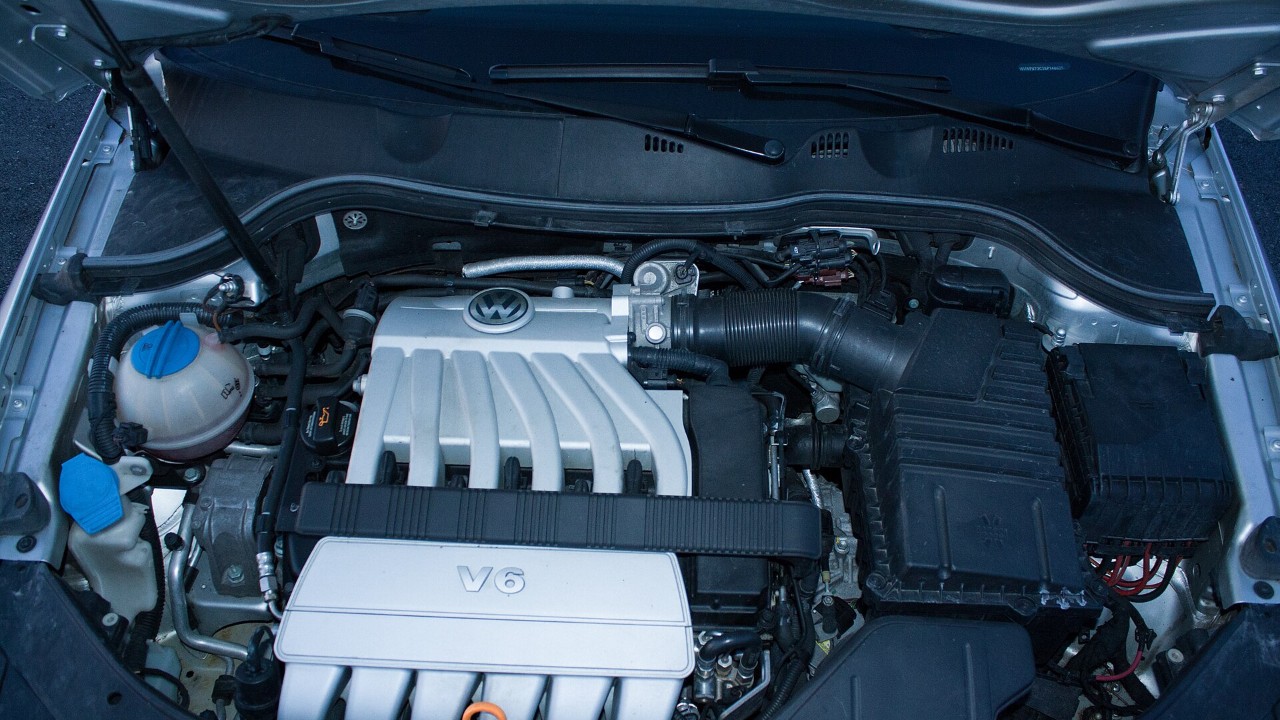
Because the narrow V left no valley between the banks, both rows of cylinders could share the same cylinder head. The Autopian notes that this made the VR6 smaller and lighter than a typical V6. Meanwhile, auto123 credits the 15-degree angle for the single-head design. As a result, the engine needed fewer parts and left more room in the engine compartment.
The single head also shaped how the engine breathed. For instance, The Autopian describes unequal-length runners passing through the head. Early versions used a single overhead camshaft with two valves per cylinder, for 12 valves in all. The VR6 fires in the order 1-5-3-6-2-4, according to the same history.
The first cars to get it
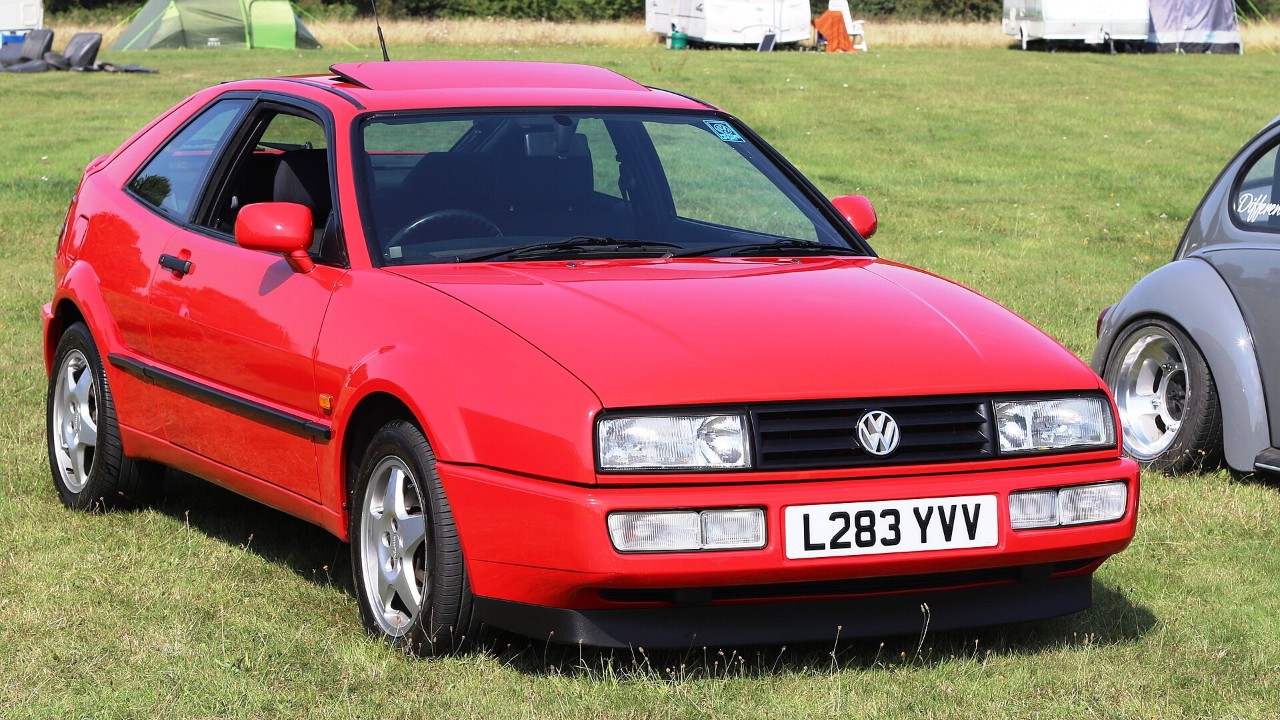
Volkswagen spent the rest of the 1980s developing the engine, and it was ready in 1991, The Autopian reports. That year, the Corrado and the Passat B3 gained a VR6 option. Auto123 agrees the Passat and Corrado came first. In North America, it adds, the engine debuted in 1992.
Both sources list 2.8 liters as a launch displacement. The Autopian also lists a 2.9-liter version for the Corrado. Output varied by car and market, so auto123 gives a range instead: from 172 horsepower to nearly 300 across the engine’s life.
For auto123, the engine’s narrowness was its best feature, because it let the VR6 fit where typical V6 engines would not. Later, the engine found its way into the GTI, the Jetta and the Touareg, according to auto123.
How the VR6 grew over three decades
The basic VR6 engine layout carried through several displacements. Auto123 lists versions from 2.8 liters up to 3.6 liters. The Autopian points to the 2001 Beetle RSi, which added 400 cc to reach 3.2 liters. By its account, the final VR6 sold in America displaced 3.6 liters.
The valvetrain changed too. Later engines moved to four valves per cylinder. Rather than fit four camshafts, Volkswagen used one camshaft for the intake valves on both banks and a second for the exhaust valves, The Autopian explains. The intake side also gained variable valve timing.
The Autopian also traces Volkswagen’s later W8 and W12 engines back to the VR concept. In effect, those engines paired up narrow-angle banks in the same spirit.
The VR5: the same idea with one less cylinder
In 1997, Volkswagen engineers took the concept a step further. The Autopian says they derived a five-cylinder engine from the VR6 by removing its first cylinder. The result kept the 15-degree bank angle and the single head.
At launch, the 2.3-liter VR5 made 150 horsepower and 154 lb-ft of torque, with one camshaft and 10 valves. Then, in 2000, it gained a second camshaft, 20 valves and a rating of 170 horsepower, according to The Autopian. The five-cylinder went into the Bora (Jetta), the Golf Mk IV, the New Beetle and the Passat B5. Volkswagen never sold it in the U.S., and in 2006 a 2.5-liter inline five replaced it.
Where the VR6 story ended
Volkswagen announced the end of the VR6 in early 2023, alongside the Atlas update, after 32 years in its lineup. The last American holdouts were the 2018 Passat, the 2018 Touareg and the 2023 Atlas, The Autopian reports.
China kept the design going a little longer. There, a 2.5-liter turbocharged VR6 made 295 horsepower and 369 lb-ft. Finally, in 2024, that engine went out of production too, closing the book on the narrow V that first ran in the 1991 Corrado and Passat.
More from Fast Lane Only