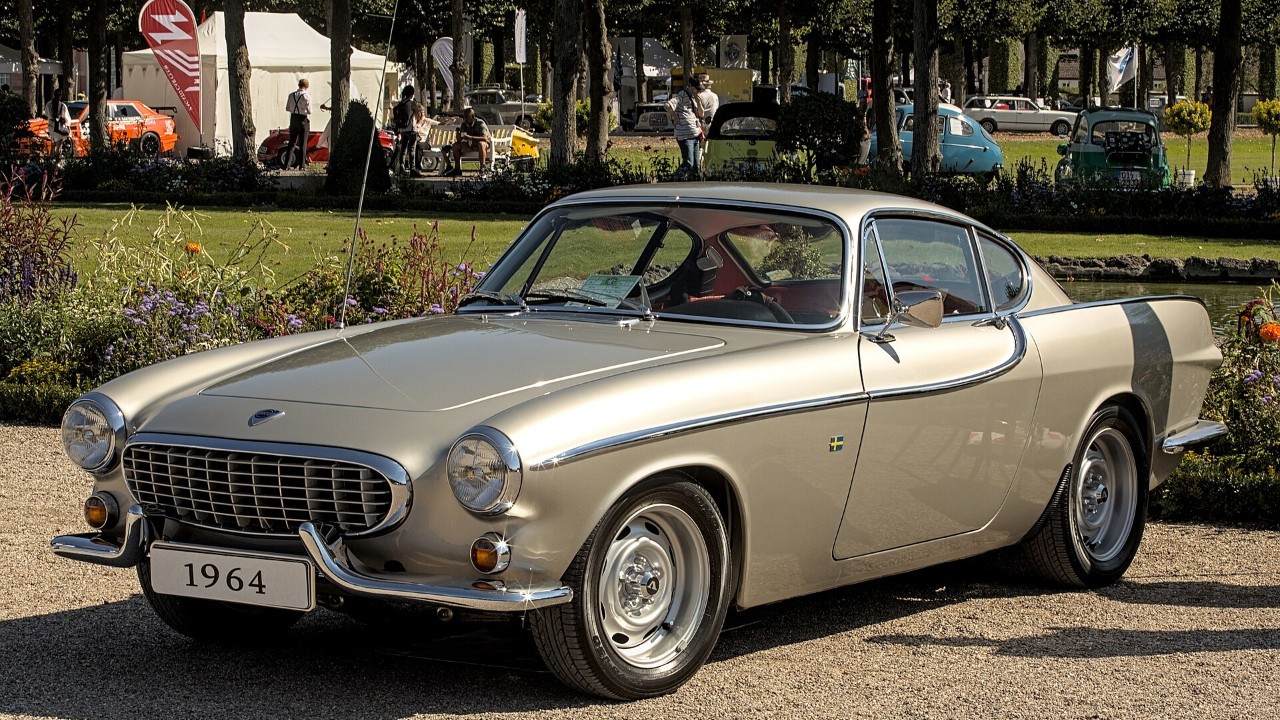
The story of Volvo in America starts with one small two-door sedan. In 1955, Volvo shipped its first car from Sweden to the United States, and it was a PV444. That car had two doors, a manual gearbox and no standard three-point belts.
What followed was a run of tough, practical cars that taught American drivers what a Swedish car felt like. Here are seven of them, in rough chronological order, with the figures Volvo and its historians put on the record.
1. 1955 Volvo PV444, the first Volvo in America

Volvo designed the PV444 in 1944, and production began in 1947. The company called it “The Little Volvo,” yet it promised room for “four fully grown Swedes with their hats still on.” Underneath, it used a self-supporting unibody for crash protection. It also had a laminated windshield for safety.
In 1955, the PV444 became the first Volvo exported to the United States, according to Volvo’s own history of the car. That same history says American drivers valued its sturdy build, straightforward engineering and fuel efficiency. Volvo’s 70th-anniversary release from December 2025 also confirms that first U.S. car was a two-door PV444 with a manual transmission.
2. 1958–1965 Volvo PV544
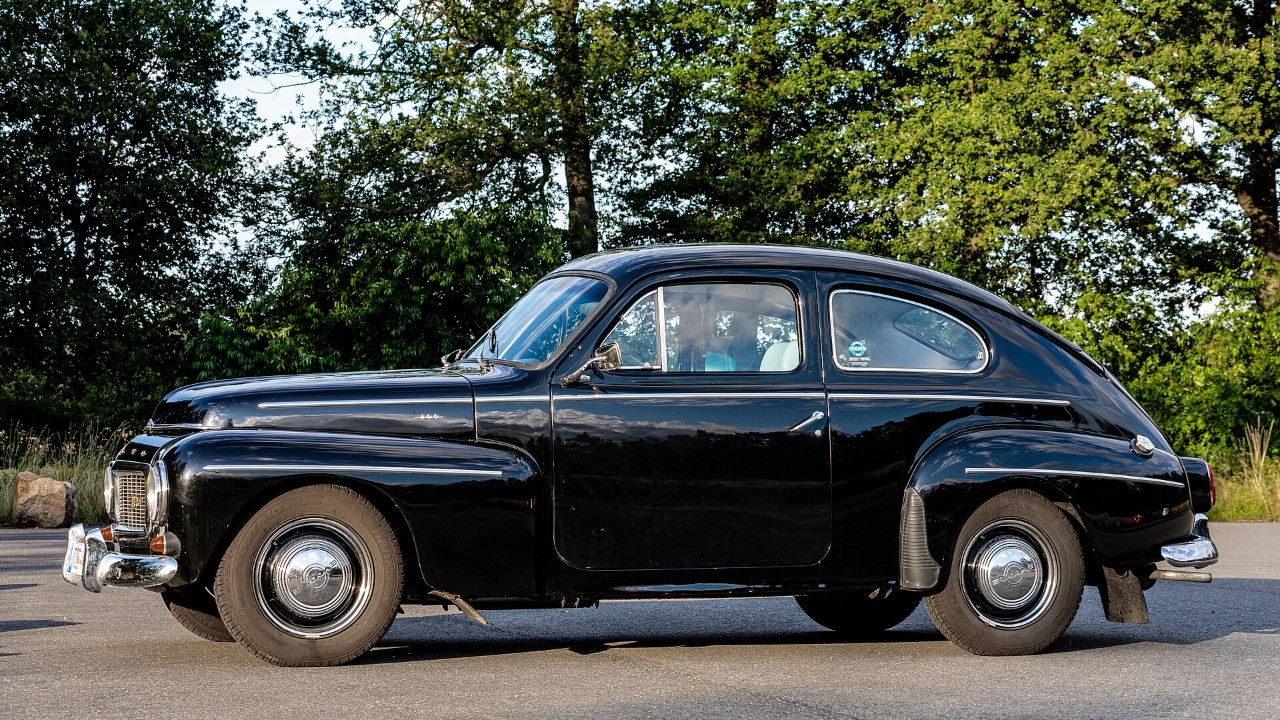
The PV544 kept the humpback shape but brought the car into the 1960s. Volvo built 243,990 of them between 1958 and 1965. At first, the engine was a 1,583 cc four-cylinder rated at 60 or 85 bhp. Then, from 1961, a 1,778 cc engine took over at 75 or 90 bhp, later rising to 95 bhp.
Those numbers come from Volvo’s PV544 heritage page, which also calls it one of the most successful rally cars of the late 1950s and early 1960s. In 1959, it and the Amazon were the first Volvos with the patented three-point belt in the Nordic markets. Later, in 1963, Volvo brought that belt to the USA, says Volvo’s safety-belt history. Meanwhile, The Truth About Cars notes that Americans could buy the PV544 into the mid-1960s.
3. Volvo 122S, known at home as the Amazon
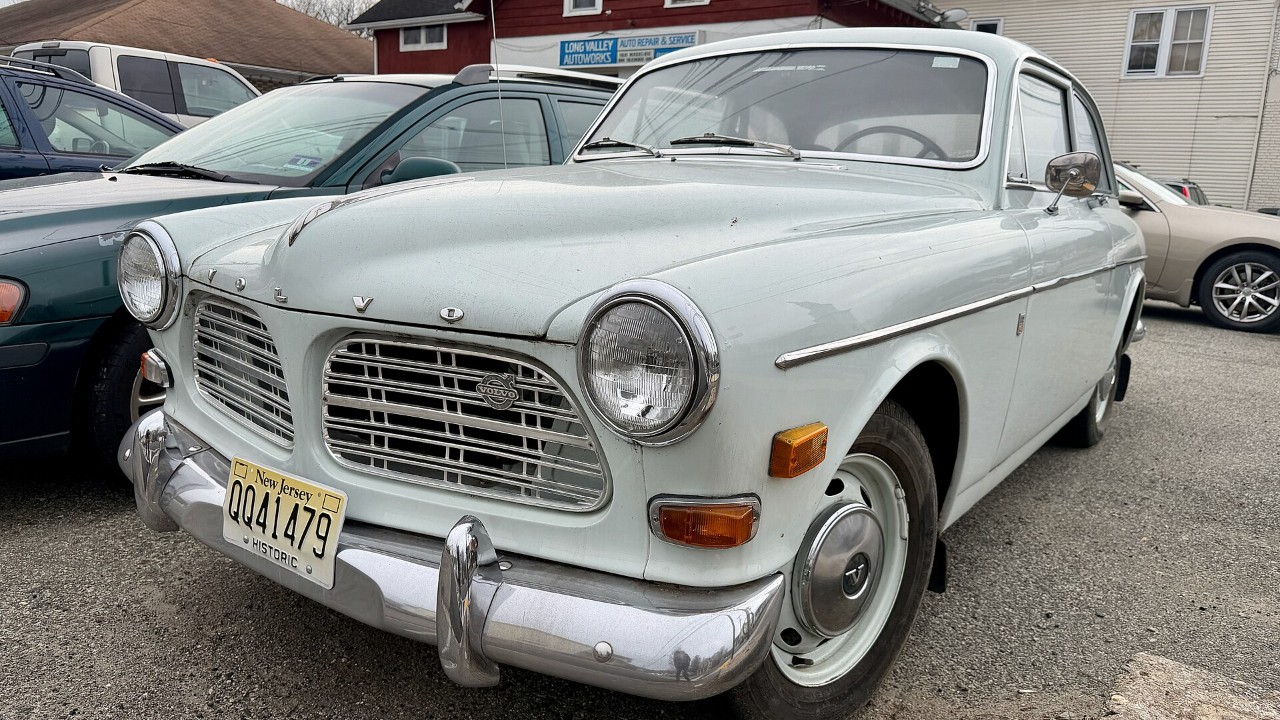
In Sweden, this rounded sedan was the Amazon. On export markets, however, Volvo sold it as the 121 and 122S. Production began in 1957 after a 1956 prototype, according to Volvo’s history of the P120 Amazon. That same history counts 234,208 four-door cars. It also lists a padded dash top, a laminated windscreen and seatbelt anchors front and rear.
The car reached the U.S. in 1959 under the 122S name, Barn Finds reports. In one sale Hagerty covered, a 1966 122S with a 95-hp B18 and twin SU carbs sold on Bring a Trailer for $8,166 with premium, according to Hagerty’s report. In fact, Hagerty says values for similar two-doors climbed from $4,700 in early 2021 to about $12,000.
4. 1961–1973 Volvo P1800

The P1800 was Volvo’s sports coupe, and it stayed in production from 1961 to 1973. Pelle Petterson, a 25-year-old designer from Göteborg, drew it. At launch, it used the new B18 engine in its 100 hp sports tune. Jensen Motors in Britain built the first 6,000 cars before production moved to Volvo’s Lundby plant in spring 1963.
Those details come from Volvo’s P1800 history, which also recounts Roger Moore driving one as Simon Templar in “The Saint.” Its best chapter of Volvo in America belongs to Irv Gordon. He bought a 1966 P1800 in East Patchogue, N.Y., in June 1966 and drove 1,500 miles in the first 48 hours. By 1998, he held a Guinness record at 1.69 million miles, Volvo reported in 2010.
5. 1966–1974 Volvo 144 and the 140 series
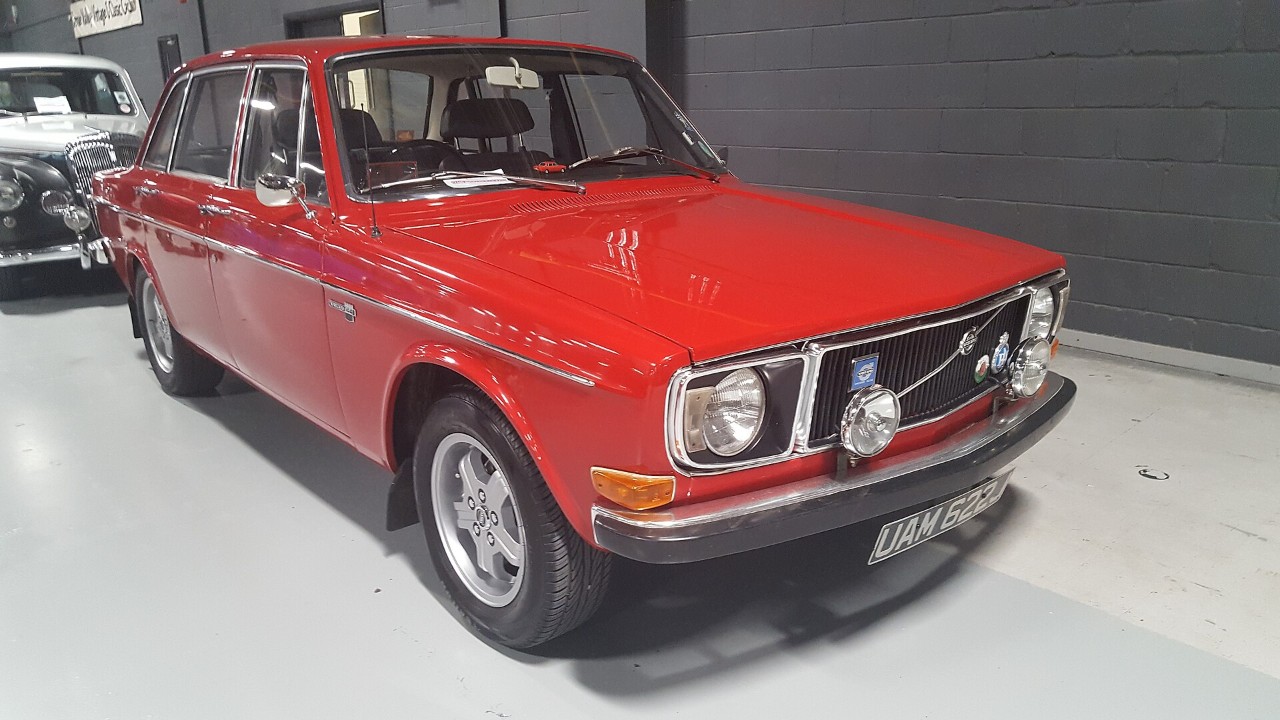
The boxy 140 series replaced the Amazon in 1966. Volvo built 523,808 of the four-door 144 between 1966 and 1974. Engines started with a 1,778 cc four at 75 or 90 bhp, and later a 1,986 cc four. Just as important, the car had crumple zones front and rear, four-wheel disc brakes and two brake circuits that each worked three wheels.
Those specs come from Volvo’s 144 heritage page. American deliveries began in March 1967, according to Hagerty. U.S. prices started at $2,995 with a manual and $3,175 with an automatic. That year, Volvo sold 33,189 cars in America, Hagerty adds. Later, the 240 carried over about three-quarters of the 144’s design.
6. 1968–1975 Volvo 164
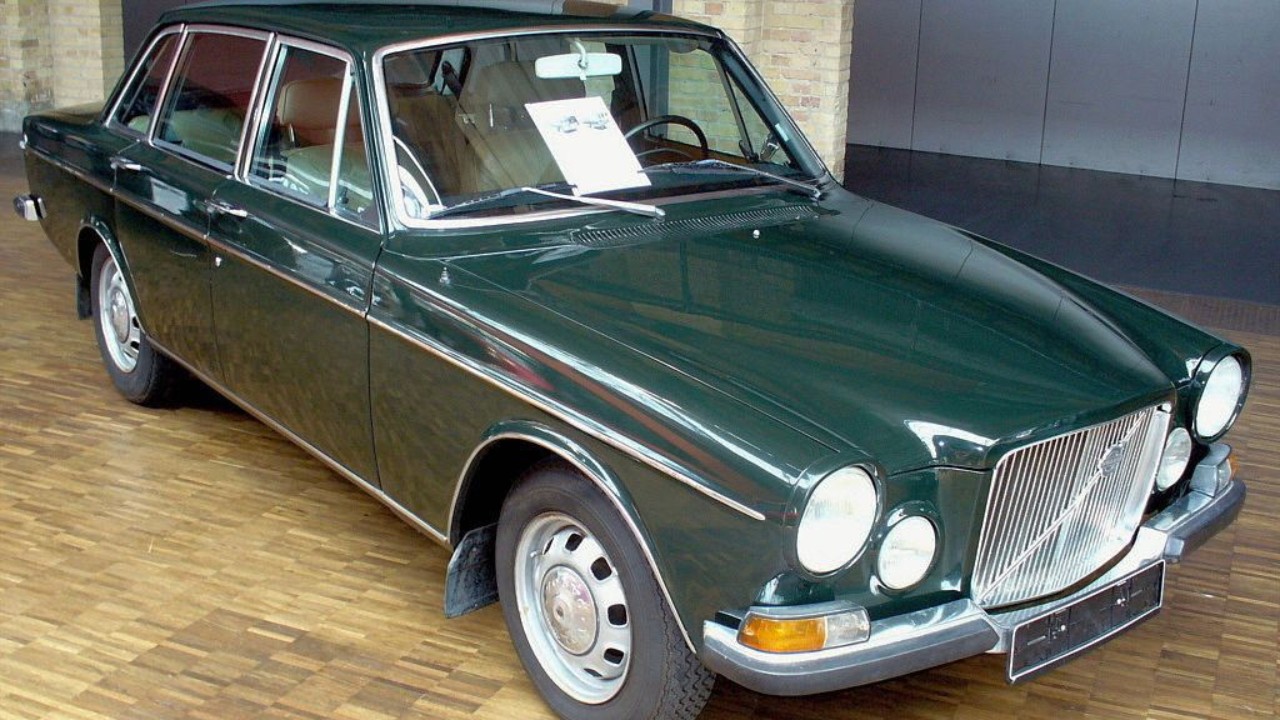
The 164 was Volvo’s six-cylinder flagship, with a longer hood to make room for the bigger engine. Volvo built 146,008 from 1968 to 1975. Its 2,978 cc inline-six made 135 to 175 bhp depending on version, with fuel injection offered later. Buyers chose a four-speed manual, a four-speed with overdrive or a three-speed automatic.
That data comes from Volvo’s 164 heritage page, which calls it Volvo’s return to six-cylinder cars after nearly two decades. The 164 came to the U.S. for the 1969 model year with leather seats and wool carpets, AutoRestorer says. That first U.S. car’s B30A six was rated at 145 hp, while a 1972 fuel-injected B30E made 160 hp. By contrast, California cars were rated at 125 hp because of emissions rules.
7. 1975–1993 Volvo 240
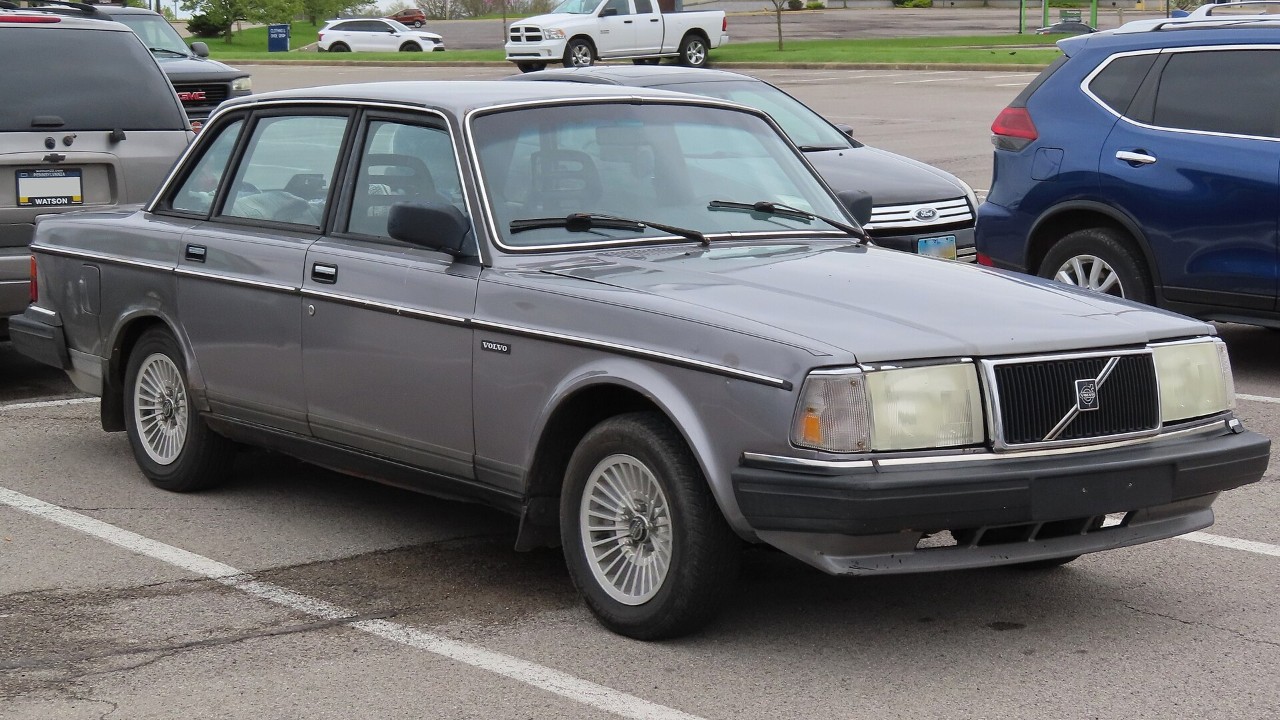
Volvo’s 240 launched in the fall of 1974 as the successor to the 140 and ran through 1993. Volvo sold more than 2.6 million worldwide as the 242 two-door, 244 four-door and 245 wagon. Self-adjusting three-point belts were standard.
According to Hagerty’s 240 buyer’s guide, every American 240 had fuel injection from the start. The original B20F made 98 hp, while the later B23F made 114 hp. Meanwhile, the GLT Turbo reached 127 hp and 150 lb-ft. For a clean, rust-free early-1980s car, Hagerty puts the sweet spot at $9,000 to $11,000.
More from Fast Lane Only
- Unboxing the WWII Jeep in a Crate
- 15 rare Chevys collectors are quietly buying
- 10 underrated V8s still worth hunting down
- Police notice this before you even roll window down
This article was created with the help of AI and was reviewed and edited by Fast Lane Only editors before publication.