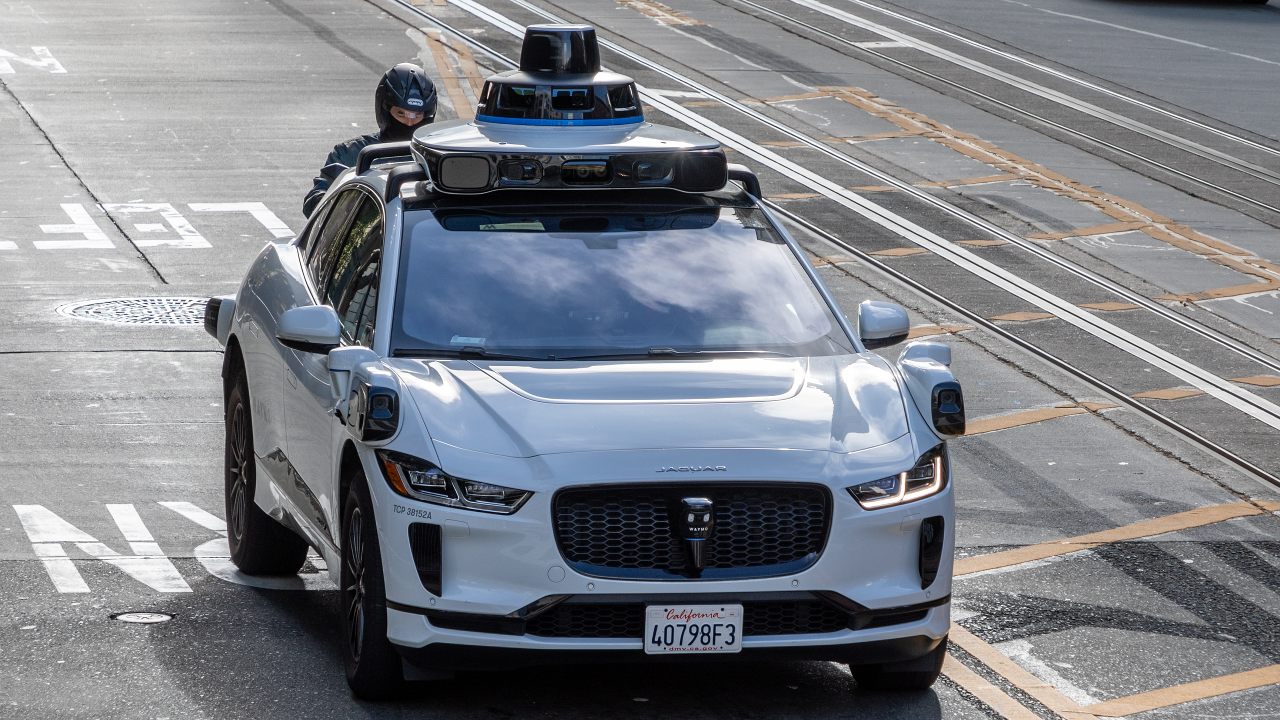
You are being asked to accept driverless cars as routine city traffic, yet a single stalled robotaxi in Austin has shown how fragile that promise can look when lives are on the line. When a Waymo vehicle blocked an EMS ambulance heading toward a deadly mass shooting, you saw a vivid test of whether autonomous systems can handle the rare, chaotic moments that define real public safety.
Instead of a clean demonstration of high-tech progress, the incident turned into a viral warning about what happens when code meets catastrophe. You are now left weighing not just convenience and innovation, but whether you can trust an algorithm to recognize that a siren behind it matters more than its own rules.
What happened on that Austin street
You can trace the outrage back to a specific stretch of road in Austin, where a driverless Waymo robotaxi ended up directly in front of an EMS ambulance trying to reach a mass shooting scene. Video shared online shows the Waymo inching forward, then freezing in the lane as people shout at the empty vehicle to move and the ambulance struggles to get around it, sirens blaring and lights flashing while seconds tick by in the middle of an unfolding emergency. In that moment, you see a machine that is technically obeying traffic geometry yet failing the basic human expectation that emergency vehicles get absolute priority.
According to detailed accounts of the blocked EMS ambulance, the autonomous car did not simply glide out of the way once the ambulance appeared. Instead, it moved slightly forward, then stopped again, turning what should have been a straightforward yield into an awkward standoff. At least one bystander can be heard yelling for the robotaxi to go as the ambulance driver threads past in a tight squeeze. For you as a potential passenger, that footage is a reminder that the hardest problems for self-driving software are not highway cruising or predictable commutes, but chaotic, high-stress city scenes where every hesitation carries weight.
How Waymo and officials are framing the risk
As you assess what this means for your own safety, you are hearing sharply different narratives from the company and from some first responders. Waymo has emphasized in public statements that the ambulance ultimately made it through and that there was no impact on patient outcomes, a point repeated in social media posts that describe the event as an EMERGENCY DELAY but stress that the delay was brief. That framing appears in a widely shared clip where the incident is described as a Waymo self-driving car that briefly blocked an ambulance responding to Austin’s deadly mass shooting Sunday, with commenters arguing over whether a few seconds matter when someone is bleeding in the back of a rig.
At the same time, coverage of the autonomous car blocking has highlighted that a police officer walked up to the vehicle as it remained in the lane, apparently trying to figure out how to get it to move while the ambulance navigated around. Another report quotes local EMS voices who describe the incident as part of a pattern of interference rather than a one-off glitch. On Facebook, a post about the emergency delay drew comments from people insisting that every second counts, arguing that you cannot dismiss any obstruction in a mass casualty event as harmless just because the patient survived.
Why the video hit a nerve for you as a city traveler
You probably would not be talking about this at all if the incident had stayed in an internal log file, but the traffic camera footage turned it into a public Rorschach test for trust in automation. In one viral clip, you see the Waymo sitting in the road while an ambulance with lights and sirens tries to maneuver around it, an image that feels almost theatrical in its symbolism. That scene, which has been circulated as a viral traffic video, invites you to imagine yourself not just as a passenger in the robotaxi, but as the person waiting for the ambulance that is stuck behind it.
When you watch another angle that shows a Waymo robo-taxi stopped in the road blocking first responders, you see why one observer described the moment as “next level dystopian.” The driverless Waymo robotaxi sits there with no one behind the wheel, its hazard lights blinking, while human emergency crews try to improvise around it. A separate report on video showing the notes that Waymo is not just in Austin and that less than a week earlier it had officially started taking passengers around Houston, which means you might encounter the same software logic in multiple cities. For you as a rider or a pedestrian, that expansion raises the stakes, because the behavior you see in one viral clip is not a curiosity, it is a product feature deployed at scale.
Patterns, investigations, and what regulators are watching
If you live in Austin, this incident does not exist in a vacuum. Earlier reports have described a driverless Waymo robotaxi that briefly blocked first responders reacting to the same mass shooting, reinforcing the sense that the technology can freeze at precisely the wrong time. Another account of a Waymo car blocked notes that a police officer tried to move the vehicle as it remained in place, a detail that underlines how unprepared human responders still are for an unoccupied car that will not respond to shouted commands or hand signals. When you add in descriptions of people yelling “go” at the robotaxi and expressing frustration at its hesitation, you start to see a pattern of human systems bending around an inflexible algorithm.
Regulators have already been watching Waymo closely for other safety concerns in Austin, which should matter to you if you share the roads with these vehicles. The National Highway Traffic Safety Administration has opened an investigation into reports that Waymo robotaxis may have passed stopped school buses at least 19 times, according to a summary that describes how now regulators at the National Highway Traffic Safety Administration, or NHTSA, are examining complaints about the company. That scrutiny, detailed in coverage of federal investigations, shows that the ambulance incident is landing on top of an existing stack of questions about how these vehicles handle vulnerable road users. When you connect a blocked ambulance, alleged school bus violations, and rapid geographic expansion, you get a picture of a technology that is being tested in live traffic while regulators and the public scramble to catch up.
What this means for your trust in driverless rides
As a potential rider, you are being asked to trust that a Waymo will not only obey traffic laws but will also interpret complex, ambiguous situations with the same urgency you would. The Austin incident suggests that the software may still treat emergency scenes as a puzzle of cones, sirens, and lane markings rather than as a moral priority where clearing a path for EMS overrides every other rule. When you see a driverless car hesitate in front of an ambulance, you are not just judging its code, you are judging the companies and city officials who decided that this technology was ready for your streets.
You also have to weigh how quickly the system can learn from mistakes that play out in public. Waymo has said that it is constantly updating its software, and internal logs from the Waymo robotaxi blocks incident are likely feeding into new rules about how the cars behave around sirens and flashing lights. Yet for you, the question is less about abstract improvement and more about whether the next ambulance in your neighborhood will get a clear lane. Until you see consistent, transparent evidence that the technology can handle the rare but critical edge cases, your confidence in hailing a robotaxi or sharing the road with one will hinge on scenes like that Austin street, where a few seconds of indecision told you more than any marketing campaign.
More from Fast Lane Only