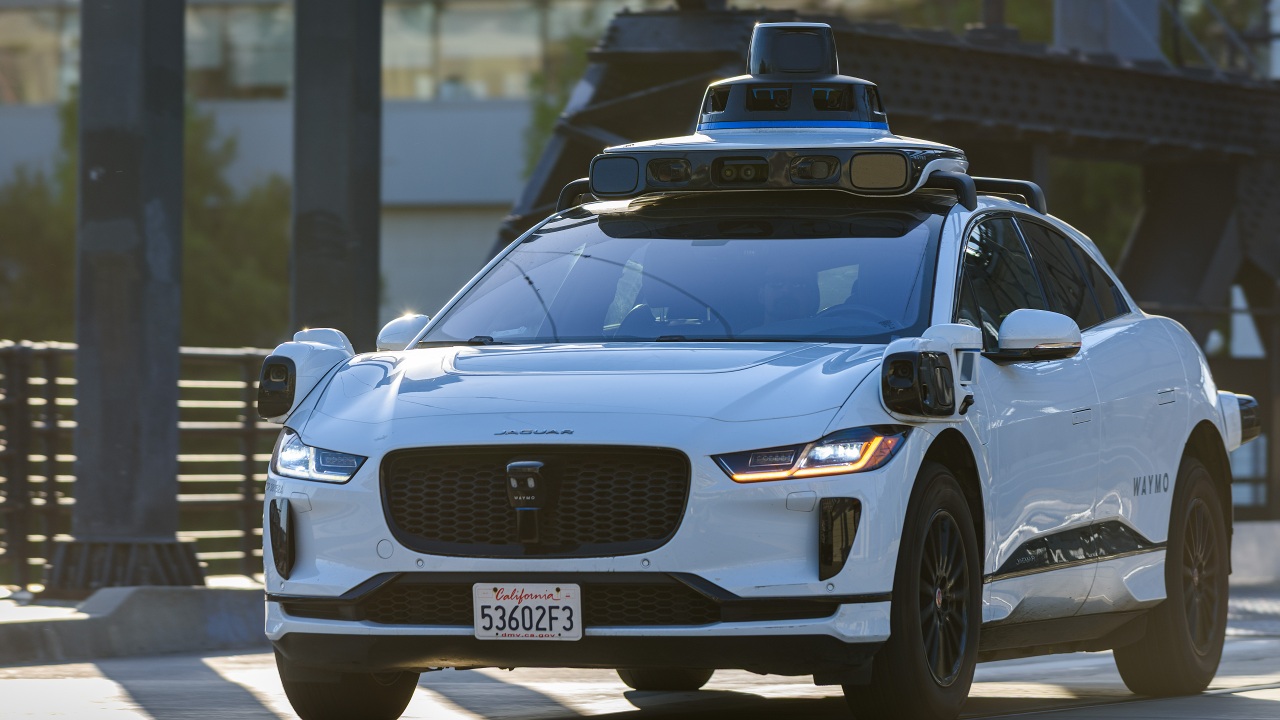
Waymo is preparing one of the largest private capital raises in the history of autonomous vehicles, targeting a $15 billion round that would value the company at $100 billion and accelerate its robotaxi rollout across the United States. The scale of the planned funding signals that Alphabet’s self‑driving unit is shifting from long‑running research project to capital‑intensive transportation network, with ambitions that stretch far beyond a handful of pilot zones.
If the Google sibling succeeds in locking in that kind of firepower, it will not just shore up its lead in driverless ride‑hailing, it will also raise the bar for every rival betting on artificial intelligence to reshape urban mobility. I see this as a pivotal test of whether investors are ready to treat robotaxis as a long‑term infrastructure play rather than a speculative side bet.
Waymo’s $15 billion bet and a $100 billion valuation
The headline number is stark: Waymo is seeking a $15 billion capital injection at a valuation of $100 billion, a figure that would put it in the same league as the most richly valued transportation and AI companies in the world. That target implies investors are being asked to underwrite not just incremental growth in a few cities, but a belief that autonomous ride‑hailing can become a mainstream, cash‑generating business at scale. Reporting on the talks makes clear that the money is intended to fuel an aggressive build‑out of Waymo’s robotaxi footprint across the country, rather than simply extend its research runway, with the $100 billion price tag framed as the marker of that ambition in the latest coverage of Waymo and in detailed accounts of Waymo being in talks with investors.
That valuation push rests on more than hype. Waymo LLC, which began life as the Google Self Driving Car Project, has spent years building what it describes as an American autonomous driving technology platform, and it now operates fully driverless ride services in multiple metropolitan areas. The company is structured as a subsidiary of Alphabet, Google’s parent, and its evolution from an internal experiment to a standalone business unit has been documented in profiles of Waymo LLC, which trace its roots back to the early Google Self Driving Car Project and describe its current role as an American leader in autonomous driving technology.
From Google Self Driving Car Project to national robotaxi network
Waymo’s push to raise capital at this scale only makes sense when viewed against its long arc from research lab curiosity to commercial operator. The company’s origin as the Google Self Driving Car Project gave it early access to Alphabet’s computing power and mapping data, and over time that work was spun into Waymo LLC, a dedicated American autonomous driving technology company focused on turning those prototypes into a real‑world service. That history, including the transition from the Google Self Driving Car Project to a branded unit known simply as WAY‑moh, is laid out in background material on Waymo LLC, which emphasizes its status as an American autonomous driving technology company under Alphabet.
What has changed in the past few years is the geographic and operational scope of that work. Waymo is no longer confined to a single test city, it is now mapping and operating across a growing list of U.S. markets, with internal materials showing a map of its expansion as of the end of 2025 and describing how its service zones have spread across the country. That national footprint, referenced in reporting on Waymo’s expansion, is the backdrop for the current funding talks, which are framed as a way to accelerate that trajectory rather than simply maintain existing operations.
New cities, new partners and the Lyft connection
Waymo’s growth strategy hinges on entering new cities with a mix of its own app and partnerships that plug its robotaxis into existing ride‑hailing demand. One of the most telling examples is its move to bring fully autonomous rides to Nashville in partnership with Lyft, a pairing that shows how Waymo is willing to lean on established consumer platforms rather than trying to build every piece of the ecosystem alone. Coverage of the Nashville rollout notes that Waymo is Bringing fully autonomous rides to Nashville with Lyft as a distribution partner, a detail that underscores how the company is using alliances to seed usage in new markets.
That approach matters for the funding story because it suggests a capital‑efficient way to scale. Instead of spending heavily to acquire riders one by one, Waymo can tap into Lyft’s installed base while focusing its own resources on vehicles, safety systems and mapping. The Nashville partnership, highlighted alongside commentary from Kris Holt that Waymo is heading into new markets with fully autonomous rides, illustrates how the company is trying to turn its technical lead into a network effect, something investors weighing a $15 billion round will scrutinize closely.
Robotaxi arms race: Waymo, Tesla and the AV pecking order
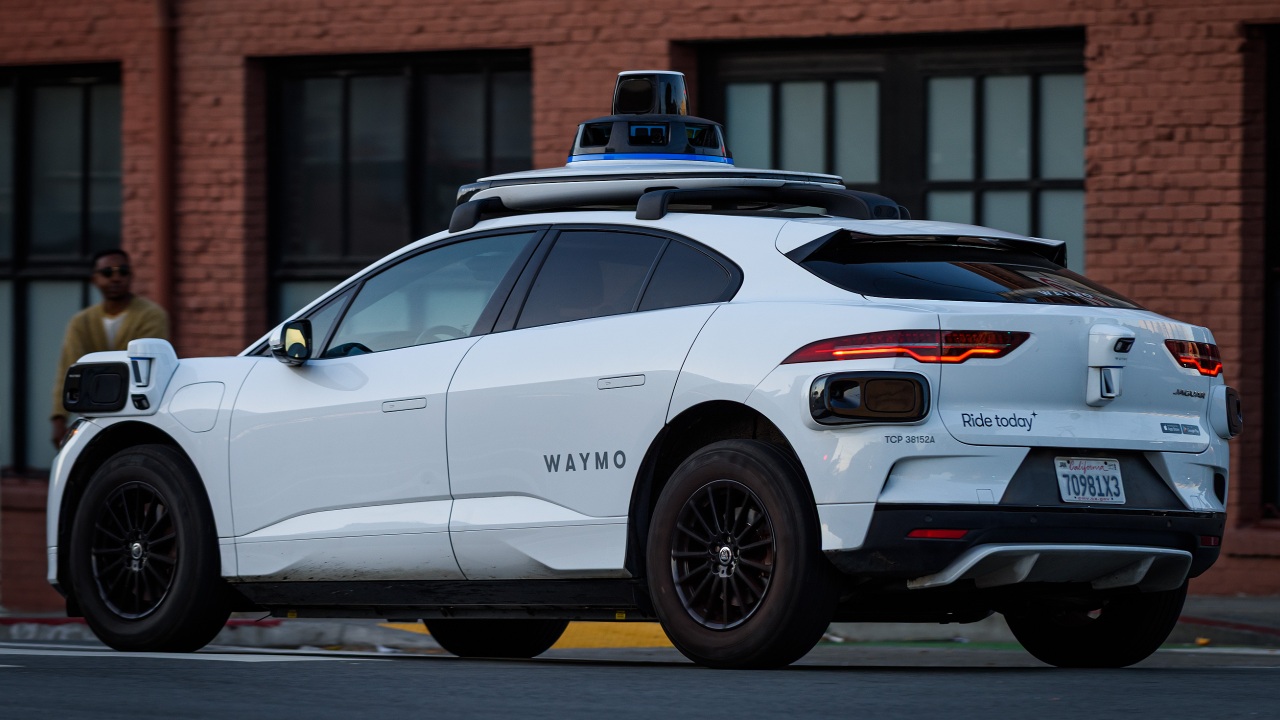
The scale of Waymo’s planned raise also throws the broader robotaxi competition into sharper relief, particularly its rivalry with Tesla over who can commercialize autonomous driving first. Investor Aug Cathie Wood has been outspoken about her conviction that Tesla’s AI and robotaxi ambitions will unlock enormous value, with Ark’s long‑run price targets for the stock built heavily around that thesis. In her view, detailed in analysis of how Wood has been bullish on Tesla’s robotaxi business, the company’s AI stack and its ability to flip a massive installed base of vehicles into a ride‑hailing network give it a structural edge.
Yet when I look at the operational reality on the ground, Waymo’s fully driverless service in multiple cities and its planned expansion to places like Nashville suggest it currently has a clearer path to scaled robotaxi operations than most rivals. Even Tesla’s own supporters acknowledge that other autonomous vehicles do not yet come close to Waymo’s performance, a point echoed in investor commentary around AVs that do not even come close to Waymo in discussions of Tesla’s financial results. The contrast between Tesla’s software‑centric, owner‑fleet vision and Waymo’s purpose‑built, centrally operated robotaxi model is at the heart of how investors will judge whether a $100 billion valuation for Waymo is justified.
AI infrastructure, capital intensity and the race for scale
Waymo’s fundraising ambitions also sit within a much larger wave of capital flowing into AI infrastructure and platforms, a trend that is reshaping expectations for how much money it takes to build category‑defining companies. In the broader AI ecosystem, Microsoft has committed $30 billion in the UK to support AI infrastructure and ongoing operations from 2025 onward, a figure cited in coverage of Microsoft that underscores how even software‑first giants now treat AI as a capital‑heavy infrastructure play. That context helps explain why a $15 billion round for a robotaxi operator no longer looks outlandish, it looks like the transportation equivalent of the data center arms race.
Policymakers and industry leaders are already framing this as a competition to build national AI champions, with tech bosses arguing that massive investment can turn the UK into an AI superpower and Microsoft president Brad Smith publicly tying his company’s spending to that goal. Those arguments, captured in reporting that quotes Zoe KleinmanMicrosoft, mirror the logic behind Waymo’s push for scale: whoever builds the densest network of autonomous vehicles, maps and AI driving models first will enjoy powerful advantages in data, safety and unit economics.
In that sense, Waymo’s $15 billion target is not just about funding more cars, it is about locking in a lead in the AI models that power those cars, from perception systems to decision‑making algorithms. The company’s roots as an American autonomous driving technology unit inside Alphabet, detailed in profiles of Waymo LLC, give it access to some of the world’s most advanced AI research, but turning that into a durable moat requires the kind of sustained, infrastructure‑level spending that only a handful of companies can contemplate.
What a $100 billion Waymo would signal for investors and cities
If investors ultimately sign off on valuing Waymo at $100 billion, it will send a powerful signal that the market is ready to treat autonomous ride‑hailing as a core part of the future transportation stack rather than a speculative science project. For investors, a successful raise at that level would validate the idea that robotaxis can command infrastructure‑like multiples, similar to cloud platforms or large‑scale AI providers, especially when backed by a parent like Alphabet. The detailed reporting on Waymo seeking a $15 billion raise at a $100 billion valuation frames the talks as a bet that its robotaxi network can eventually generate returns commensurate with that price.
For cities, the implications are just as significant. A well‑funded Waymo would be in a position to approach more municipalities with offers to deploy fully autonomous rides, often in partnership with existing platforms like Lyft, as it is doing in Nashville. That could accelerate the timeline for when residents in places far from Silicon Valley can hail a driverless car, but it will also force local regulators to grapple with questions around safety, labor and data that have so far been largely theoretical. As I see it, the outcome of Waymo’s funding push will help determine not only which company leads the robotaxi race, but also how quickly American streets adapt to a future where the driver is an AI trained inside an Alphabet subsidiary rather than a human behind the wheel.