For more than two decades, the Ford Ranchero tried to convince American buyers that a vehicle could be both a capable truck and a comfortable car. It offered payloads that rivaled traditional pickups, wrapped in the sheet metal and driving manners of contemporary sedans and wagons. Yet despite its practicality and long production run, it remained a curiosity, a truck that mainstream truck buyers never fully embraced.
The reasons reach beyond simple sales figures. The Ranchero challenged deeply held ideas about what a truck should look like, how it should be built, and who it was for. In a market that increasingly rewarded bigger, more specialized pickups, Ford’s car‑based utility occupied an in‑between space that many buyers either misunderstood or distrusted.
A truck hiding in a car’s clothing
From its debut in the late 1950s, the Ford Ranchero was engineered to blur categories. Rather than starting with a separate ladder frame like the F‑Series, Ford adapted its existing passenger car platforms, turning two‑door sedans and station wagons into a coupe utility with an integrated cargo bed. Contemporary descriptions of the Ford Ranchero emphasize that it was a coupe utility, adapted from a two‑door station wagon and intended to function as a light‑duty pickup truck, not a full commercial hauler. That structural choice gave the Ranchero a lower ride height, a smoother ride, and handling that felt far more like a family car than a farm truck.
Yet those same traits made traditional truck buyers suspicious. In an era when work vehicles were expected to be visibly rugged, a car‑based pickup could look like a compromise. Reporting on car‑derived utilities notes that they were more expensive than purely utilitarian trucks, came in fewer work‑oriented configurations, and often offered lower perceived durability even when their actual payload ratings matched or exceeded half‑ton pickups. The Ranchero’s introduction is described as having challenged conventional automotive design and created a new niche, but that niche sat awkwardly between established categories, which limited its appeal among buyers who wanted either a straightforward work truck or a conventional car.
Marketing to two audiences that rarely overlapped
Ford’s own positioning of the Ranchero added to the confusion. On one hand, the company offered an extremely basic standard model aimed squarely at traditional pickup buyers such as farmers, while the Custom trim picked up most of the passenger‑car options and comforts. That split strategy tried to speak both to rural customers who needed a work tool and to suburban drivers who wanted style and convenience with some extra utility. The Ford Ranchero was never intended to compete directly in the traditional truck market, instead it was framed as a way to get the utility of a bed without giving up carlike comfort and image.
However, the broader truck market was moving in a different direction. Over time, manufacturers expanded their pickup lineups into dozens of versions, from small pickups with short beds to imposing four‑door, long‑bed models. Buyers who wanted comfort and status increasingly gravitated to well‑equipped F‑Series trucks, which offered plush interiors without sacrificing the visual identity of a “real” pickup. At the same time, the Ranchero’s car‑derived nature meant it came in fewer work‑oriented combinations, which reinforced the perception that it was a lifestyle accessory rather than a serious tool. That left it stranded between audiences: too refined and unconventional for conservative truck buyers, yet too utilitarian and visually truck‑like for many car shoppers.
Engineering that solved problems buyers did not think they had
From an engineering standpoint, the Ranchero often addressed real shortcomings of contemporary pickups. The Falcon Ranchero, for example, benefited from improved ball‑joint front suspension and a wider tread, which period descriptions credit with smoothing out bumps and making the Ranchero wonderfully roadworthy. Promotional material highlighted “SMOOTHER RIDIND‑EASIER HANDLING,” underscoring that this was a working vehicle that could be driven long distances without the fatigue associated with stiff‑sprung trucks. The Ranchero’s lower bed height also made loading easier compared with taller body‑on‑frame pickups, a practical advantage for owners who regularly lifted heavy items.
Powertrain choices reinforced that dual‑purpose character. Accounts of the model’s evolution note that engines fitted to later generations went up to the 400 cu in (6.6 L) V8, giving the car‑based pickup the muscle to tow and haul in line with contemporary full‑size trucks. Other reporting on the Ranchero the vehicle’s engines emphasizes that these options gave it the versatility to perform well in both everyday driving and light‑duty hauling, while still presenting as a stylish, even head‑turning, presence on the road. Yet many buyers did not prioritize ride quality or handling in their truck purchases, and those who did could increasingly find similar comfort in upscale F‑Series trims, which undercut the Ranchero’s technical advantages.
A long, shape‑shifting life that blurred its own identity
One of the most striking facts about the Ford Ranchero is its longevity. The Ford Motor Co introduced the Ranchero for the 1957 model year, and the last one was built in 1979. During that 23‑year period, Ford built full size, intermediate, and compact Rancheros, repeatedly shifting the vehicle to new platforms as its car lineup evolved. Early versions were closely related to the Ford Falcon, later ones to intermediate models such as the Torino, and the seventh generation adopted the styling and underpinnings of full‑size cars of the late 1970s. Production ceased in 1979, with the final generation offering engines up to the 400 cu in (6.6 L) V8, underscoring how far the model had traveled from its compact origins.
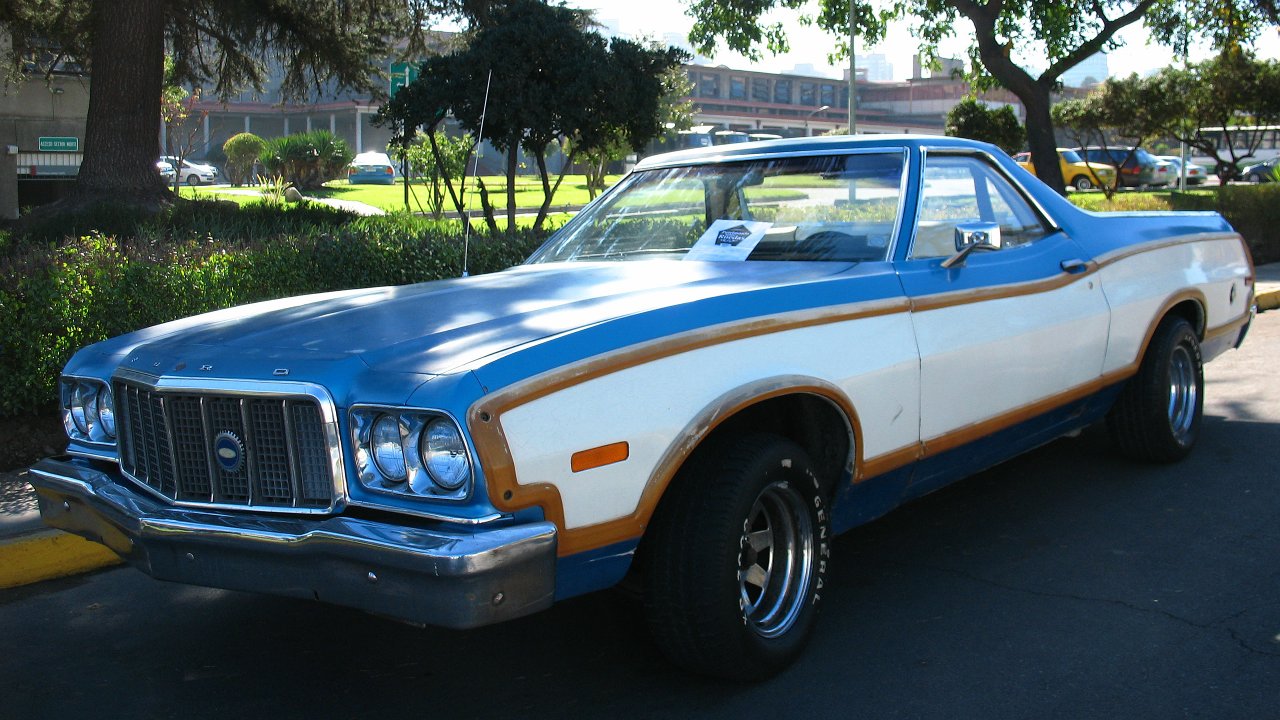
That constant reinvention kept the Ranchero technically current but also muddied its identity. Enthusiast histories point out that the Ranchero had a staggering seven generations, with the third generation lasting only a single year, an unusually brief run that hints at Ford’s willingness to experiment and adjust. Over the time that the Ranchero (Ford Ranchero) was produced, consumer tastes changed, and the 1970s era Rancheros reflected this by adopting more flamboyant styling, including brightly colored decals and shaker air scoops on the hoods of the Rancheros. While such features helped the vehicle stand out, they also pushed it further into the realm of personal coupe or “cowboy Cadillac,” which may have alienated buyers who simply wanted a straightforward work truck.
Why the idea still matters in a truck‑obsessed era
Looking back from a market now dominated by large pickups, the Ranchero’s failure to win over traditional truck buyers seems less like a miscalculation and more like an early attempt at a concept that has since become mainstream. Modern truck lineups are filled with lifestyle‑oriented models that prioritize comfort, image, and everyday drivability over sheer work capacity. Industry overviews describe how each manufacturer now offers dozens of versions of its pickups, from small, short‑bed models to imposing four‑door, long‑bed trucks, reflecting a broad spectrum of uses that range from commuting to towing heavy trailers. In that context, the Ranchero’s promise of carlike handling with respectable cargo capacity looks prescient rather than misguided.
Contemporary commentary on the Ford Ranchero often notes that it was never meant to replace the F‑Series, which has become the best‑selling vehicle in the United States, but to complement it. The Ranchero’s introduction is described as having challenged rigid categories of cars and trucks, capturing the imagination of some buyers even as it puzzled others. From 1973 until 1991, Ford Motor Argentina even developed and sold a utility version of its own Ford Falcon called the Ford Ranchero, suggesting that the basic idea of a car‑based pickup resonated in markets where buyers were more accustomed to multipurpose vehicles. In North America, however, the Ranchero’s hybrid identity, its shifting size and styling, and the rapid expansion of conventional pickup options combined to keep it on the margins, a capable and often sophisticated machine that never quite fit the mental picture of what a truck should be.
More from Fast Lane Only