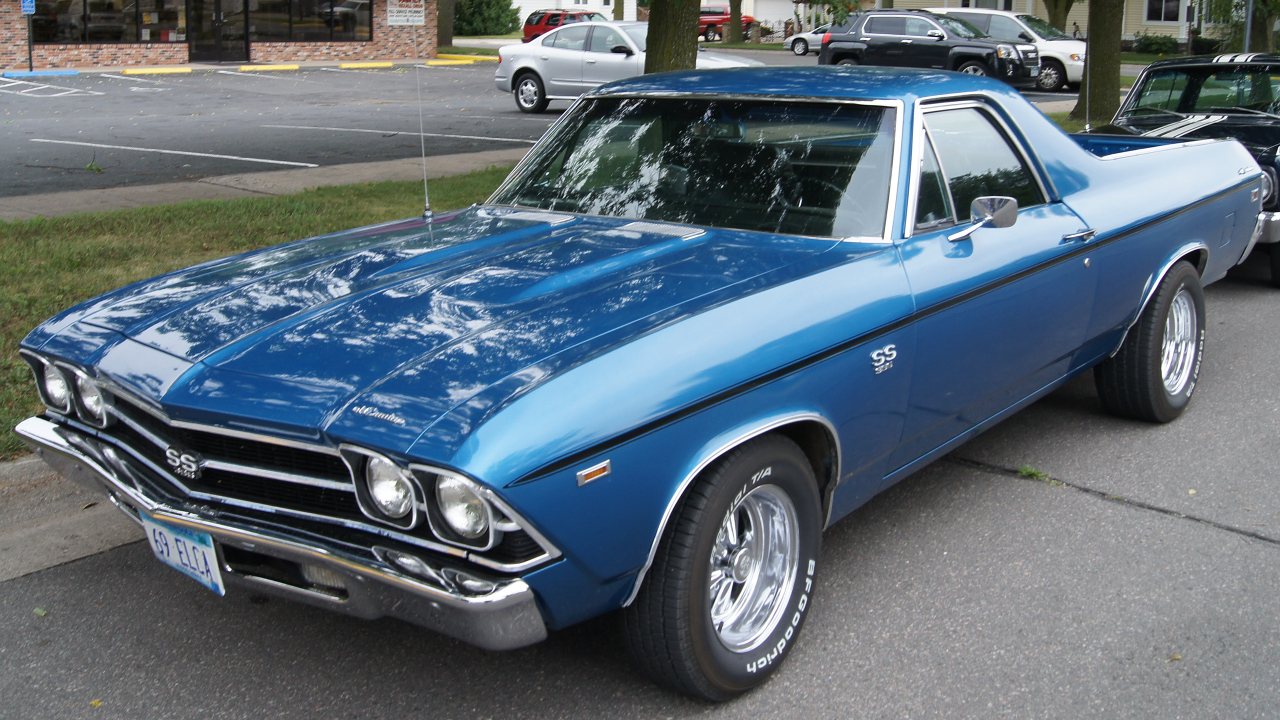
The Chevrolet El Camino has always resisted tidy labels. Conceived as a vehicle that could haul lumber on Friday and cruise Main Street on Saturday night, it blurred the line between passenger car and pickup in a way that unsettled marketers, regulators, and even some buyers. Its story shows how a machine that refuses to fit a single category can become both a cult favorite and a commercial headache.
Across five generations, the El Camino shifted shapes and missions, yet it never stopped being a rolling contradiction: sedan in front, open bed in back, part work tool and part personal statement. That tension, more than any single design choice, explains why it never settled comfortably into the existing automotive order and why its legacy still sparks debate about what a “car” or a “truck” should be.
Born from a hybrid idea, not a segment
The El Camino did not emerge from a conventional product brief for a new car or a new truck, but from a long‑running experiment in blending the two. American manufacturers had already toyed with “roadster utility” and “coupe utility” layouts, car‑based pickups that grafted a cargo box onto a passenger car body. The Chevrolet El Camino followed that template, pairing the comfort and styling of a full‑size Chevrolet with an open bed that could carry serious loads, a concept that made it inherently difficult to file under a single showroom category.
That hybrid intent was explicit from the start. The Chevrolet El Camino was described as combining the comfort and style of a car with the utility of a truck, a formula that echoed earlier “roadster utility” experiments in the United States during the 1920s and later Australian‑inspired coupe utilities. The first Chevrolet El Camino, introduced for the 1959 model year, rode on a passenger car platform yet offered a cargo capacity of 1,150 pounds, a figure more typical of light trucks. It was neither a conventional sedan nor a body‑on‑frame pickup, and that structural compromise set the tone for its entire life.
Designed like a car, worked like a truck
Structurally, the El Camino was built to behave like a car on the road while performing many of a truck’s chores, which only deepened its identity crisis. Early versions shared their chassis and styling cues with Chevrolet’s full‑size cars, adopting the same sweeping fins and chrome‑heavy bodywork that defined late‑1950s American design. Underneath, the suspension and ride tuning leaned toward passenger comfort rather than the stiff, utilitarian setups common on dedicated pickups, so the vehicle felt more like a coupe from behind the wheel even as its silhouette ended in a cargo bed.
At the same time, Chevrolet engineered the El Camino with genuine work capability. The 1959 Chevrolet El Camino, for example, was documented with that 1,150‑pound payload rating, a clear signal that it was expected to haul more than weekend luggage. Later generations continued to share platforms with intermediate Chevrolet cars, but they retained open beds sized and rated for real cargo. This dual nature meant that, in practice, owners used El Caminos as suburban commuters during the week and light‑duty haulers on weekends, a pattern that mirrored how modern rugged off‑roaders are often driven. The chassis and suspension were car‑derived, yet the open bed and payload figures aligned it with trucks, leaving it straddling two engineering philosophies at once.
Marketed between lifestyle toy and working rig
If the engineering left the El Camino in between categories, the marketing only amplified that ambiguity. Chevrolet introduced the model as a direct response to Ford’s Ranchero, which had proven that a stylish car‑based pickup could find buyers. The El Camino was positioned as a challenge to that rival, promising the glamour of Chevrolet’s full‑size cars with the practicality of a pickup box. Period descriptions emphasized its ability to serve as both a personal car and a work vehicle, a “cowboy Cadillac” that could arrive at a job site without sacrificing driveway appeal.
That pitch, however, made it difficult to define a core audience. Traditional truck buyers, accustomed to body‑on‑frame pickups, often saw the El Camino as too pretty and too car‑like for serious work. At the same time, sedan and coupe shoppers could be wary of the exposed cargo bed and utilitarian image. The first generation, despite its dramatic styling, did not match the consistent sales performance of the Ford Ranchero, and Chevrolet dropped it after only two model years. Later revivals leaned harder into lifestyle and performance, with muscle‑era El Caminos sharing engines and styling with Chevelle‑based cars, yet they still carried open beds that invited comparison with conventional pickups. The result was a product that appealed intensely to a niche of buyers who wanted both identities, but never fully captured either mainstream market.
Regulators and historians could not agree either
The El Camino’s refusal to fit a single category extended beyond showrooms into the way institutions classified it. In official descriptions, the Chevrolet El Camino has been labeled a “coupe utility” and a “car‑truck hybrid,” terms that acknowledge its mixed heritage. Some historical overviews describe it as an open‑bed pickup truck produced by an American car manufacturer, while others emphasize that it was a passenger car derivative that happened to have a cargo box instead of a trunk. Even within enthusiast communities, debates persist over whether it should be counted among Chevrolet trucks or among its cars.
That ambiguity had practical implications. In some jurisdictions and reference materials, the El Camino is grouped with trucks for registration or cataloging purposes, reflecting its open bed and payload capacity. In others, it is treated as a car because of its unibody or car‑based frame and shared components with Chevrolet sedans and coupes. Historical summaries of the Chevrolet El Camino’s five generations often toggle between these descriptors, underscoring that there is no universally accepted label. The very need for specialized terms like “coupe utility” illustrates how the model forced regulators and historians to stretch their categories to accommodate something that did not fit preexisting boxes.
A legacy that outgrew the showroom
Over time, the El Camino’s in‑between status evolved from a marketing challenge into the core of its cultural appeal. Enthusiasts now celebrate it precisely because it was “never just a car or a truck,” describing it as a rebellion on wheels that looked like nothing else on the road. Accounts of the Chevrolet El Camino’s history emphasize how it was born from the desire to blend comfort and styling with utility, a formula that anticipated later crossovers and lifestyle pickups even if it did not use those names. The image of “business in front, party in the back” has become shorthand for its split personality, turning what once confused buyers into a badge of honor among fans.
That legacy has prompted recurring calls for Chevrolet to revive the concept. Contemporary discussions about whether Chevy should bring back the El Camino often highlight how the original combined the comfort and style of a car with the utility of a truck, arguing that modern consumers who daily‑drive rugged off‑roaders as commuters might embrace a new car‑based pickup. Historical retrospectives, from “Before the El Camino” accounts of the Cameo Carrier to detailed timelines of all generations, frame the model as a key step in the evolution of American hybrids that blend categories. Yet even in these celebrations, the language circles back to the same point: the Chevrolet El Camino was unique because it never fit neatly into any single definition, and that unresolved tension is what keeps its story alive.
More from Fast Lane Only