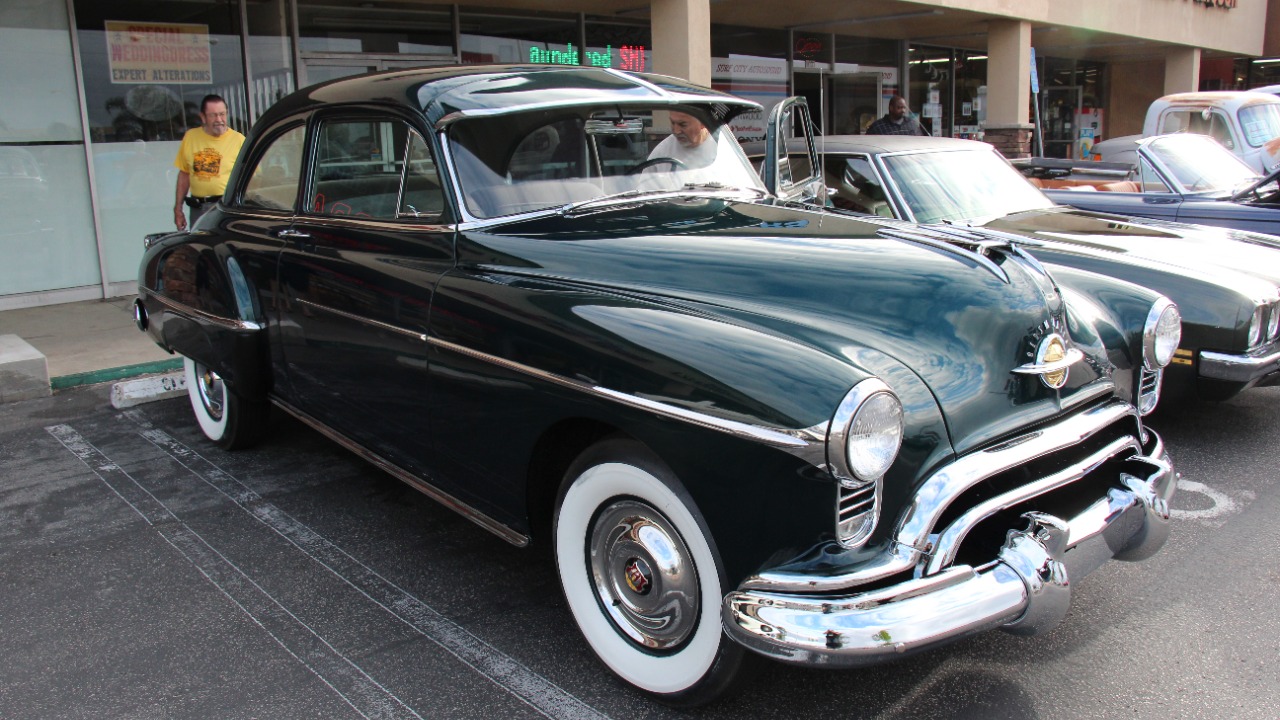
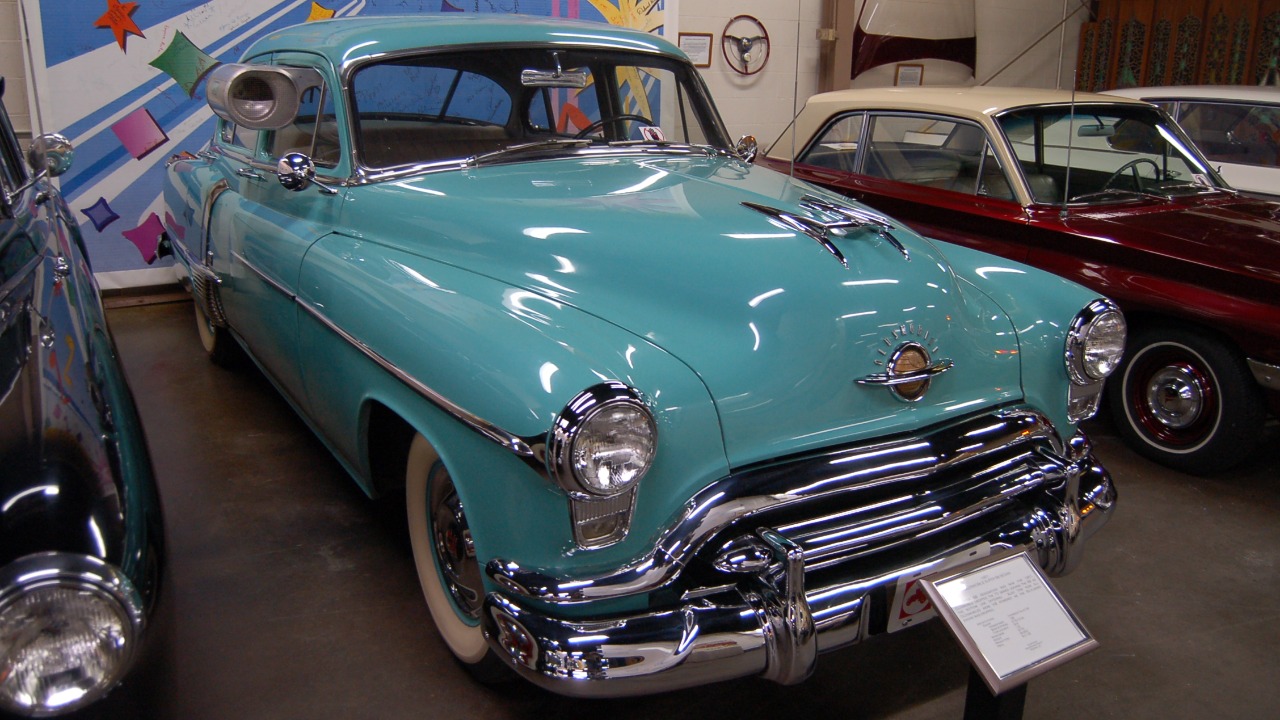
The 1951 Oldsmobile Super 88 did not appear out of thin air as a plush family sedan. It arrived with a reputation already forged on dirt ovals and high banks, carrying the swagger of a car that had been beating rivals since the first years of stock car racing. By the time this upmarket version of Olds’ mid‑size line hit showrooms, the Super 88 was trading on victories, speed records, and an engine that had already become a legend.
In other words, the Super 88 was built as much in the grandstands as in the factory. I see it as the moment when Oldsmobile turned raw competition success into a polished product, wrapping racing hardware in chrome and two‑tone paint to sell performance as a lifestyle rather than a niche obsession.
From dirt tracks to “King of NASCAR”
To understand why the 1951 Super 88 mattered, I start a couple of seasons earlier, when Oldsmobile’s Rocket V‑8 was still a shock to the system. In the first year of the NASCAR Strictly Stock Division, later known as the Cup Series, Oldsmobile 88 Coupes quickly became the cars to beat, winning five of eight early races and helping turn the humble number 88 into shorthand for speed. That success was not just about horsepower, it was about a relatively light body wrapped around a big engine, a combination that made the car a favorite of racers who suddenly had factory hardware that could survive a long Sunday afternoon.
As those wins piled up, Oldsmobile’s reputation in stock car circles hardened into something close to dominance. The brand would eventually rack up 115 victories at the top level, powered by the same basic Rocket 88 formula that had first stunned the field. Period observers described this light‑body, big‑engine pairing as so effective that it helped turn the Oldsmobile 88 into the real “King of NASCAR,” a title rooted in the way the car’s compact shell and strong V‑8 reshaped performance expectations in the early 1950s, as chronicled in contemporary accounts of the Oldsmobile 88.
Rocket power and the birth of muscle
What made those early Oldsmobiles so disruptive was not just that they were quick, but how they made their power. The Rocket V‑8 was an overhead‑valve design at a time when many rivals still relied on flathead layouts, and its relatively short stroke and wide bore reflected an OVERSQUARE philosophy that let the engine breathe and rev more freely. Until well into the 1950s, most engines were undersquare, with narrow bores and long pistons, so Oldsmobile’s approach gave the Rocket a real advantage in airflow and durability at sustained high speeds.
That engineering edge translated into numbers that still sound stout today. Enthusiasts point out that these cars, starting in 1950, came standard with the Rocket 88 engine, a 303-cubic-inch overhead‑valve V‑8 that out‑muscled the flathead engines of the day. Period sales material and later collector write‑ups describe how this 303 cid unit produced about 135 horsepower in early 1950s trim, a figure that helped cement the Rocket’s status as a pioneering American performance engine and inspired later commentators to call the base 88 one of the first true muscle cars, a claim echoed in modern video retrospectives on how the Oldsmobile 88 emerged from the shadow of War II–era sedans.
How racing crowds sold the Super 88
Racing did more than validate the Rocket; it turned Oldsmobile into a box‑office draw. When the Southern 500 launched as a marquee stock car event, a gleaming maroon and cream Olds 88 helped pull in a sellout crowd of 25,000 fans to the first running of the Southern 500. The car’s presence in victory lanes and on promotional posters meant that by the time a buyer walked into a dealership, the 88 badge already carried the smell of fuel and the sound of grandstands, even if the showroom car would spend its life on suburban streets.
That halo effect set the stage for the Super 88, which arrived as a more luxurious expression of the same basic package. Collectors now describe how The Oldsmobile Super 88 debuted in 1951 as the upmarket version of Oldsmobile’s core 88 series, pairing the Rocket engine with richer trim, better upholstery, and more standard equipment. In effect, Oldsmobile was selling race‑bred performance to customers who also wanted quiet cabins and lined trunks, a strategy that let the brand cash in on its competition record without asking buyers to live with stripped‑out specials.
What made the 1951 Super 88 different
By 1951, Oldsmobile had reorganized its lineup so that the 88 moved to the new GM B‑body and became the entry‑level Olds, while the Super 88 stepped in as a more refined alternative. Fact sheets from the period note that the Series 88 and Super 88 shared the same basic mechanicals, but the Super added extra chrome moldings and a lined luggage compartment to justify its higher price. The wheelbase stretched to about 88 m in factory literature, a neat numerical echo of the model name that also reflected the car’s move into a slightly larger, more comfortable footprint.
From behind the wheel, the Super 88 still felt like a Rocket car first and a luxury car second. Contemporary driving impressions and later reviews recall that with a manual transmission, the Super 88 could sprint from 0 to 60 miles per hour in roughly a dozen seconds, at a time when many competitors still struggled to feel lively. One period test recorded a Super 88 averaging just over 100 miles per hour on the sands of Daytona, proof that the extra chrome and nicer fabrics had not dulled the car’s appetite for speed, even if, as one writer put it, “But the” competition still had pokey flatheads and soft suspensions.
The Super 88’s lasting influence
Looking back now, I see the 1951 Super 88 as a bridge between the stripped‑down stock cars of the late 1940s and the full‑blown muscle machines that would follow in the 1960s. The base 88 is often described as one of the first muscle cars ever built, and a more powerful variant, the Super 88, arrived in 1952 with output climbing toward 160 horsepower. That steady escalation in power, wrapped in family‑friendly sheetmetal, set a template that Pontiac, Chevrolet, and others would later follow, but Oldsmobile was there first, using its Rocket engine and NASCAR pedigree to prove that performance and practicality could share the same driveway.
It is easy to forget, given the brand’s later reputation, that Contrary to its late‑stage geriatric image, Oldsmobile once served as General Motors’ innovation division, and the Super 88 is one of the clearest examples of that role. The car combined the proven Rocket hardware that had made Oldsmobile a Rocket in stock car racing with the comfort and style that middle‑class buyers wanted, turning race victories into showroom traffic. When I picture a maroon and cream Super 88 today, I do not just see chrome and curves; I hear the echo of grandstands that once roared for an Olds charging out of Turn 4, carrying its racing success straight into American driveways.