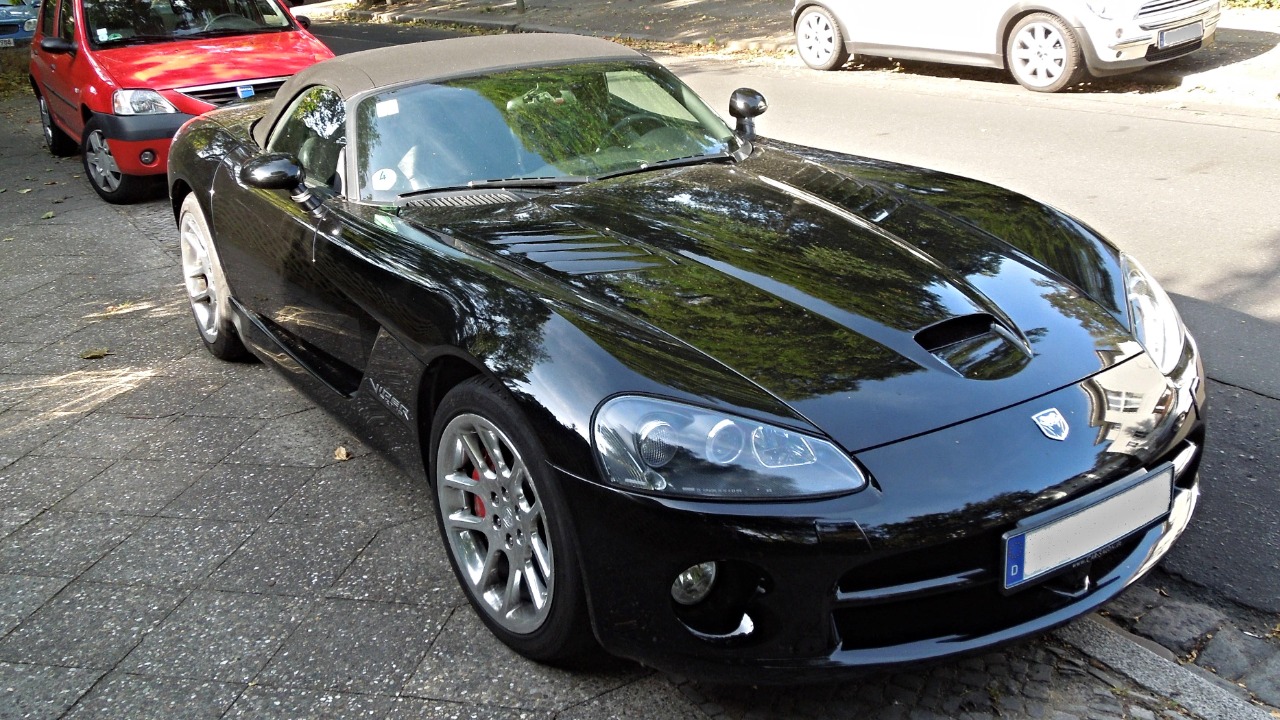
The 2003 Dodge Viper SRT-10 arrived at a moment when supercars were starting to apologize for their excesses with softer suspensions, quieter cabins, and clever electronics. Instead, this car doubled down on being loud, hot, and slightly terrifying, trading polish for a rawness that felt almost out of time. It was marketed as a new generation, but at its core it was a deliberate refusal to join the refinement race that was reshaping performance cars.
That choice is exactly why the SRT-10 still fascinates me. It tried on a few civilized touches, yet every major decision, from its V10 to its chassis tuning, pushed it away from comfort and toward a kind of mechanical honesty that borders on hostility. To understand why, you have to look at what Dodge was chasing, what it was willing to sacrifice, and how owners and testers still talk about living with one.
The SRT-10’s mission: a back-to-basics Amer brute
From the outset, the 2003 Dodge Viper SRT-10 was framed as a purist’s machine, not a grand tourer. The SRT team wanted a car that felt like a race car with license plates, so the priorities were power, grip, and drama, not quietness or convenience. Even when the model gained a bit of polish compared with the earliest Vipers, its core identity stayed that of a back-to-basics Amer monster that put the driver right on the edge of their talent rather than insulating them from it.
Contemporary comparisons made the point clearly by setting the SRT-10 against more rounded rivals like the Chevrolet Corvette Z06, and even then the verdict was that The SRT-10, despite its newfound refinement, remains true to the Viper’s original design philosophy of being a back-to-basics Amer. That phrase captures the car’s entire brief: a huge naturally aspirated engine, rear-wheel drive, and minimal filters between the driver and the road. Where the Corvette Z06 chased lap times with a broader comfort envelope, the Viper leaned into being the wild one in the comparison, and Dodge seemed perfectly comfortable with that role.
Power first, manners later
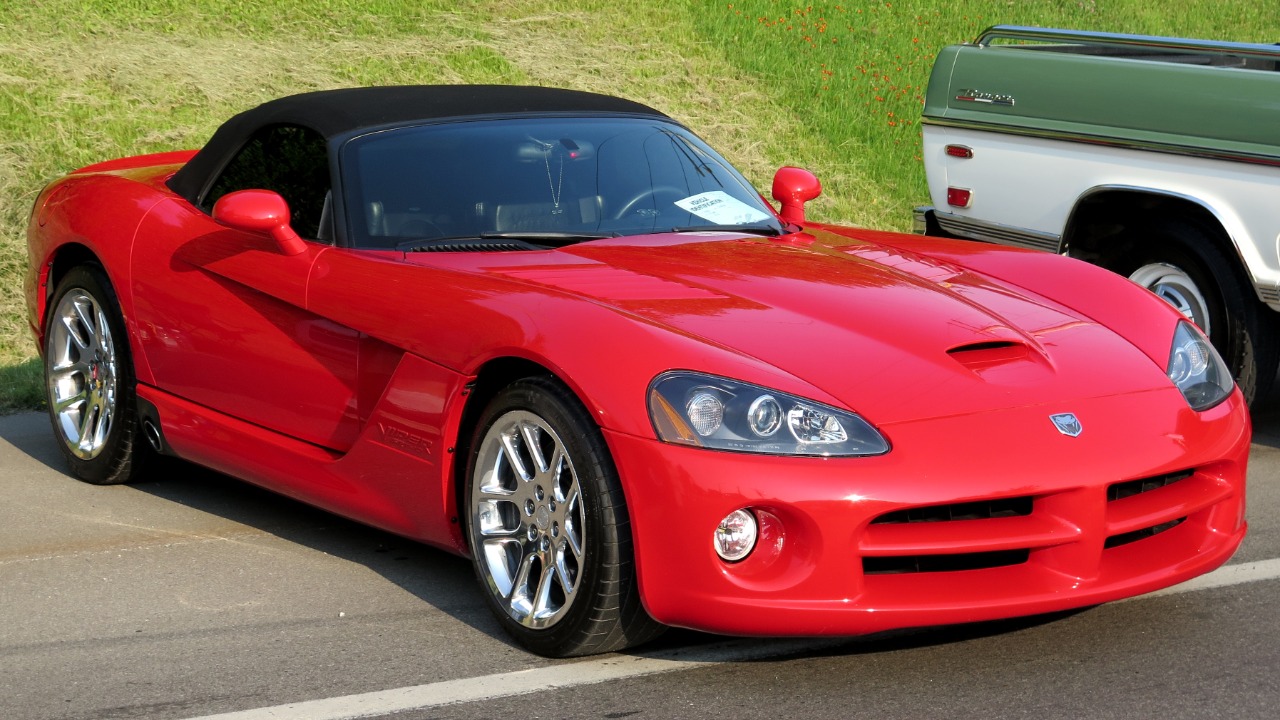
The heart of the SRT-10 story is that Dodge prioritized headline performance over day-to-day manners. The V10 was tuned to deliver brutal acceleration, and the chassis was set up to transmit every surge of torque straight to the rear tires and the driver’s spine. That approach created a car that felt alive at any speed, but it also meant the Viper demanded constant respect, especially when the road was less than perfect or the driver’s attention wandered.
Owners and enthusiasts still describe the Viper in language that leaves little doubt about its character. In one discussion, a commenter named Jan summed it up as loud, powerful, fast, completely unrefined, and even “kinda dangerous,” and another user simply replied, “You summed it up,” capturing how the community has internalized that reputation on Jan and You. That mix of admiration and wariness is exactly what you get when a manufacturer pours its energy into raw output and leaves the smoothing work to the driver’s right foot and hands instead of to stability control and soft bushings.
“Difficult to tame” by design
The Viper’s handling quirks were not accidents so much as the logical outcome of its priorities. With a long hood, a big V10 up front, and a short rear deck, the car had a layout that rewarded skill but punished clumsy inputs. The steering and suspension were tuned to feel immediate rather than forgiving, which made the car thrilling on a clear road and intimidating when conditions turned marginal. The result was a machine that felt more like a track toy than a daily driver, even when it was sitting in traffic.
Analyses of the V10 Viper’s behavior often focus on what some call its “looseness,” a quality that comes from the way the chassis and power delivery interact at the limit. One breakdown notes that, But perhaps the most important thing of all to mention regarding the “looseness” of the V10 Viper is the fact that it made the car’s reactions intense, to say the least, which is why so many drivers describe it as But perhaps the most important thing of all to mention regarding the “looseness” of the V10 Viper is the fact that it. That intensity was not softened by layers of electronic intervention, because Dodge chose to keep the car relatively analog, trusting that buyers wanted the challenge as much as the speed.
Refinement where it mattered, brutality where it sold
To be fair, the 2003 SRT-10 was not as crude as the earliest Vipers, and Dodge did respond to some basic comfort and safety expectations. The second generation, which ran from 2003 to 2010, is often recommended as a starting point for shoppers because it finally brought real windows, more airbags, and a cabin that felt less like a kit car and more like a finished product. Guides that walk buyers through Which Dodge Viper years are the best tend to highlight this era as a sweet spot between usability and the original car’s wild streak, noting that the Which Dodge Viper years are the best? The second generation of the Dodge Viper added those basics without diluting the formula.
Even so, the SRT-10 never tried to compete with European exotics on interior quality or ride comfort. Reviewers and owners talk about the car in almost awestruck tones, with one video review host asked whether someone should buy a 2003 Viper SRT-10 responding that if he could, he would, calling it one of the best cars he had ever seen, before joking about how little sense it makes as a rational purchase on Aug. That mix of admiration and resignation captures the car’s split personality: Dodge cleaned up the roughest edges just enough to make ownership feasible, but it left the core experience as loud, hot, and uncompromising because that is what buyers expected from the badge.
Living with the lack of polish
Where the SRT-10’s anti-refinement stance really shows is in the day-to-day quirks that owners simply have to accept. Mechanical noises that would be chased out of a luxury coupe are treated as normal here, and the driveline feels more like a race car’s than a commuter’s. Technical problem lists for the Viper even spell this out, noting that a Driveline Clunk on Acceleration and Deceleration is Normal, and that a Click or Pop Heard From Rear of Vehicle While Turning is also part of the package, which is why these issues appear under Top Dodge Viper Problems, Driveline Clunk, Acceleration, Deceleration, Normal, Click. In other words, some of what sounds alarming in a Viper is simply the car being itself, not a defect to be engineered away.
The physical environment of the car is just as unforgiving. Earlier Vipers were notorious for side-exit exhausts that superheated the sills, to the point that you could burn yourself climbing out, and for visibility that one writer compared unfavorably to medieval plate armor. That heritage still hangs over the SRT-10, which keeps the low seating position, long hood, and sense that you are peering out from behind a shield, echoing the description that the side-exit exhausts superheat the sills so you burn yourself every time you get out and that The Dodge Vip has worse visibility than medieval plate armour. Those details might sound like dealbreakers in a modern context, but for Viper loyalists they are part of the charm, proof that the car never tried to be something it was not.