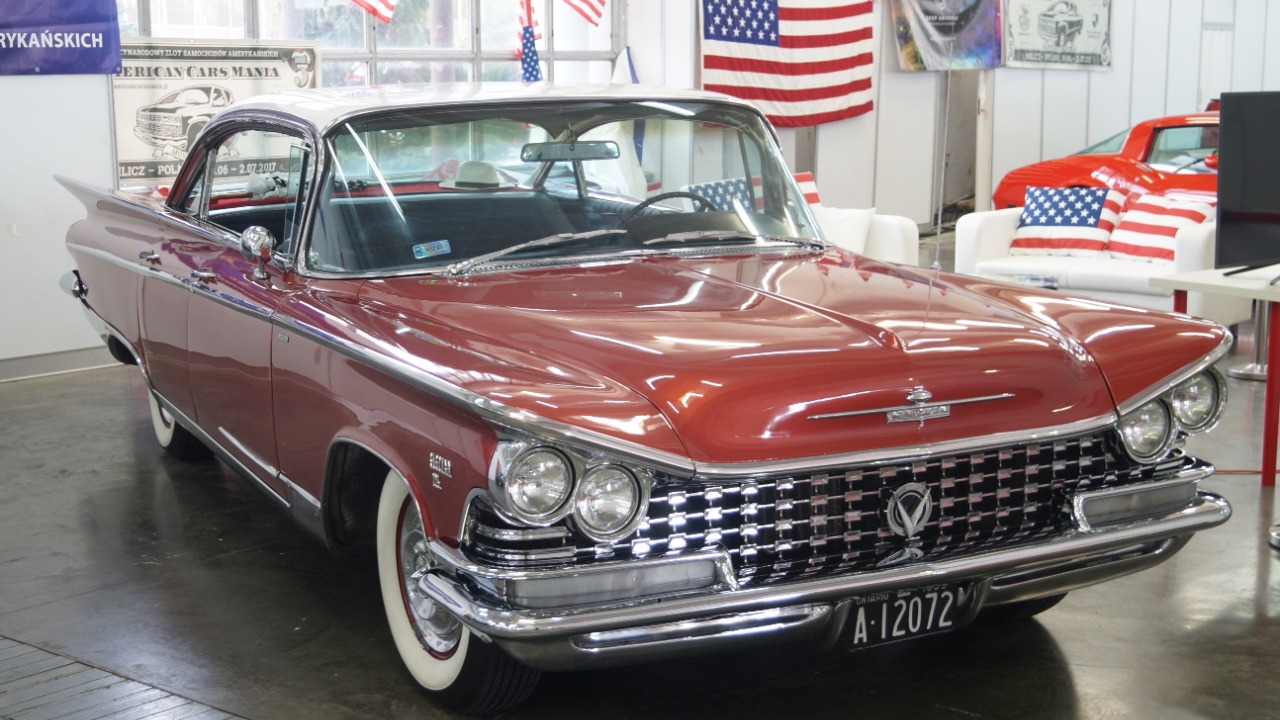
The 1959 Buick Electra 225 did not just look big in old photos, it felt oversized even to people who were used to tailfins and chrome. In an era when American cars were already stretching out, this flagship Buick pushed length, weight, and visual drama to a point that made it a rolling spectacle. I want to unpack why, even by late‑fifties standards, this car registered as truly massive from the curb and from behind the wheel.
The Buick that turned size into a selling point
When I look at the late fifties, I see a market that rewarded excess, and The Buick Electra was Buick’s way of leaning into that appetite for more of everything. Introduced for 1959 as a full-size luxury car, it sat at the top of the brand’s lineup, with The Buick Electra offered in multiple body styles that all shared the same basic mission of space, comfort, and status. In that context, the Electra 225 was not an outlier so much as the most extroverted version of a car that was already large, and that is a big part of why it felt so imposing even when new.
Buick understood that a certain kind of buyer wanted a car that would make the entire neighborhood stop and stare, and the Electra 225 was tailored to that instinct. In period footage and modern walkarounds, you can see how the long deck, sweeping fins, and acres of brightwork were used to amplify the car’s footprint so it read as even longer than it measured, a point that comes through clearly in detailed video looks at the Buick Electra 225. When I imagine this car pulling up to a mid‑century driveway lined with smaller family sedans, it is easy to understand why it instantly became shorthand for “the big Buick” in so many neighborhoods.
Numbers that backed up the nickname
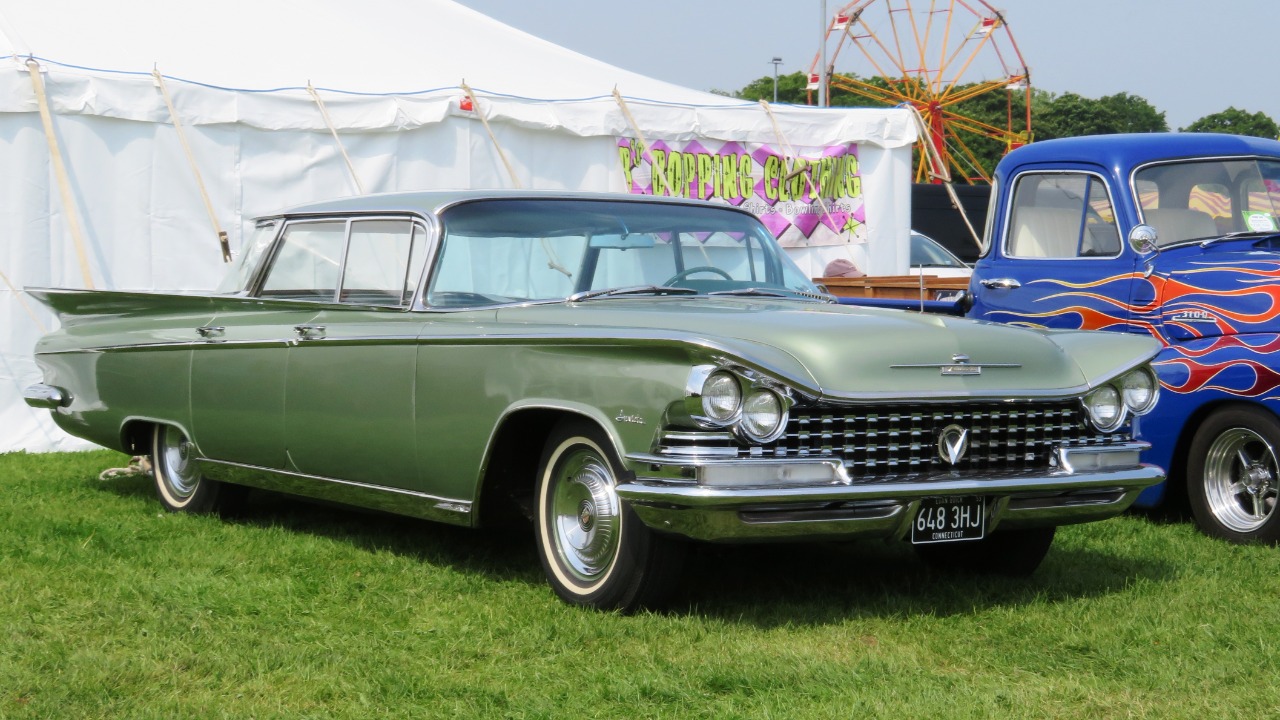
Part of what makes the Electra 225 so fascinating to me is that its reputation for size was not just marketing talk, it was written right into the spec sheet. Contemporary data lists the Vehicle shipping weight at 4,632 lbs, with an overall length of 225.4 in and a Wheelbase of 126.3 in, figures that would be substantial even for a modern three‑row SUV, let alone a low‑slung sedan. When I picture that much sheet metal stretched over such a long wheelbase, I understand why parking one in a typical garage felt like docking a boat, a reality that the raw Vehicle specifications make impossible to ignore.
The name itself doubled as a spec sheet, and that is where the “225” becomes more than a badge. Enthusiasts have long pointed out that the regular 1959 Electra measured 220.6 inches, while the Electra 225 stretched to 225.4 inches, so the number on the trunk lid was a literal nod to its length, with 220.6, 225, and 225.4 all part of the same story. I like how that detail, documented in discussions of how the Electra got its name, turns a marketing flourish into a measurable claim, and it explains why owners could brag that their car was not just an Electra, it was the full 225.4 inch version, as laid out in period‑correct breakdowns of the Electra 225 dimensions.
Why “225” sounded even bigger than it was
Even if you never saw one in person, the phrase “Electra 225” carries a certain weight, and I think that is because the number works on more than one level. On paper, it refers to that 225.4 inch overall length, but in American car culture the figure 225 also picked up a second life as slang, especially among American gearheads who associated it with a long, low, and slightly intimidating luxury barge. When I hear people talk about a “deuce and a quarter,” they are not just reciting a spec, they are invoking a whole attitude that grew up around this car, a connection that is explored in detail in pieces that unpack what is in the 225 designation.
There is also a psychological trick at work that I find hard to ignore. Saying “two twenty‑five” or “225” out loud feels more substantial than the already long 220.6, even though the difference on a tape measure is modest, and that sound helped the car loom larger in the public imagination. But the way family stories and street lore evolved around the Electra 225, with people remembering it as longer, heavier, and more dominant than the standard Electra, shows how a simple numeric badge can magnify a car’s presence far beyond the extra inches that separate it from its 220.6 inch sibling, a dynamic that enthusiasts still debate when they revisit how This Electra earned its 225 identity.
Design that made every inch count
Numbers alone do not explain why a car feels huge from the driver’s seat, and that is where the 1959 styling comes in. I see the Electra 225 as a masterclass in using design to exaggerate length, from the low roofline to the extended rear overhang that visually drags the car out even farther than its 225.4 inches. The long horizontal character lines, the wide grille, and the dramatic fins all pull your eye toward the corners, so the car reads as a single sweeping shape rather than a collection of panels, a trick that makes the already generous Wheelbase of 126.3 in feel even more stretched when you view the car in profile, a point that becomes obvious when you compare it to other full-size offerings from Buick in the same era.
Inside, the sense of scale continued, and I think that is where owners really felt the difference between an ordinary sedan and a flagship. The Buick Electra cabin was laid out to emphasize width and distance, with a broad dash, a long hood visible through the windshield, and rear seats that seemed a world away from the driver, all of which reinforced the idea that you were piloting something closer to a living room than a commuter car. When I connect those impressions to the way The Buick Electra was marketed as a full-size luxury car from 1959 to 1990, with multiple generations offered as two‑door sedans, two‑door convertibles, and other expansive body styles, it is clear that the 1959 Electra 225 was designed to feel big in every direction, a philosophy that carries through the lineage described in historical overviews of The Buick Electra.
Living with a land yacht, then and now
When I imagine daily life with a 1959 Electra 225, I see a car that constantly reminded its owner of its size, even in an era of big driveways and wide streets. Pulling into a downtown parking space or threading through a narrow alley would have been a small event, and that sense of occasion is part of why the car felt so massive to its original drivers. The shipping weight of 4,632 lbs meant that every stop sign and every highway merge came with the sensation of moving serious mass, and that physical heft, combined with the 225.4 in length, turned routine errands into something closer to piloting a personal luxury liner, a feeling that still comes through when modern reviewers climb behind the wheel of a well‑preserved example.
Today, when I compare the Electra 225 to modern crossovers and pickups, the numbers are not as shocking as the way the car uses them. Plenty of current vehicles match or exceed 4,632 lbs, but few spread that weight across such a low, long, and visually extravagant body, and that is why the old Buick still reads as outsized even in crowded contemporary traffic. The combination of a literal 225.4 inch footprint, a name that turned that measurement into legend, and styling that stretched every line to the horizon explains why the 1959 Electra 225 felt enormous in its own time and still commands the kind of presence that makes people stop, stare, and quietly measure their own cars against its shadow.