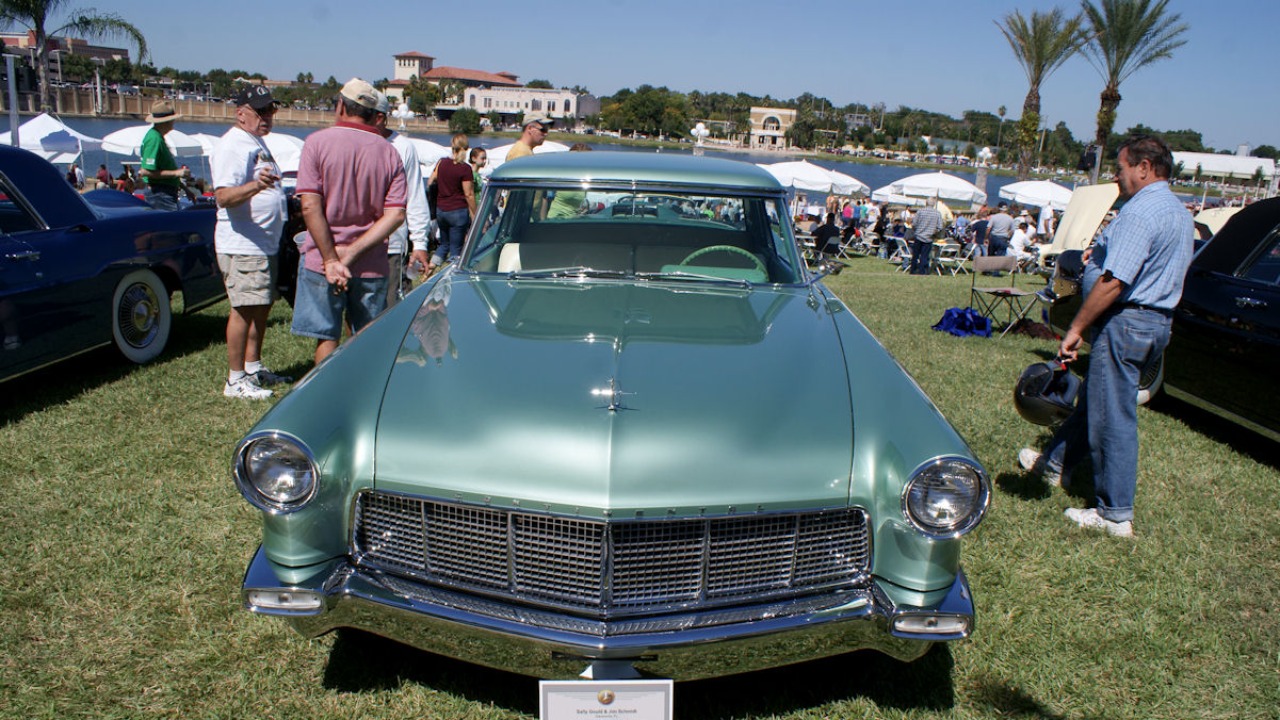
The 1956 Lincoln Continental Mark II arrived as if price were an afterthought, a car built to prove a point rather than balance a ledger. It was a rolling declaration that American luxury could match anything in the world, even if that meant losing money on every sale.
When I look at the Mark II today, I see a company deliberately stepping outside normal business logic, using a single, ultra‑expensive coupe to reshape how people thought about its entire brand. The story of how Ford treated the sticker as secondary, and why that bravado could not last, still feels surprisingly modern.
The halo car that was never meant to add up
From the start, Ford Motor Company treated the Continental Mark II as a statement piece rather than a volume product. Internally it was framed as a “halo car,” a low‑production flagship meant to cast a glow over everything else in the showroom, not a model that would ever carry its own weight on the balance sheet. The company was explicit that Ford Motor Company never intended the Mark II to be a mainstream success, and that clarity freed the designers and engineers to chase proportion, craftsmanship, and prestige first, while the accountants waited their turn.
That mindset explains why the Mark II was built in tiny numbers and priced in the stratosphere, yet still green‑lit. Executives were comfortable with a short run of cars over two model years because the real goal was to elevate the Ford family’s prestige brand and to signal that the company could play in the same rarefied space as European coachbuilt coupes. In that sense, the Mark II functioned as a carefully curated image project, a car that sprinkled glamour on the rest of the lineup, as reflected in accounts of how Ford Motor Company never intended it to be anything else.
Handbuilt luxury in a Detroit world
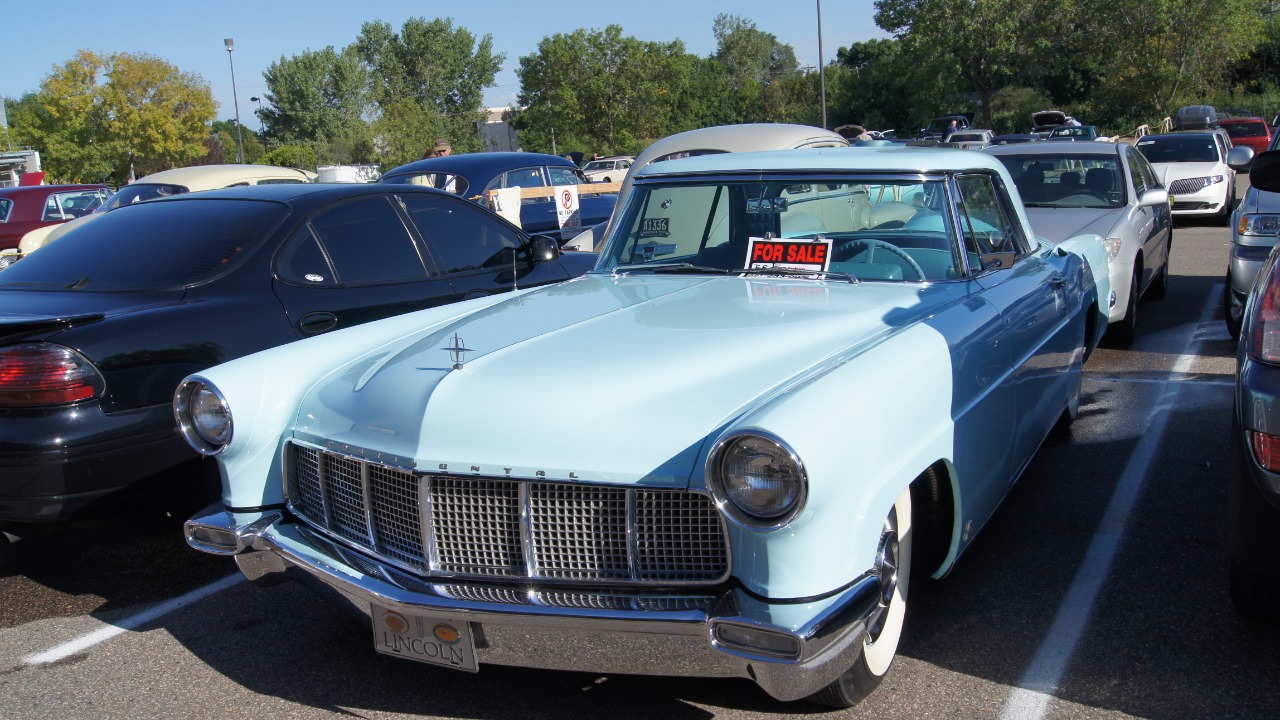
What fascinates me most is how far Ford was willing to go in pursuit of that image. The Mark II was treated almost like a custom car, with painstaking attention to fit, finish, and materials that sat well beyond normal Detroit practice of the mid‑1950s. That kind of near‑handbuilt approach was inherently expensive, especially when layered on top of a bespoke body and a low production run, and it pushed the car’s retail price into territory that rivaled the most exclusive imports.
Yet even that lofty sticker could not cover what it cost to build. Despite its lofty price, Ford Motor lost about $1,000 on each Mark II, a remarkable admission for a company that prided itself on mass‑production efficiency. Some dealers initially managed to charge a $1,000 premium over the suggested price, but even that extra margin could not erase the underlying loss baked into the car’s construction. When I picture a Mark II gliding out of a showroom, I see a customer driving away in a car that cost Ford Motor more to build than it would ever recoup, a conscious sacrifice in the name of prestige.
Bill Ford’s reality check
That kind of indulgence could only last as long as the broader corporate environment allowed it. Bill Ford, who died in 2014, later pointed to a specific turning point when the company’s tolerance for a money‑losing flagship evaporated. He argued that Ford’s public stock offering forced a new discipline on the business, one where every division, even a prestige project like Continental, had to justify itself in hard numbers rather than soft image benefits. In his telling, the romance of a loss‑leader luxury coupe collided with the cold expectations of outside shareholders.
Bill Ford described that stock sale as the straw that broke the camel’s back for the Mark II, because once Ford had to show a profit to the market, it could no longer carry a car that bled cash on every unit. The Continental experiment suddenly looked less like visionary brand building and more like a liability that analysts would question on earnings calls. That shift in pressure, as Bill Ford framed it, helps explain why the Mark II’s run was so short and why the company pivoted away from such extreme handbuilt luxury after the initial burst of enthusiasm, a dynamic captured in his view that Bill Ford believed the stock offering meant Ford had to show a profit.
Ignoring the price tag, on purpose
When I say the Mark II ignored the price tag, I do not mean Ford forgot to do the math. The company knew exactly what each car cost and accepted that the numbers would not work in a conventional sense. The decision to proceed anyway was a calculated gamble that the intangible benefits, from showroom traffic to executive prestige, would outweigh the red ink. In that light, the Mark II becomes less an accounting mistake and more an intentional marketing expense, one that just happened to take the shape of a low, elegant coupe.
That perspective also reframes the losses. Ford Motor did not lose about $1,000 per car because it mispriced the Mark II by accident, it did so because the car was engineered and finished to a standard that simply could not be reconciled with any realistic sticker in the American market of the time. The fact that some dealers could briefly tack on a $1,000 premium shows there was a small pool of buyers willing to pay almost anything for that combination of style and exclusivity, but it was never going to be a sustainable business. To me, that tension between deliberate extravagance and financial gravity is what makes the Mark II such a compelling case study in how far a company will go to reshape its image.
What the Mark II still says about luxury
Looking back, I see the Continental Mark II as an early example of a strategy that modern carmakers still use, even if they execute it differently. Today, a brand might launch a limited‑run electric halo model or a six‑figure performance SUV to signal technological prowess or design leadership, fully aware that the real profits will come from more ordinary vehicles. The Mark II played that role in the 1950s, a car that existed less to fill a segment and more to tell a story about what Ford Motor Company wanted to be.
The difference is that contemporary halo cars are usually engineered to at least break even, if not quietly make money through shared platforms and components. The Mark II had no such safety net, which is why its brief life feels both bold and slightly reckless. When I think about it now, I see a moment when Detroit allowed itself to chase pure luxury, even at a loss, and then had to pull back once the realities of public ownership and shareholder scrutiny set in. That arc, from audacious spending to disciplined accountability, still shapes how car companies think about their most ambitious projects.