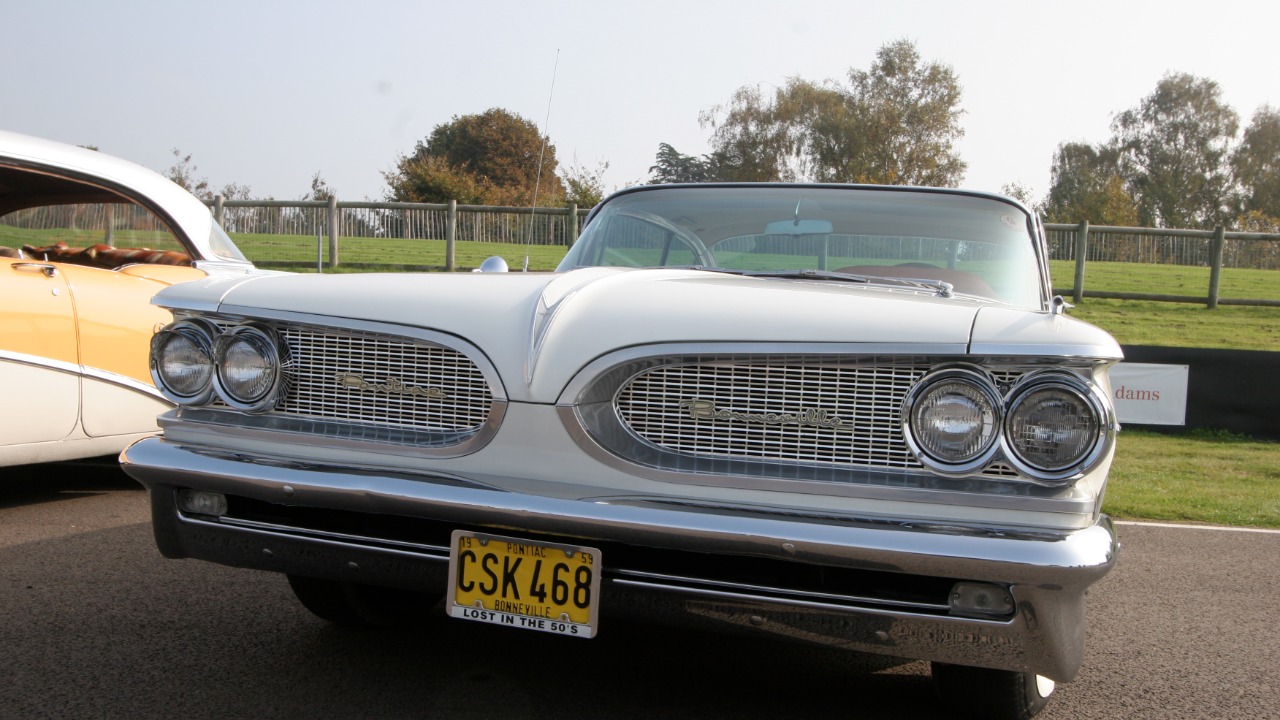
The 1959 Pontiac Bonneville did more than top a price sheet. It crystallized a new identity for Pontiac, turning a once middle‑of‑the‑road brand into a confident, style‑driven contender that could stand next to the most glamorous cars in Detroit. When the division elevated the Bonneville to its flagship, it signaled that luxury, performance, and bold design would now share the same wide, chrome‑lined stage.
To understand how that happened, I need to trace the Bonneville name from its limited debut through its breakout year, then look closely at the styling, engineering, and market impact that made the 1959 model the car that finally carried Pontiac’s ambitions in full view.
From Daytona experiment to luxury nameplate
The Bonneville story starts not in a showroom but at the track, where Pontiac first attached the name to a special convertible that appeared at the Daytona Beach races. That early car was a one‑off statement of intent, a way for Pontiac to test whether buyers would respond to a more exclusive blend of speed and style. The experiment quickly evolved into the 1957 Pontiac Star Chief Custom Bonneville, a fuel‑injected convertible that sat at the very top of the line and previewed the division’s appetite for Cadillac‑level flash.
That 1957 Star Chief variant was built in tiny numbers and priced accordingly, and a later description of the 1957 Pontiac Star Chief Custom Bonneville calls it a rare mix of elegance and power. A separate account of the same car notes that the 1957 Pontiac Star Chief Custom Bonneville was a rare mix of elegance and power and that Only 630 m examples were produced, underscoring how carefully Pontiac curated the Bonneville name at the start.
Becoming a model, then the flagship
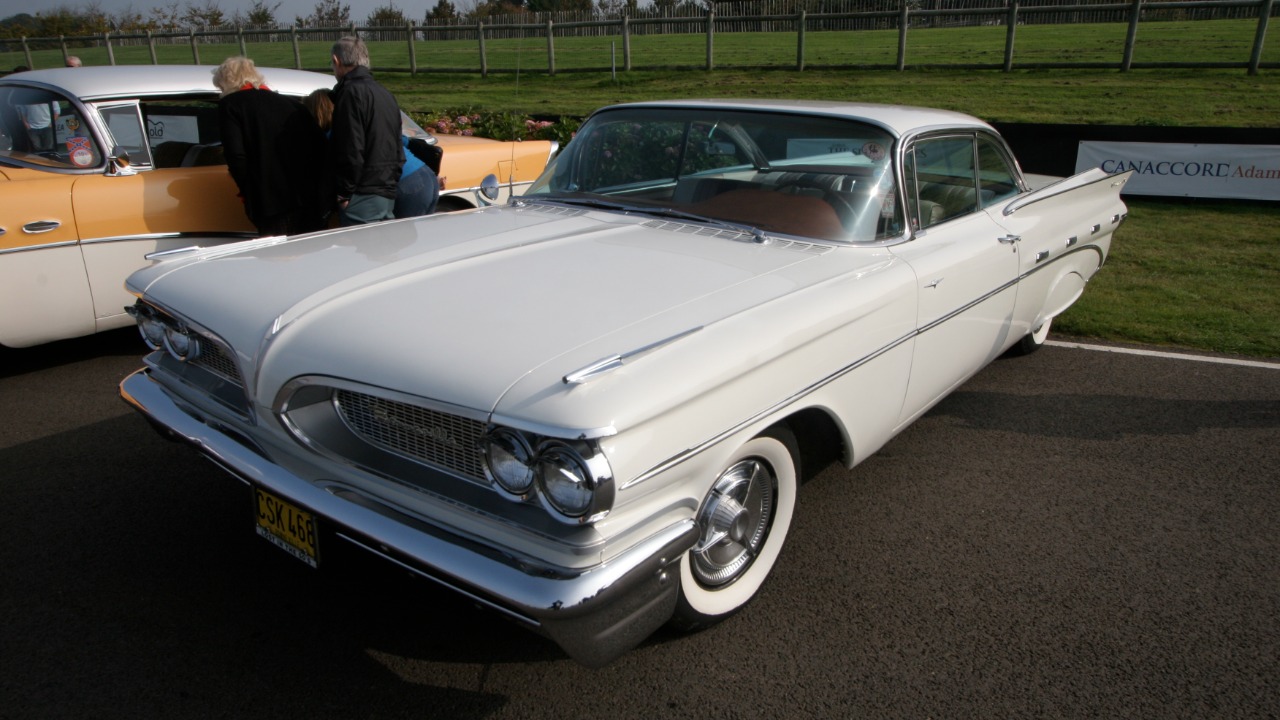
After that limited run, Pontiac moved quickly to turn the Bonneville into more than a trim package. Though it first appeared in 1957 as a limited production convertible in the Star Chief lineup, the Though Pontiac Bonneville got its own line in 1958, which meant the name now described a full‑fledged series rather than a one‑year curiosity. That shift let Pontiac build a consistent image around the car, tying its styling and equipment to a clear promise of premium performance.
Back in 1958, the first generation of the Back Pontiac Bonneville became its own model after it was first a convertible and part of the Star Chief line, and contemporary coverage of that year notes that in 1958, the Feb Bonneville became its own model, available as either a two‑door hard top or convertible. Another performance‑focused account of the period points out that for 58, the Bonneville became Pontiac’s top of the line model, offered only as a hardtop coupe and convertible, which set the stage for the 1959 car to carry the division’s flag more visibly than ever.
Styling, Wide‑Track stance, and the 1959 breakthrough
By 1959, Pontiac was ready to break from its conservative past, and the Bonneville became the canvas for that transformation. The GM styling department had been long at work on a styling makeover for 1959 and the new The GM Pontiacs were much more than a simple facelift, with lower, longer bodies and a cleaner, almost space‑age look that pushed the Bonneville firmly into aspirational territory. The car’s proportions and detailing made it clear that this was the one Pontiac wanted you to notice first when you walked into a showroom.
Underneath that sheet metal, Pontiac widened the track of its full‑size cars, a move that gave the 1959 Bonneville a planted, confident stance that marketing would soon brand as Wide‑Track. A detailed look at the 1959 Pontiac Bonneville notes how this wide‑track layout improved both handling and visual drama, while a broader history of the model year explains that Sep Along with the all‑new exterior sheet metal and more athletic stance, there were further changes at Pontiac for 59 that helped the division shake off its staid image. A video history of the brand’s turning point adds that the widetrack Pontiac not only birthed an advertising campaign but also reshaped how the division was perceived in the Nov United States, showing how central the 1959 cars were to Pontiac’s new identity.
Powertrains and luxury pricing that rivaled Cadillac
Flagship status is not just about chrome and slogans, it is about what sits under the hood and how the car is positioned on the price ladder. All Pontiacs were powered by various renditions of the new All Pontiacs 389 cubic‑inch Tempest V8, which gave the 1959 Bonneville a muscular baseline that could be tuned for comfort or speed. At the top of the range, the engine is the 315 brake horsepower Tri‑Power version of Pontiac’s venerable and sturdy 389-cubic inch V-8, with 10.0:1 compression and a Strato‑Flight Hydra‑Matic transmission, a combination that let the Bonneville compete credibly with more expensive performance luxury cars.
The pricing strategy was just as bold. When Pontiac loaded the Bonneville with equipment and style, it pushed the car into a bracket that had traditionally belonged to Cadillac. One detailed overview notes that this put the Bonneville in a Cadillac-like price range of US$5,782 ($64,732 in 2024 dollars), more than double the base price of some other models in the lineup and a clear signal that Pontiac was comfortable asking premium money for its top‑of‑the‑line model. That willingness to price the car so aggressively, backed by substantial power and equipment, is what truly made the 1959 Bonneville the division’s flagship rather than just its fanciest trim.
Legacy, collectability, and the flagship’s long shadow
Looking back from today, it is striking how much of Pontiac’s identity became wrapped up in the Bonneville name that crystallized in 1959. A retrospective on the brand’s demise notes that, of all the cars the division built, But the Pontiac Bonneville is perhaps the model most synonymous with Pontiac, and that it started out as a one-time convertible and evolved into a long‑running sedan with plenty of power. That arc, from Daytona special to everyday flagship, traces directly back to the confidence Pontiac displayed when it gave the 1959 Bonneville the lead role in its lineup.
The collector market has only reinforced that judgment. Valuation data show that the highest selling price of a 1959 Pontiac Bonneville at auction over the last three years was $143,000, a figure that reflects how desirable well‑preserved convertibles and coupes have become. A closer look at one restored example shows how that value is built, with a 1959 Pontiac Bonneville convertible carrying the 315 horsepower Tri‑Power engine and period‑correct detailing that collectors prize, while another period review of the 1959 Pontiac Bonneville Wide‑Track highlights how the combination of stance, power, and luxury equipment turned what had once been an experiment into the car that defined Pontiac’s aspirations for years to come.