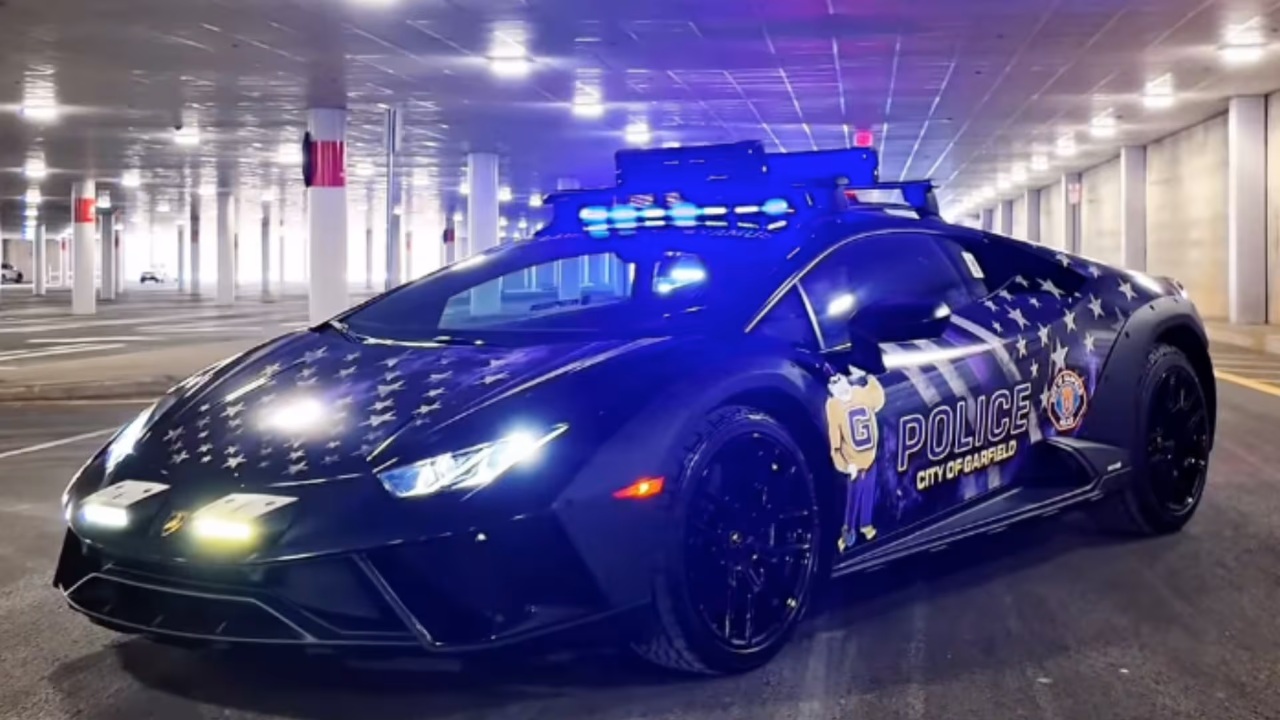
A New Jersey city has turned to a 2023 Lamborghini Huracán Sterrato, an off-road capable supercar, as the unlikely centerpiece of a new push against opioid addiction. The Garfield Police Department is rolling out the lifted Lamborghini as a mobile billboard for treatment and recovery, betting that a head-turning vehicle can pull residents toward help faster than traditional outreach ever has.
Instead of chasing speeders, the Huracán Sterrato is being positioned as a conversation starter and a lifeline on wheels, wrapped in custom Garfield graphics and branded with the “Outrun Opioids” message. I see it as a calculated attempt to meet people where their attention already is, and then redirect that attention to concrete resources for those living with addiction and their families.
A supercar with a serious mission
The Garfield Police Department has not added the Lamborghini to its fleet to run high-speed pursuits or traffic details. The 2023 Lamborghini Huracán Sterrato, provided by Lamborghini Paramus, is being used as a dedicated outreach and education tool under the banner of “Outrun Opioids,” a campaign that treats the car as a rolling public health message rather than a tactical asset. Officials in Garfield have been explicit that the vehicle will not be assigned to routine patrol or enforcement activities, a point underscored in reporting that describes the Sterrato as separate from standard police operations and focused on community engagement instead of arrests.
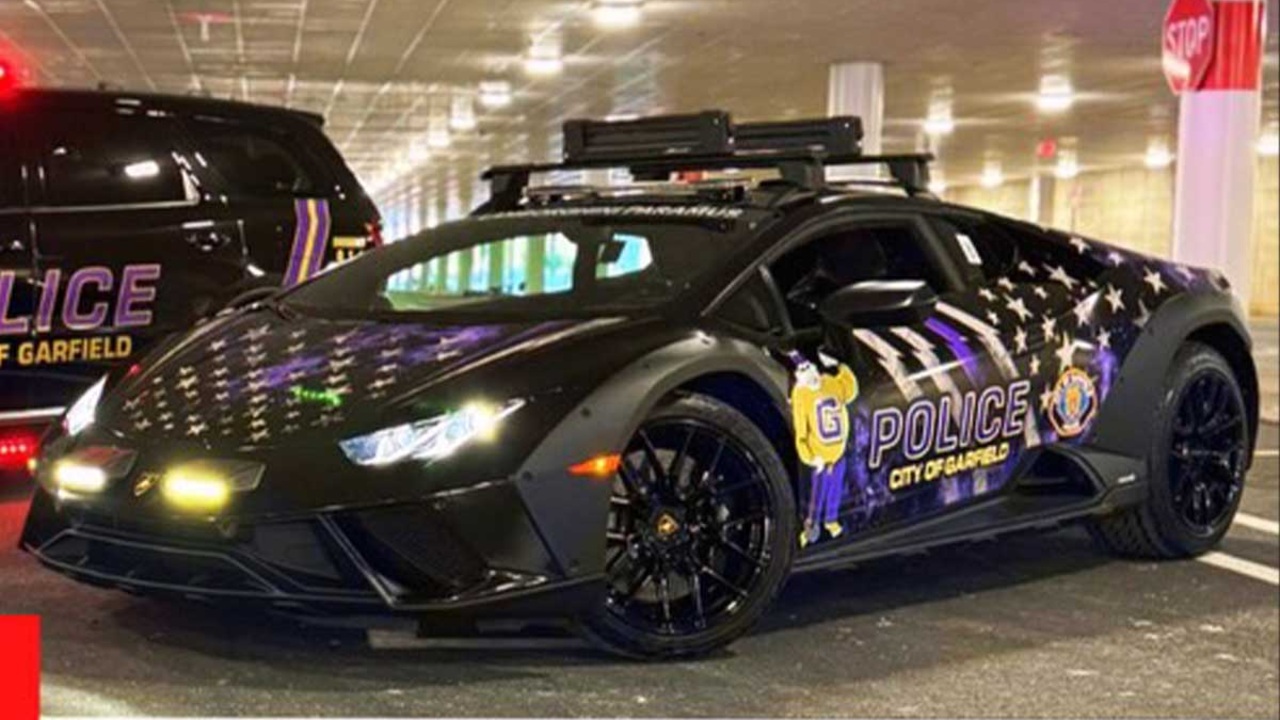
What makes the Huracán Sterrato distinctive in this context is not only its performance pedigree but its visual impact and off-road stance, which give it a presence that few residents can ignore. The car is wrapped in custom Garfield Police Department branding tied to the Outrun Opioids initiative, turning every appearance at a school, community event, or neighborhood gathering into a photo opportunity that doubles as a prevention message. Coverage of the program notes that the Lamborghini is meant to draw people in so officers and partners can talk about addiction, treatment, and recovery, rather than to project force or intimidation, which marks a deliberate shift in how a police-branded supercar is framed.
Inside the “Outrun Opioids” partnership
At the heart of the project is a formal partnership between The Garfield Police Department and Lamborghini Paramus, which jointly launched the Outrun Opioids initiative. The dealership supplied the 2023 Lamborghini Huracán Sterrato and worked with the department on the custom wrap that ties the car visually to Garfield while highlighting the anti-opioid message. According to the department’s own description of the program, Outrun Opioids is designed as a unique collaboration that uses the appeal of a high-end vehicle to promote the health and safety of the City of Garfield, rather than to showcase police hardware for its own sake.
The collaboration extends beyond branding and vehicle access. Reporting on the initiative explains that the Huracán Sterrato displays a QR code that connects directly to a 24/7 live hotline operated by the Center for Alcohol and Drug Resources, giving anyone who scans it immediate access to support. By embedding that code into the car’s design, the partners have turned the Lamborghini into a literal gateway to services, not just a symbol. The Garfield Police Department’s social media announcement of Outrun Opioids emphasizes that the campaign is about linking residents to life-saving resources, and the involvement of Lamborghini Paramus signals that local businesses are being asked to play a visible role in that public health mission.
How the Lamborghini connects people to help
The most consequential feature of the Huracán Sterrato is not its engine or suspension, but the QR code that sits on its bodywork and points directly to a 24/7 hotline. That code links to the Center for Alcohol and Drug Resources, which provides live support for people struggling with substance use and for families trying to navigate treatment and recovery. Reporting on the Garfield program stresses that anyone who spots the Lamborghini can scan the code and be connected to help at any hour, turning a fleeting encounter with a supercar into a potential first step toward recovery.
Officials have also publicized a direct phone number, 201-589-2976, as part of the same initiative, ensuring that residents who do not use QR codes still have a clear way to reach assistance. The idea is that the Lamborghini’s novelty will prompt people to take out their phones, snap photos, and share them, and in the process notice the hotline information that might otherwise be ignored on a static billboard or brochure. Coverage of the program describes the car as a “Supercar With a Serious Missio,” underscoring that its primary job is to make sure people know that help is available and that recovery is possible, not to glamorize policing or luxury vehicles.
Community reaction and the optics of a police supercar
Deploying a Lamborghini in a city police livery inevitably raises questions about optics, priorities, and public trust. Some residents and observers are likely to wonder whether a six-figure supercar, even one loaned by a dealership, sends the wrong message at a time when many communities are debating police budgets and the best use of public funds. The Garfield initiative attempts to preempt that criticism by stressing that the Huracán Sterrato is not purchased by the city, is not used for enforcement, and is dedicated to outreach around opioid addiction, a crisis that has touched families across New Jersey. Reporting on the program highlights that the car is part of a broader educational push, not a standalone showpiece, which is an important distinction when evaluating its role.
From my perspective, the key test will be whether the Lamborghini actually drives measurable engagement with treatment resources, rather than just generating social media buzz. The presence of the QR code tied to the Center for Alcohol and Drug Resources and the promotion of the 201-589-2976 hotline give the department at least two concrete metrics to track: scans and calls that can be linked to the car’s appearances. Coverage of the initiative frames the Huracán Sterrato as a tool to reach young people and families who might not respond to traditional public service announcements, and if the data show that more residents are seeking help after encountering the vehicle, that will strengthen the case for this kind of unconventional outreach.
What Garfield’s experiment signals for policing and public health
The Garfield Police Department’s decision to front an opioid outreach campaign with a Lamborghini hints at a broader shift in how some agencies see their role in public health crises. Instead of focusing solely on enforcement against dealers and users, the Outrun Opioids initiative treats addiction as a condition that requires connection to services, with police acting as a bridge rather than just an arm of the criminal justice system. By partnering with Lamborghini Paramus and the Center for Alcohol and Drug Resources, the department is aligning itself with treatment providers and community stakeholders, signaling that its strategy against opioids includes prevention and recovery alongside traditional policing.
I see this as part of a growing recognition that messaging and access can be as important as arrests when it comes to reducing overdose deaths. The Huracán Sterrato is a dramatic way to package that message, but the underlying logic is straightforward: use whatever draws attention to steer people toward help. Reporting on the Garfield program notes that the Lamborghini is being used at community events and public gatherings, where officers can talk about addiction, distribute information, and encourage residents to use the hotline or scan the QR code. If the experiment proves effective, it could encourage other departments to explore similar partnerships and to think more creatively about how to make treatment resources visible, memorable, and easy to reach.
More from Fast Lane Only: