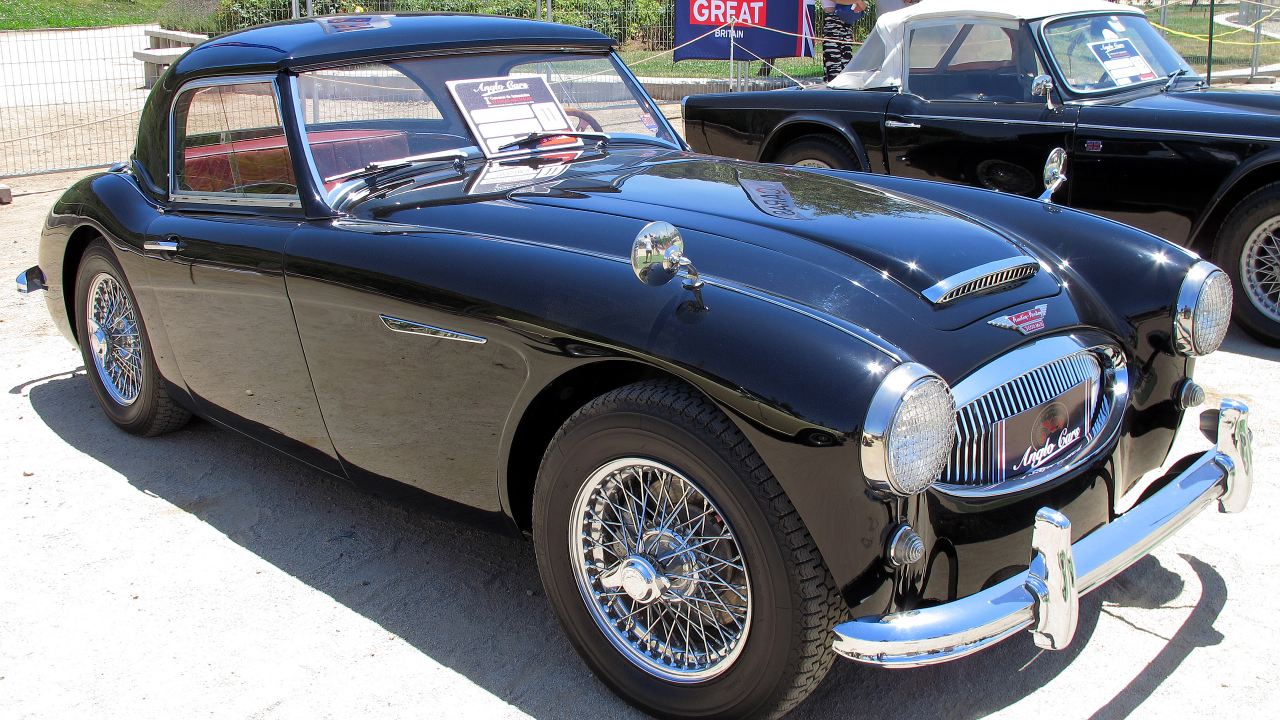
The Austin-Healey 3000 occupies a rare space in sports car history, a machine that bridged postwar British minimalism and the more refined grand tourers that followed. Among its many iterations, the 1962 models sit at a turning point, when performance, styling, and market pressures briefly aligned before regulations and corporate strategy pushed the car in a different direction.
To understand when the 1962 Austin-Healey 3000 truly peaked, I need to trace how the car evolved from a raw competition tool into a more comfortable export product, and why that balance in the early 1960s still defines its reputation today.
From rugged roadster to refined “Big Healey”
The Austin-Healey 3000 did not appear in a vacuum. It was the latest in a line of British sports cars created through a partnership between Austin and Donald Healey, with The Austin providing the mechanical backbone and Healey shaping the chassis and character. By the time the 3000 arrived in 1959, the formula was clear: a relatively large displacement engine in a compact, traditional roadster body, tuned for both road use and competition, and built in Britain for a global audience. The car quickly became the best known of the so‑called “big Healeys,” a family that began with the Austin Healey 100 and evolved through incremental improvements in power, braking, and comfort.
Earlier in the decade, the Austin Healey 100 had already proven that there was a strong market for a straightforward, fast British sports car, with Production numbers listed at 14,634 for that model alone. The 3000 built on that foundation, keeping the basic silhouette but upgrading the mechanicals and interior to stay competitive as sports car buyers demanded more speed and usability. According to historical overviews of the Austin-Healey 3000, the car was produced from 1959 until 1967, with assembly handled in Abingdon alongside other British sports models. That long run, and the steady evolution within it, set the stage for the specific mix of attributes that defined the 1962 peak.
Why 1962 sits at the mechanical sweet spot
By 1961 and 1962, the 3000 had entered its Mk II phase, and this is where the car’s mechanical character sharpened. The BN7 and BT7 variants of the Austin-Healey 3000 Mk II combined the robust six‑cylinder engine with meaningful updates to the body and interior packaging. The rear panel of the BT7 was cut deeper toward the trunk to make room for small jumper seats in the back, a change that allowed the car to appeal to buyers who wanted occasional extra seating without abandoning the classic roadster profile. This adjustment did not transform the 3000 into a family car, but it did broaden its usability in a way that mattered to export markets.
At the same time, the Mk II cars were still close to the original competition‑oriented concept. Period descriptions of the 1961–1962 Austin-Healey 3000 Mk II BN7 note that later examples came equipped with more features, including overdrive and wire wheels, which improved both performance flexibility and visual appeal. Crucially, these additions arrived before the car was heavily burdened by the comfort and emissions expectations that would shape later 1960s sports cars. In other words, the 1962 specification sat at a mechanical sweet spot: powerful enough to feel genuinely quick, simple enough to remain light and communicative, and just civilized enough to serve as a daily driver for committed enthusiasts. That balance is why I see 1962 as the moment when the 3000’s engineering and its intended use were most closely aligned.
Design evolution and the “Big Healey” identity
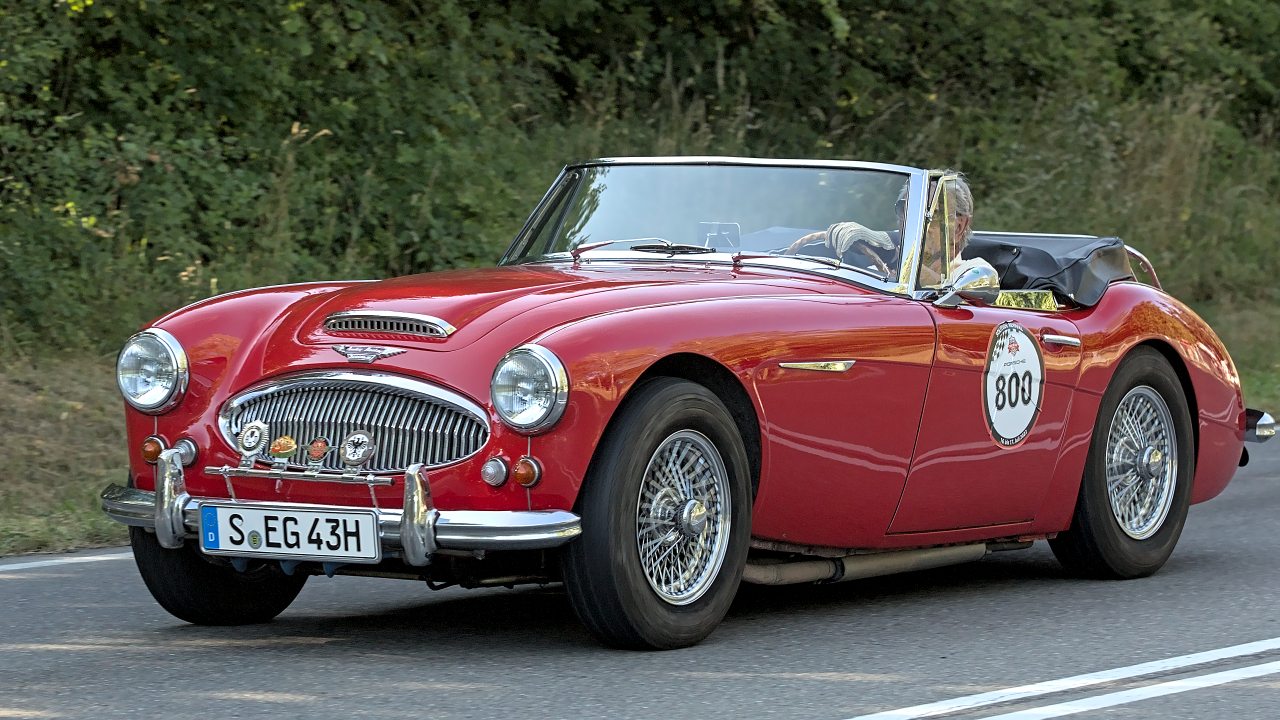
Stylistically, the 3000 had always traded on its long hood, short deck proportions and its low, almost crouched stance. By 1962, those lines were familiar, but the subtle changes introduced with the Mk II cars gave the design more practicality without diluting its identity. The deeper rear cut on the BT7, which made space for the jumper seats, also altered the visual weight of the tail, giving the car a slightly more substantial look from the side. It remained unmistakably a “big Healey,” but it now read as a sports car that could plausibly carry luggage and an extra passenger on a weekend trip, not just a stripped‑back racer with license plates.
That evolution mattered because the Austin-Healey 3000 was competing in a market where buyers were beginning to expect more from their sports cars than bare‑bones thrills. Historical accounts of the History of the Austin note that the 3000 became one of the most representative vintage British sports cars of its era, precisely because it managed to combine traditional open‑top styling with enough comfort and reliability to be used regularly. The 1962 models, with their incremental design refinements, captured that identity at its most coherent. Later cars would add more equipment and, eventually, more concessions to safety and regulation, but the early Mk II versions still looked and felt like pure sports cars first, with practicality as a carefully measured second priority.
Racing credibility and the pressure of British taxes
Performance on the road was only part of the 3000 story. The car’s reputation was also built on its competition record, and the early 1960s were a particularly strong period for Austin-Healey in rallying and circuit racing. The 3000’s sturdy six‑cylinder engine and straightforward chassis made it a favorite for privateers, while factory‑backed efforts demonstrated that the car could handle the punishment of long‑distance events. The 1961–1962 Mk II BN7, in particular, benefited from incremental improvements that made it more capable at speed, including better breathing and the availability of overdrive, which allowed drivers to keep the engine in its power band without sacrificing cruising comfort.
Yet even as the 3000’s competition credentials solidified, external pressures were beginning to shape its future. Reports on the 1961–1962 Austin-Healey 3000 Mk II BN7 point out that later cars came with more standard equipment, in part to justify their price in export markets and to offset the impact of hefty British taxes on larger displacement vehicles. Those taxes pushed manufacturers to either downsize engines or add value in other ways, and in the case of the 3000, the response was to lean into comfort and features. I see 1962 as the inflection point before that shift became dominant. The car still felt like a relatively raw sports machine, but the economic and regulatory forces that would eventually turn it into a more heavily equipped grand tourer were already visible.
The long fade and why collectors look back to 1962
Production of the Austin-Healey 3000 continued until 1967, and the later cars, especially the Mk III, offered more luxury and refinement than the early versions. They were easier to live with in some respects, with improved interiors and additional standard equipment, and they reflected the broader trend in the 1960s toward more comfortable sports cars. However, that progression also moved the 3000 away from the raw, mechanical feel that had defined the original big Healey concept. Historical summaries of the Austin Healey range note that the line eventually ended as corporate priorities shifted and the economics of building a relatively low‑volume, large‑engined sports car became harder to justify.
Looking back from today, I find that collectors and enthusiasts often gravitate to the early 1960s cars, and especially the 1962 Mk II variants, because they capture the 3000 at its most focused. The model still carried the competition‑bred simplicity that defined the first big Healeys, yet it had gained enough usability to function as a genuine all‑rounder. The deeper rear panel and jumper seats of the BT7, the availability of overdrive and other performance‑oriented options on the BN7, and the still‑unfiltered driving experience combined to create a version of the 3000 that felt complete without feeling compromised. In that sense, 1962 marks the moment when the Austin-Healey 3000 reached its high point as a driver’s car, before the weight of taxes, regulations, and changing tastes nudged it toward a different role.
More from Fast Lane Only: